
The Singapore – Kuala Lumpur route is one of the busiest air routes in the world, with most of the traffic carried by Malaysian and Singaporean airlines. Lesser known is a “fifth freedom” service between both cities by Ethiopian Airlines, operated as a tag on to its long haul service between Addis Ababa and Singapore.
I had a trip to Singapore planned for a recent long weekend and found Ethiopian’s 3:50pm Singapore – Kuala Lumpur departure to be very convenient, and affordably priced compared to other full-service options. I decided it was time to try out a new airline without leaving my regional backyard. As a bonus, this was my first African airline too!
What are fifth freedom routes?
A series of “freedoms of the air” govern modern air travel, each deciding what an airline is allowed to do on a particular route. One of these is the “fifth freedom”, which gives airlines the right to fly paying passengers between foreign countries. Back in the days when aircraft had to do multiple stops on a long haul routing, this fifth freedom gave airlines the right to sell individual tickets for each sectors. These aren’t as common anymore as aircraft can now fly further, but some airlines like Ethiopian have found fifth freedom flights useful to serve a market that wouldn’t otherwise justify a dedicated direct flight.
Departure from Singapore Changi Airport (SIN)
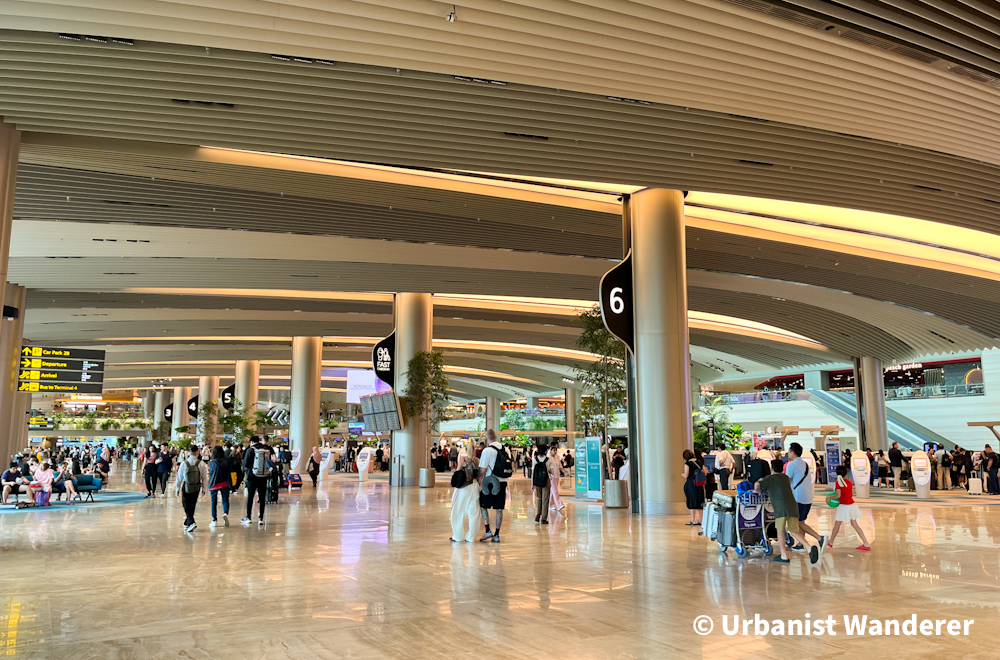
Ethiopian flies from SIN’s Terminal 2, the 1991-opened facility that has been extensively renovated throughout the Covid-19 pandemic. The results are stunning, with the departure hall seemingly looking ready to handle the latest trends in air travel. I last saw this same space in 2019, and the difference is worlds apart.
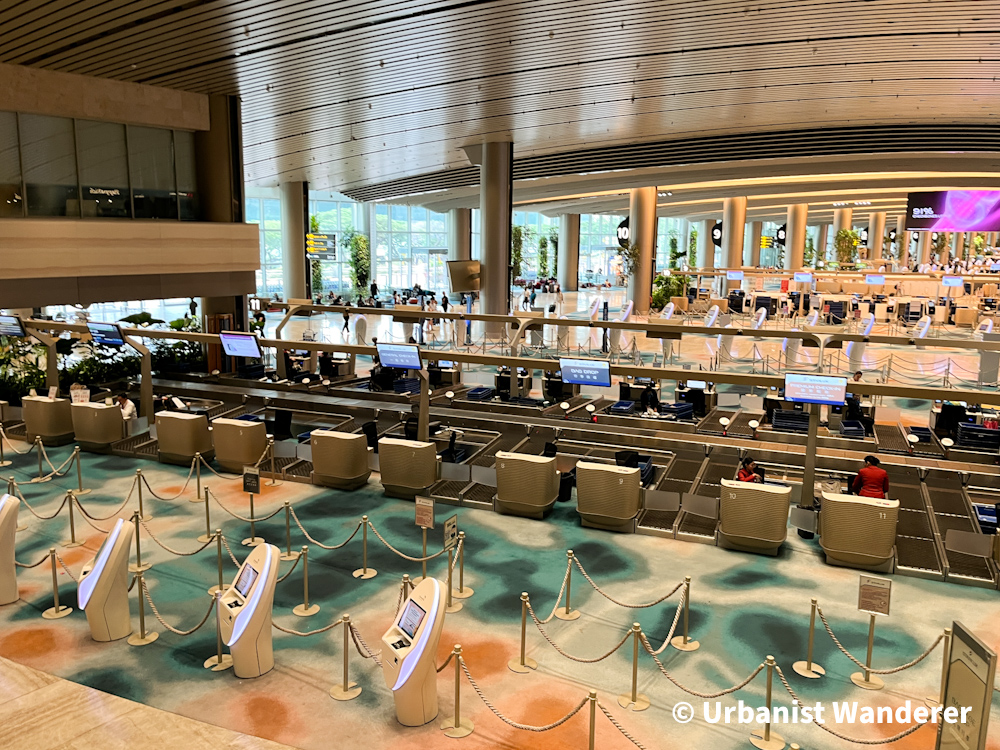
I showed up at the airport early to spend more time in one of the world’s best airports, and to beat the usual check-in queues. To my surprise, there were only 2 other passengers in line at Ethiopian’s counters, and this ended up being my fastest check-in at a major airport.
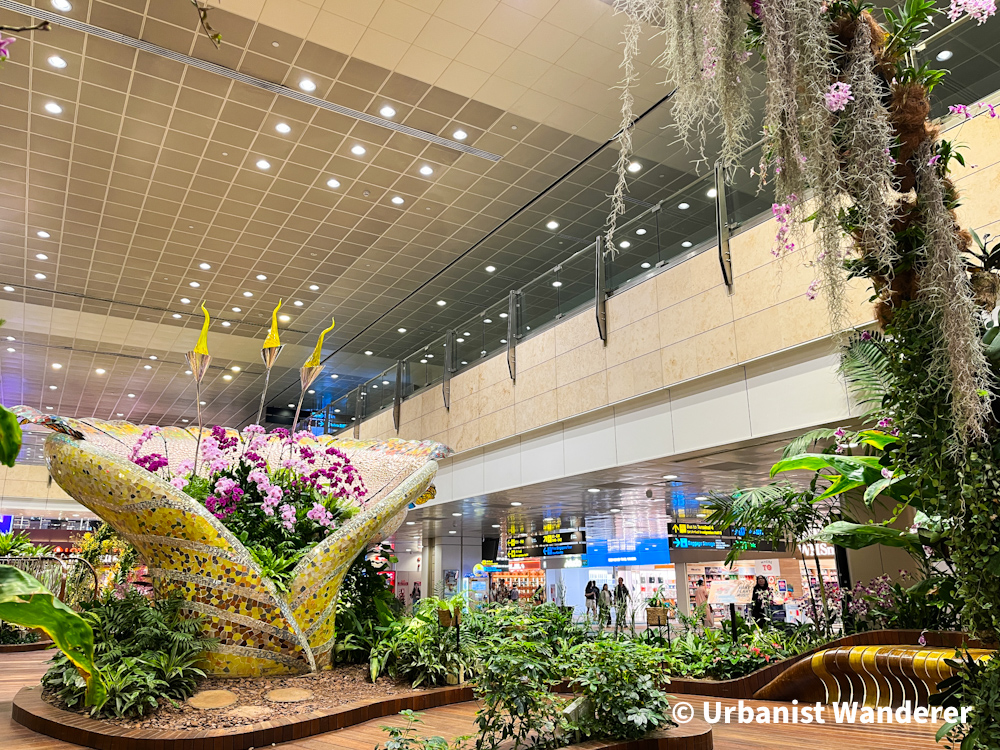
With time to spare, I took my time taking in the airside sights of SIN, which resemble a tasteful cross between a plush hotel lobby and a mall. It was all very impressive, but you can still tell that SIN Terminals 1 and 2 are legacy pre-2000s structures. Not as architecturally impressive as newer airports, perhaps, but it still works much better than most.
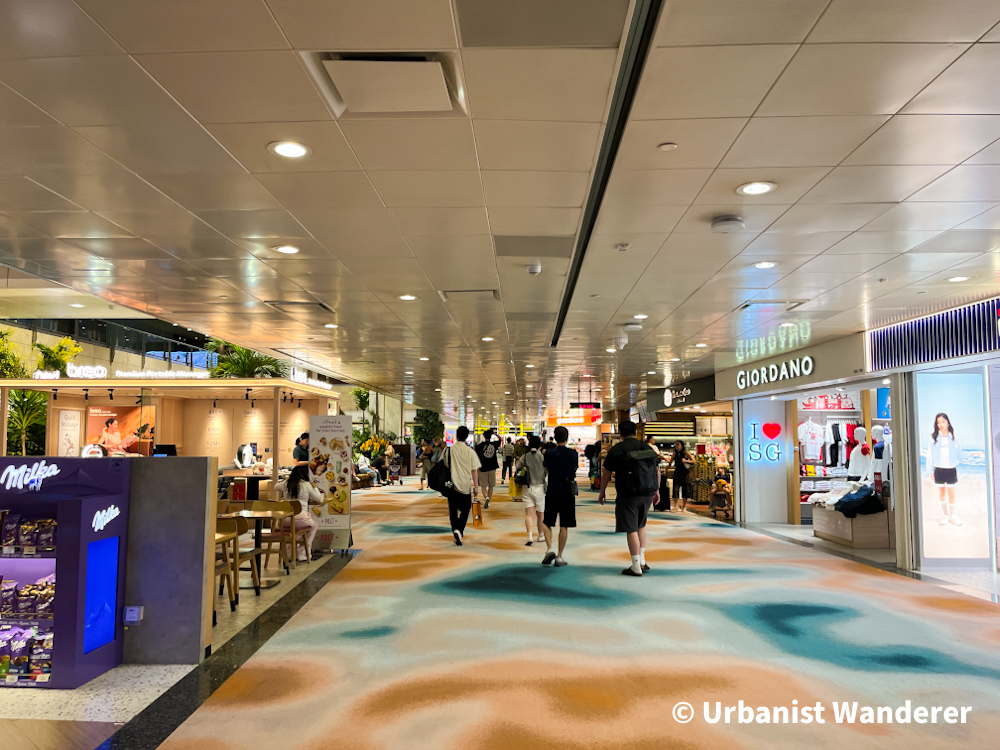
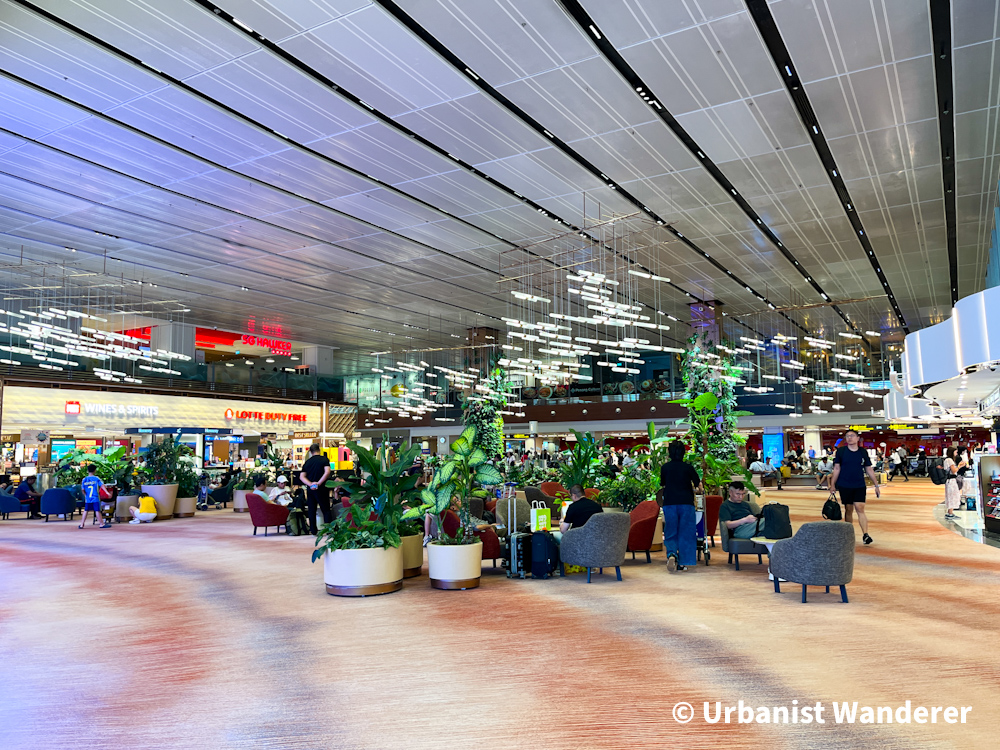
I passed the rest of my pre-departure time at the Plaza Premium Lounge in Terminal 1 and saw my Boeing 787-9 make its arrival in the rainy afternoon. I must have lost track of time or Ethiopian intentionally tries to get people to board early, as I noticed the FIDS screens flashing “Final Call” on my flight only 5 minutes after the advertised boarding time – way earlier than expected for a widebody aircraft. Huh.
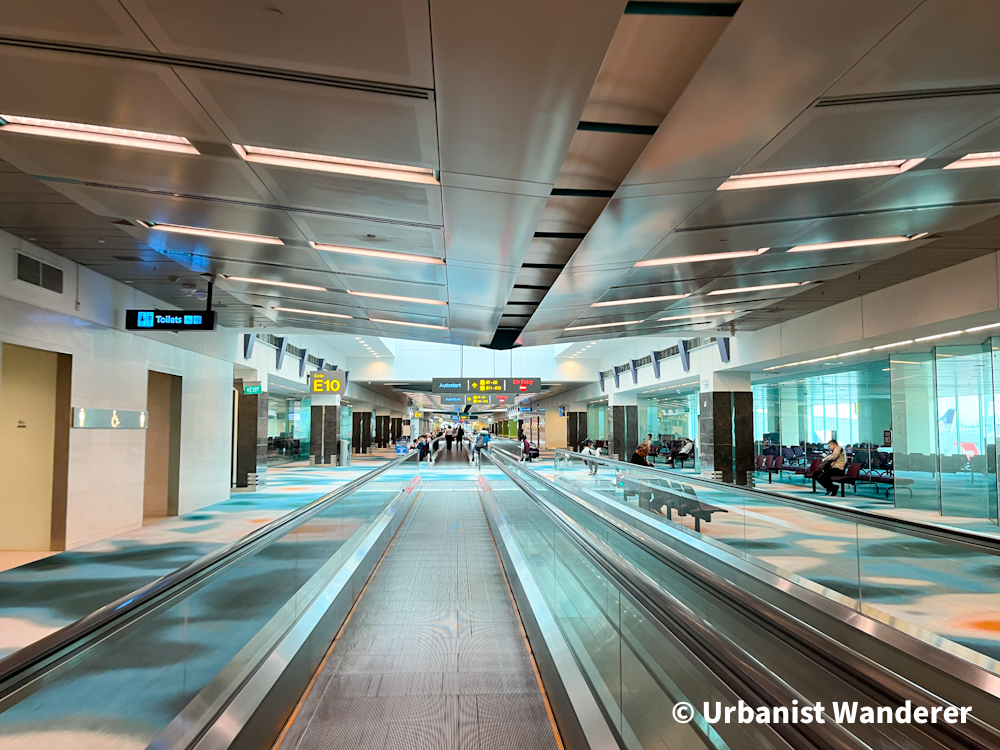
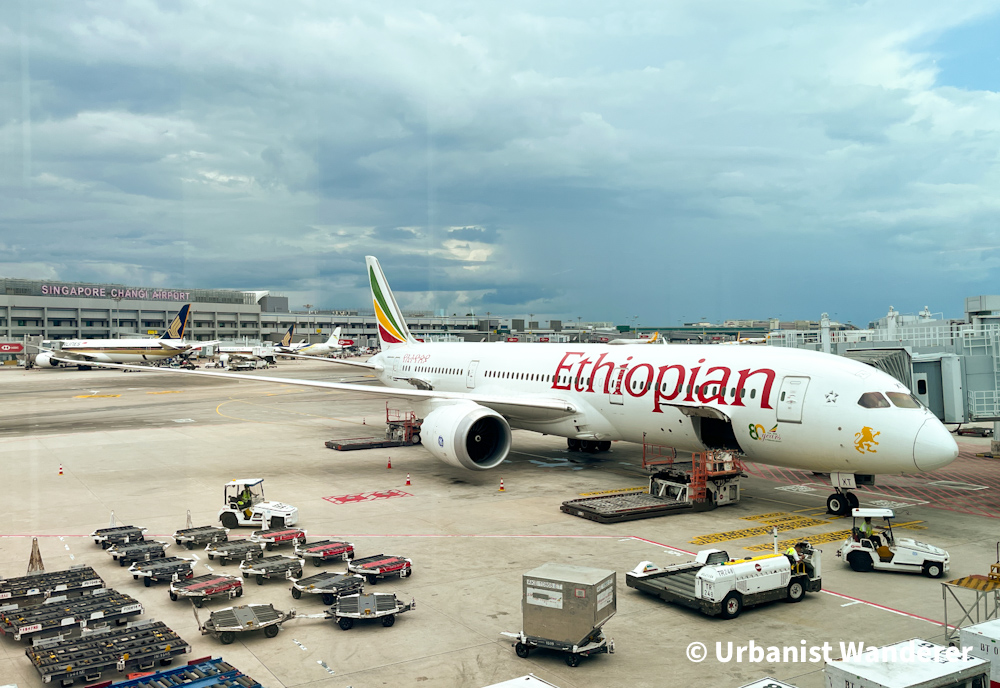
I managed to make my way to the suspiciously empty gate in Terminal 2 in record time, and boarded the aircraft only to be welcomed by the sight of what seemed like the entirety of the flight’s passengers. We sat on the ground for a bit longer with only 2 or 3 passengers boarding after me, after which the doors were closed and we managed an early departure. I guess most passengers on the SIN – KUL segment are transiting from Addis Ababa, with a small number of SIN-origin ones.
Onboard Cabin & Amenities
Ethiopian outfits their 10 B787-9s with 30 seats in Cloud 9 (Business Class) and 285 seats in Economy. The airline has 2 batches of the aircraft type, with Cloud 9 in the older 6 aircraft fitted out with Collins Diamond Parallel seats in a 2-2-2 configuration and the newer 4 aircraft having Collins Super Diamond seats in a 1-2-1 configuration.
Why is the Business Class cabin relevant to this post? As it turns out, the newer aircraft’s Cloud 9 cabin pushes the Economy Class cabin slightly further back, and Ethiopian swapped my aircraft at the last minute to 3 year old ET-AXT. My Economy seat at row 37 went from being a window seat on the older cabin, to a blank wall panel on the swapped aircraft’s newer cabin. It didn’t matter much on this short flight, but it can be very annoying on longer flights.
Ethiopian Airlines B787-9 Economy Class
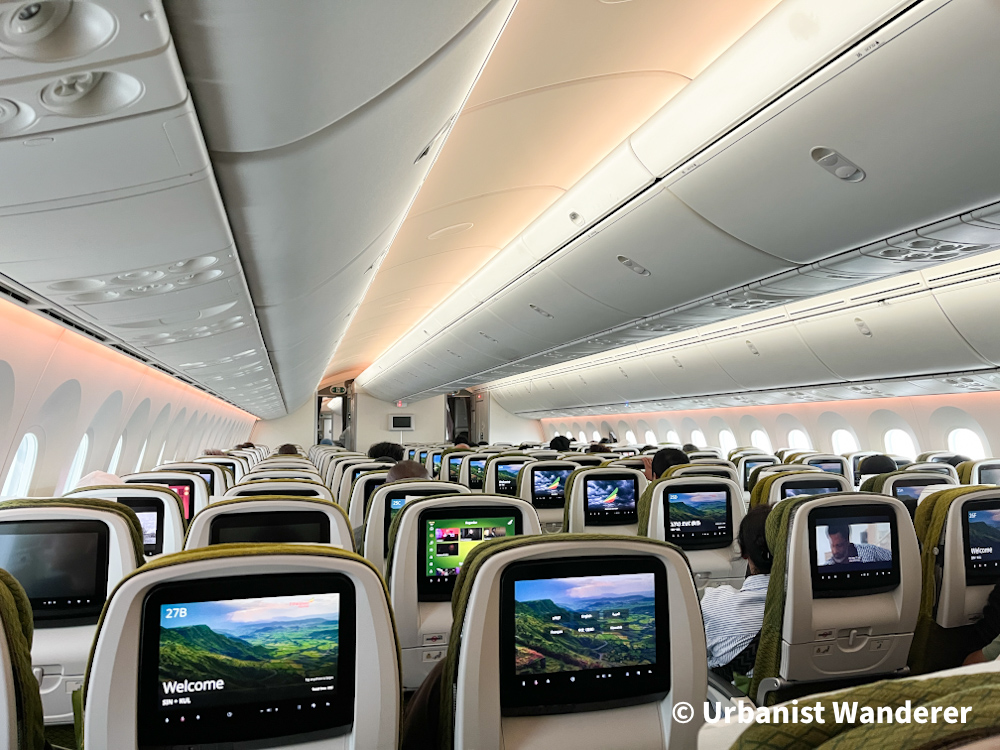
Ethiopian’s Economy Class on its B787 fleet is laid out in a standard 3-3-3 configuration, and uses Collins Aerospace Pinnacle seats on the B787-9. These are industry standard seats for long-haul Economy cabins, and the same/similar seats are also used on Vietnam Airlines’ B787-9 and on Malaysia Airlines’ Airbus A350-900 too. The seats have 31 inches of pitch, are 17.1 inches wide, and with 5 inches of recline. These are decently comfortable stats for long-haul, and even more so on the short SIN – KUL hop.
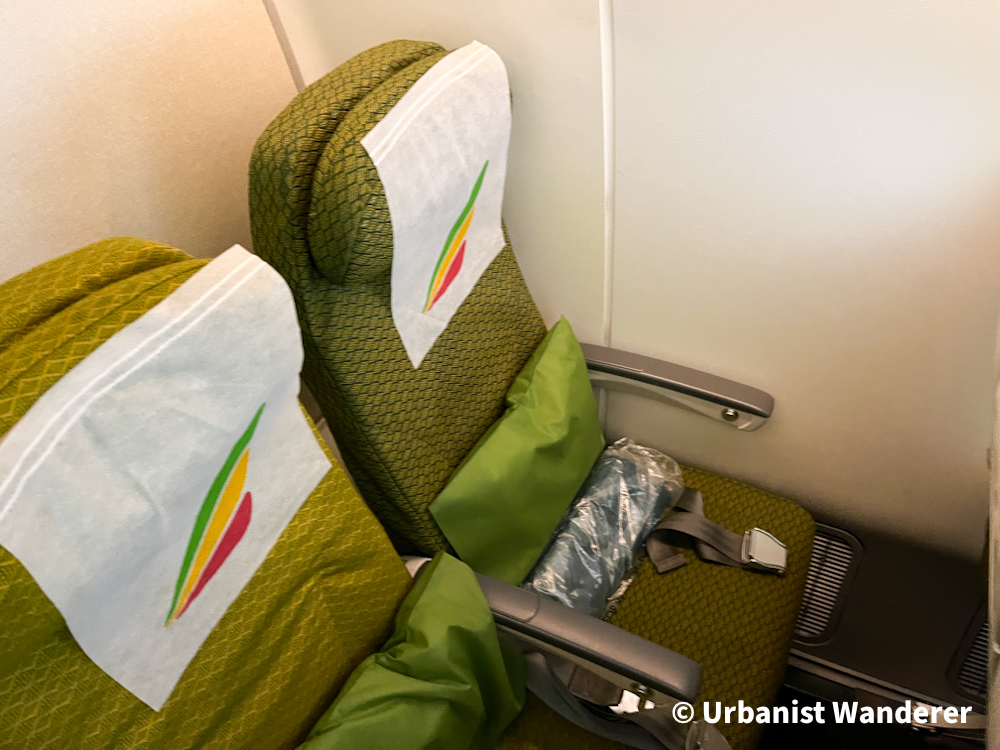
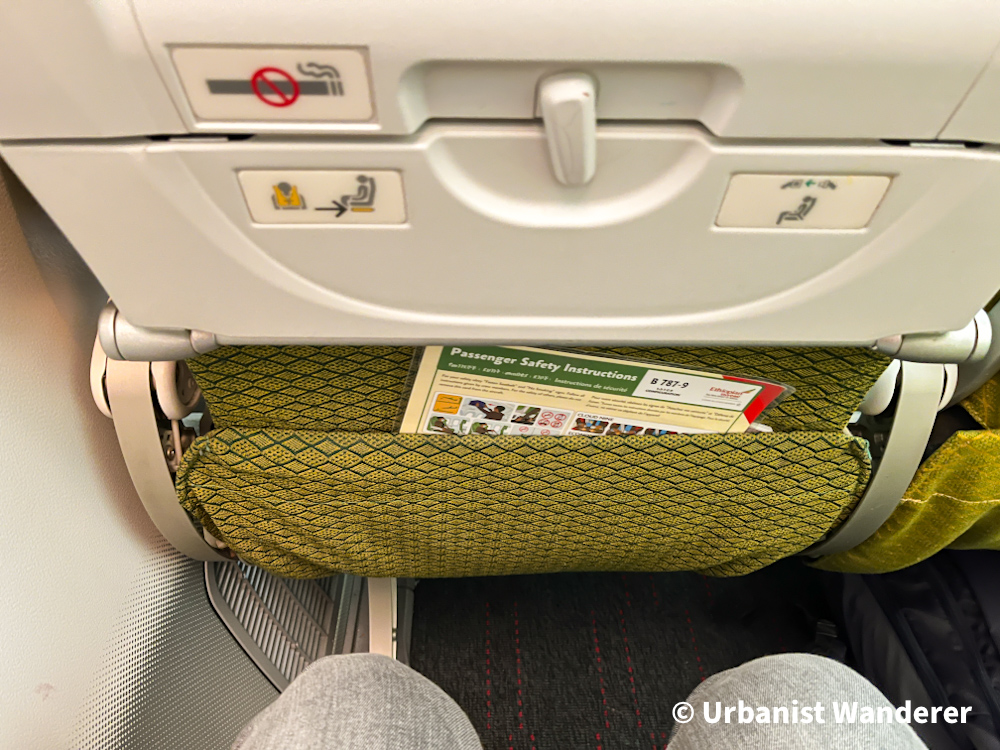
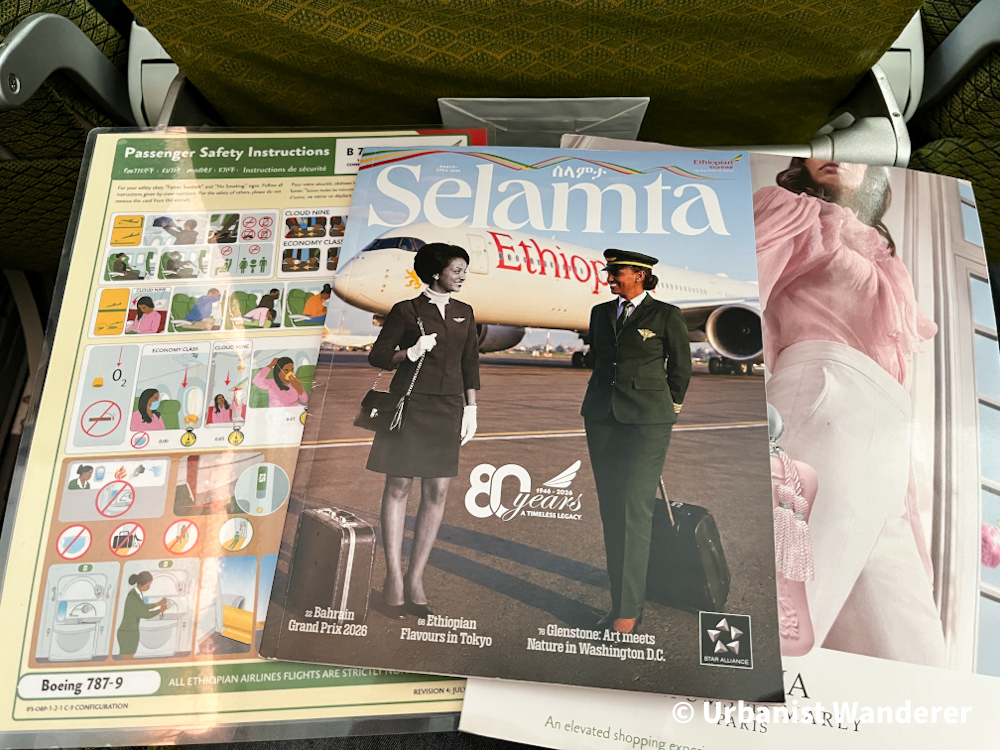
In terms of in-seat power, each bay of 3 seats share 2 universal a/c sockets, and all IFE screens have a USB-A port for charging.
The one thing I didn’t like was that my tray table wasn’t cleaned properly during the transit stop in SIN and had a somewhat sticky residue. The neighbouring seat’s table was fine, and I was lucky to have all 3 seats to myself. I can’t imagine this being amusing during a longer flight, though. I don’t really blame the airline for this, as it’s usually a ground service contractor issue.
Ethiopian Airlines Inflight Entertainment
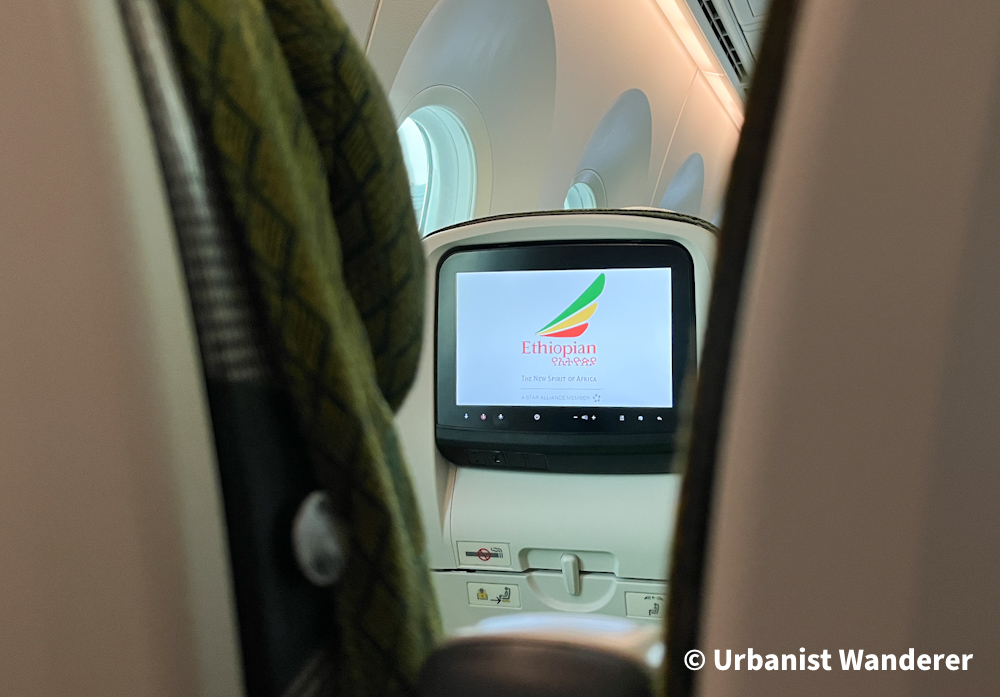
I managed a quick peek through the seatback IFE system during the short flight. I’m picky with my films and TV shows so I didn’t find the content to be very interesting, plus the quantity is clearly not on the same level as the big Gulf airlines. But the system is present and functional, so it will do the job fine in a pinch.
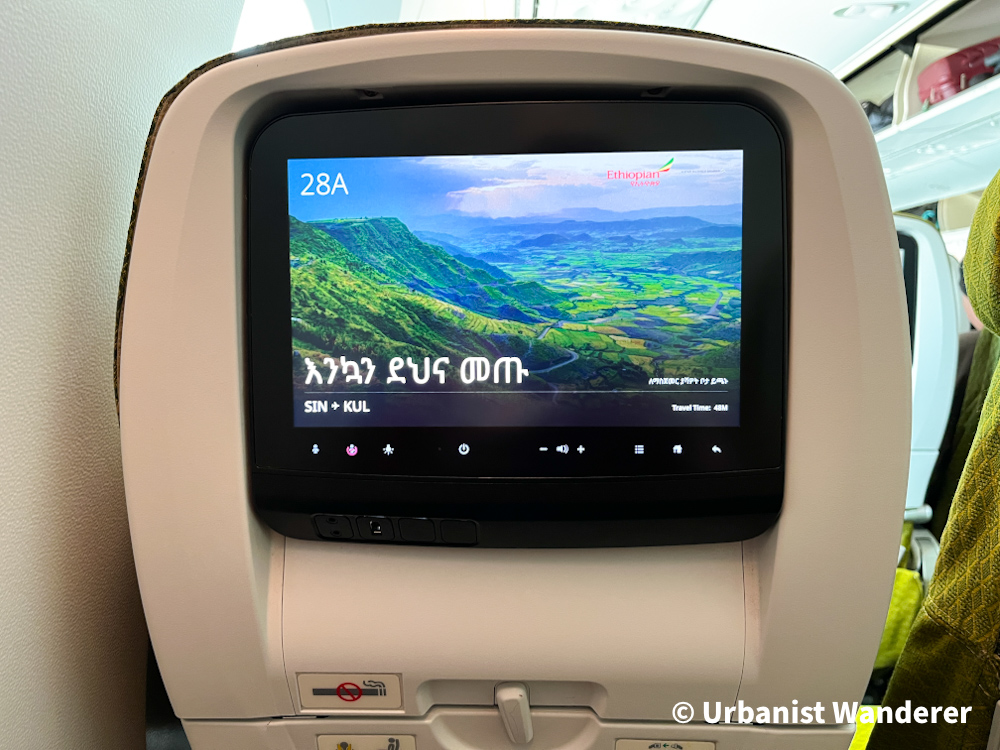
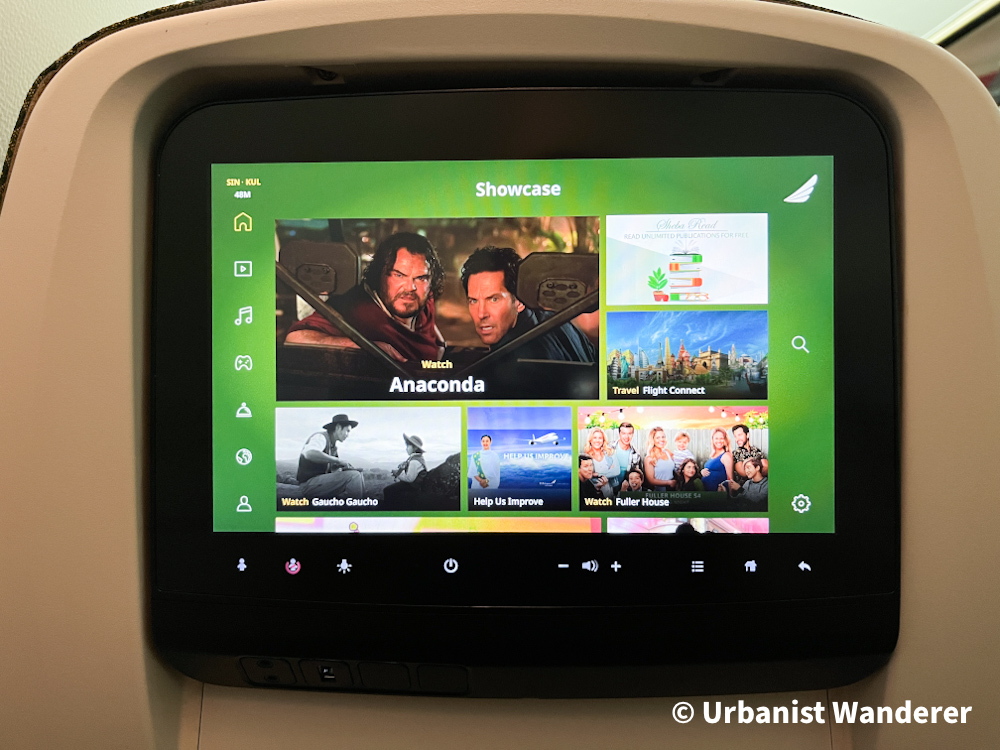
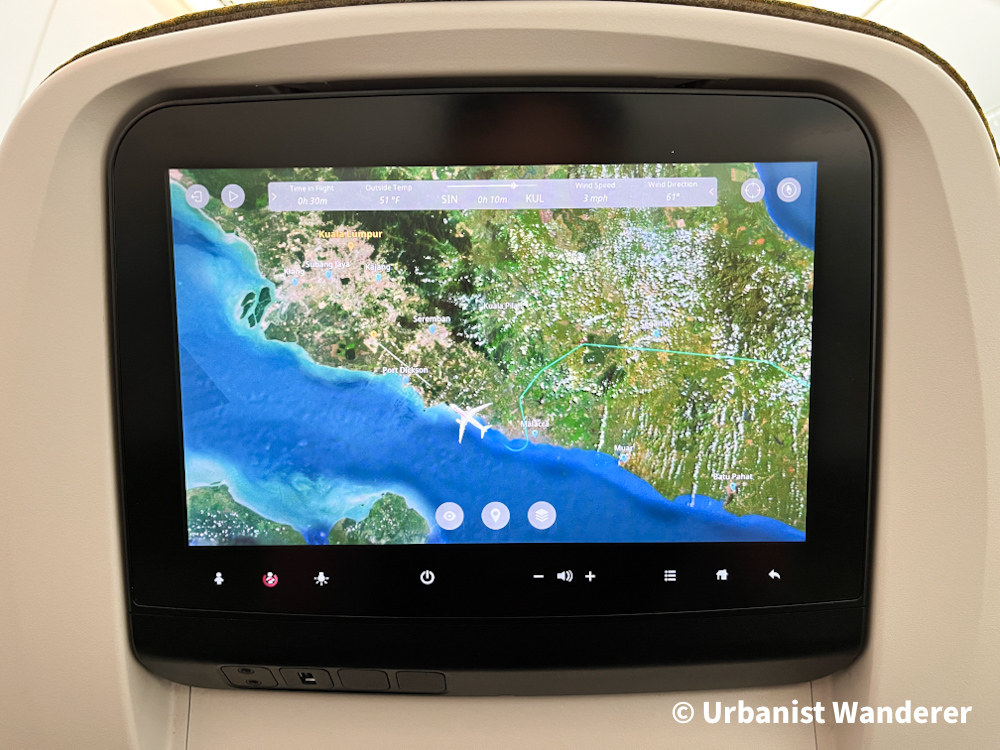
The one thing I found amusing is that the system’s homepage clearly isn’t synced-up with the actual seating rows. My seat was in row 37, but the homepage read “28A”. Wonder what’s that about?
Onboard Catering
Ethiopian serves a simple snack service on the SIN – KUL sector, consisting of a cold sandwich and a choice of drink.
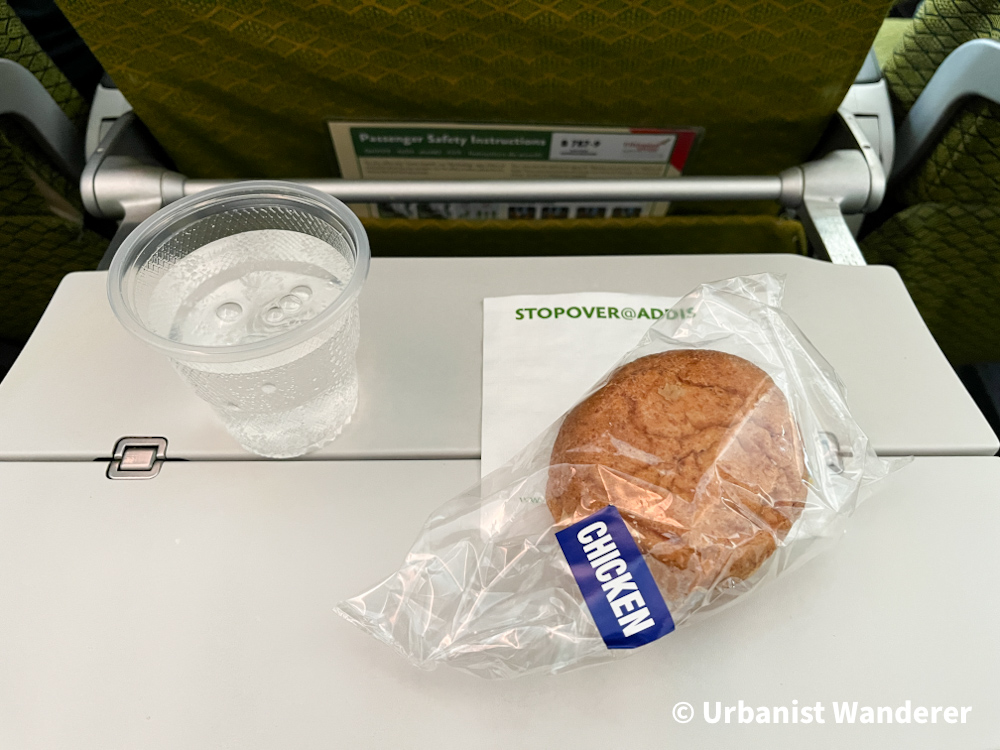
There was only a single option for the sandwich (it was chicken), and drink options were a small range of fruit juices, soft drinks, and some alcoholic options. All very standard for this short route with nothing to complain about. If you’re hungry, eat before boarding at SIN or on arrival at KUL.
Arrival at Kuala Lumpur International Airport (KUL)
This being a short flight, we landed at rainy Kuala Lumpur way ahead of schedule. In a bit of a twist, our originally assigned gate was still occupied by a delayed Shanghai Airlines flight. The airport couldn’t give us a new gate immediately, so we sat on the taxiway for more than an hour before we were directed to another gate. This turned our 20-minutes early arrival to an 80-minutes delayed arrival.
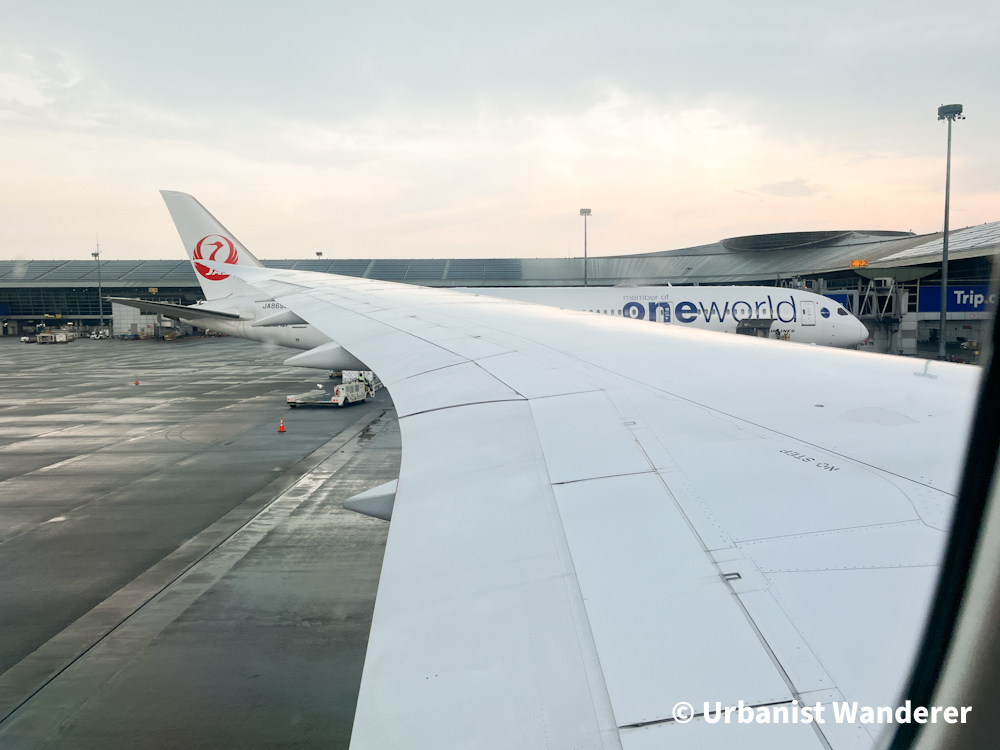
This isn’t the airline’s fault, and I suppose the actual early arrival shows that any slightly delayed departure from SIN can be easily made up in the air en-route to KUL.
Final Thoughts
This was a great introduction to Ethiopian’s long-haul cabin product on its B787-9 and I found the experience to be worth the money paid. I do look forward to flying them further in the future, and needless to say it is an excellent choice for the SIN – KUL/KUL – SIN sectors as well!