
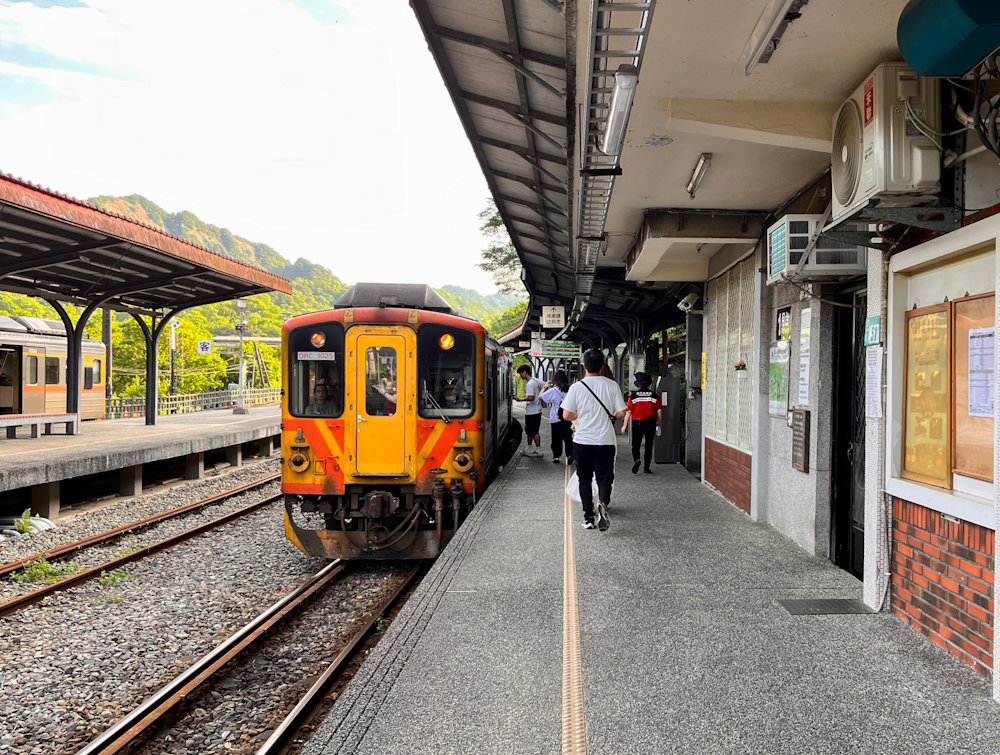
The hilly regions east of Taipei’s urban area was once home to a substantial coal mining industry. Today, visitors make the trip to see its scenic towns and settlements. One of the best known towns in the area is Shifen 十分 which, in keeping with the theme of this blog, is best reached by train. To be precise, you can get to Shifen by local train via the Pingxi 平溪 railway line from the nearby town of Ruifang 瑞芳.
Depending on how you plan your day in the area, it is very possible to spend a full day on the Pingxi line. I didn’t have the time to do that when I visited, but I managed to squeeze in a trip to the very touristy Shifen by train.
What is the Pingxi 平溪 line?
The Pingxi line is a 12.9 kilometre long branch line that originally opened in 1921 during Taiwan’s Japanese era to transport coal. It branches from the Yilan 宜蘭 line after Sandiaoling 三貂嶺 and runs for 6 more stations before terminating in Jingtong 菁桐. There are no direct train services from anywhere on the Pingxi line to Taipei, and making the trip requires a change of trains in Ruifang.
Can I take the train to the equally popular Jiufen 九份? No, you cannot: There are no trains to Jiufen.
Buying my tickets
EasyCards are accepted for payment on the line much like a regular Taiwanese commuter train. Alternatively, you could buy your tickets at the ticket machines in Ruifang and Shifen stations, but I strongly recommend using your EasyCards for the sheer convenience. There is no need to pre-purchase tickets for these local trains.
There is also a daypass for use on the entire line, which in my view is only worth it if you spend your day getting off at every stop on the line. As it were, a ride from Ruifang to Shifen costs only NTD 29 as of 2026 as seen on the Taiwan Railways website.
Departure from Ruifang 瑞芳 station
Ruifang station sits at the centre of the compact Ruifang town amidst shophouses. A bus stop serving buses to Jiufen and beyond are also conveniently located opposite the station square, making it easy to transfer between Jiufen buses to the trains here. The amount of shops in the general area also make getting pre-travel snacks and bites pretty easy.
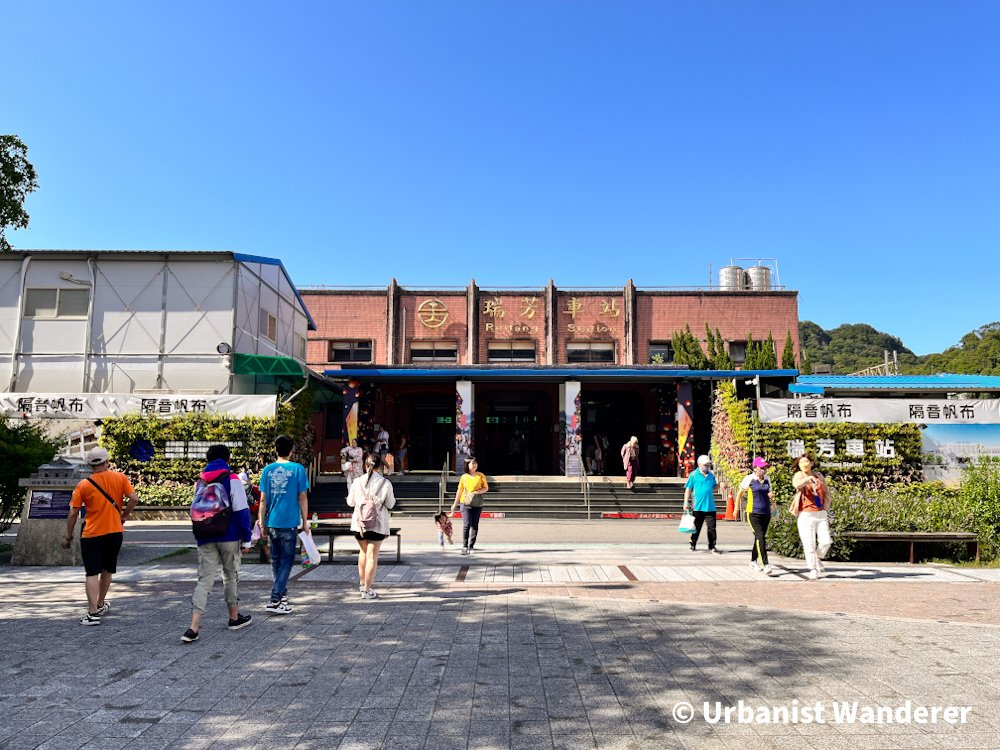
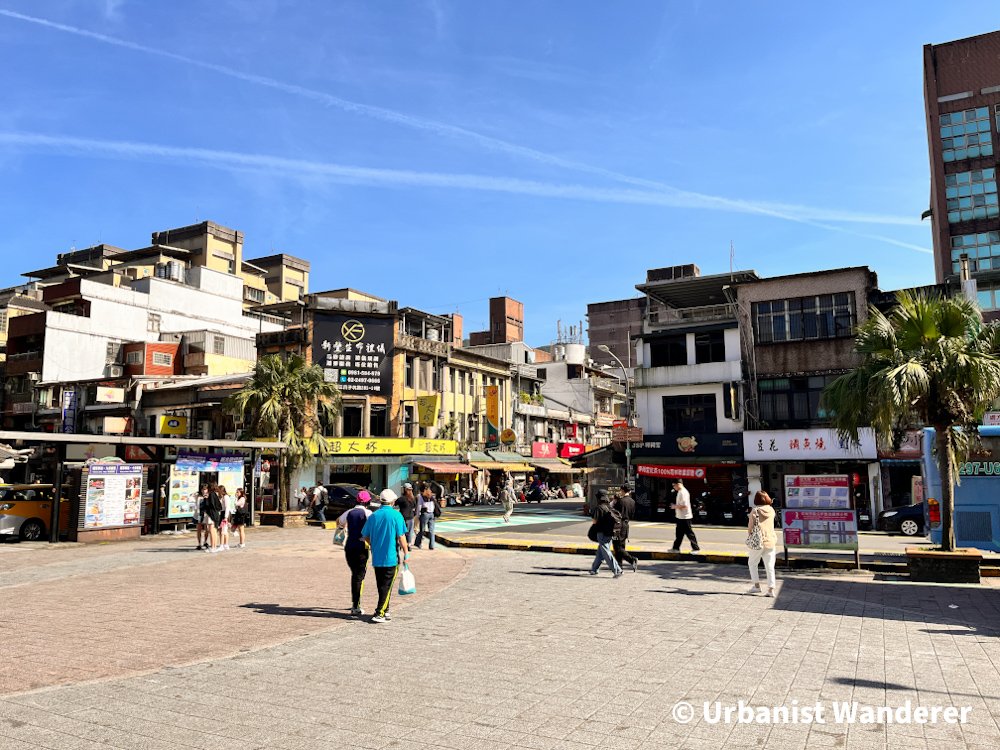
Ruifang is not a very big station, and quite likely running overcapacity too given the amount of people passing through for the Pingxi line and Jiufen. In fact, planned station expansion works had already commenced during my trip in 2025.
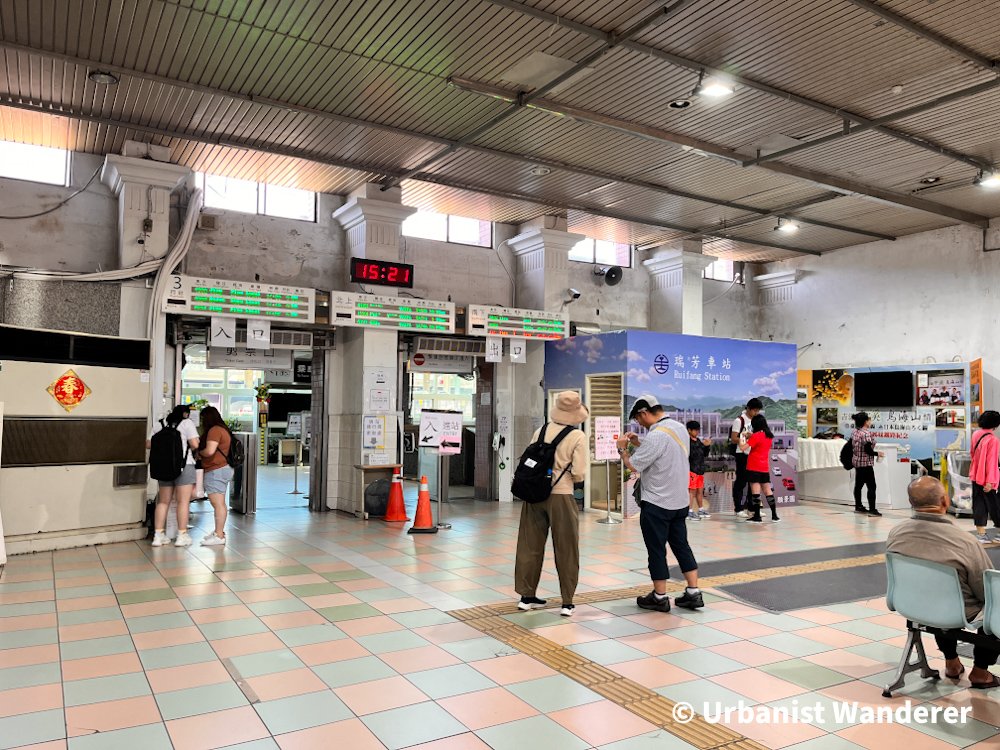
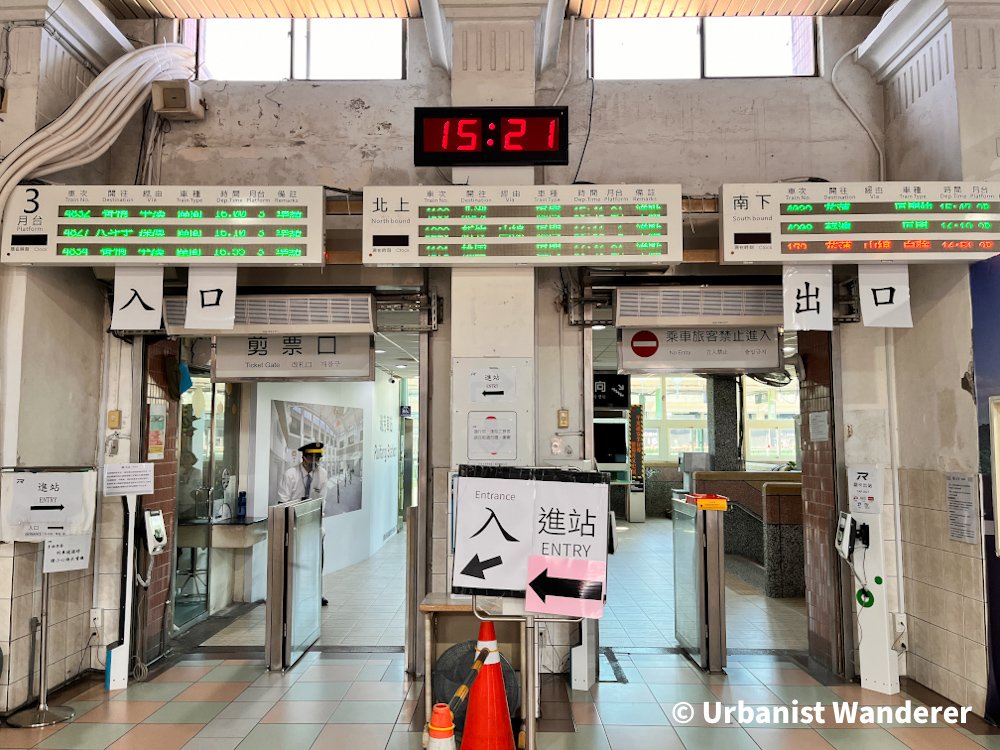
It’s impossible to get lost at Ruifang with only 3 platforms. Simply follow the directions for the Pingxi line, and you will emerge next to the stainless steel-bodied 45DR1000 diesel trains that Taiwan Railways runs on branch lines.
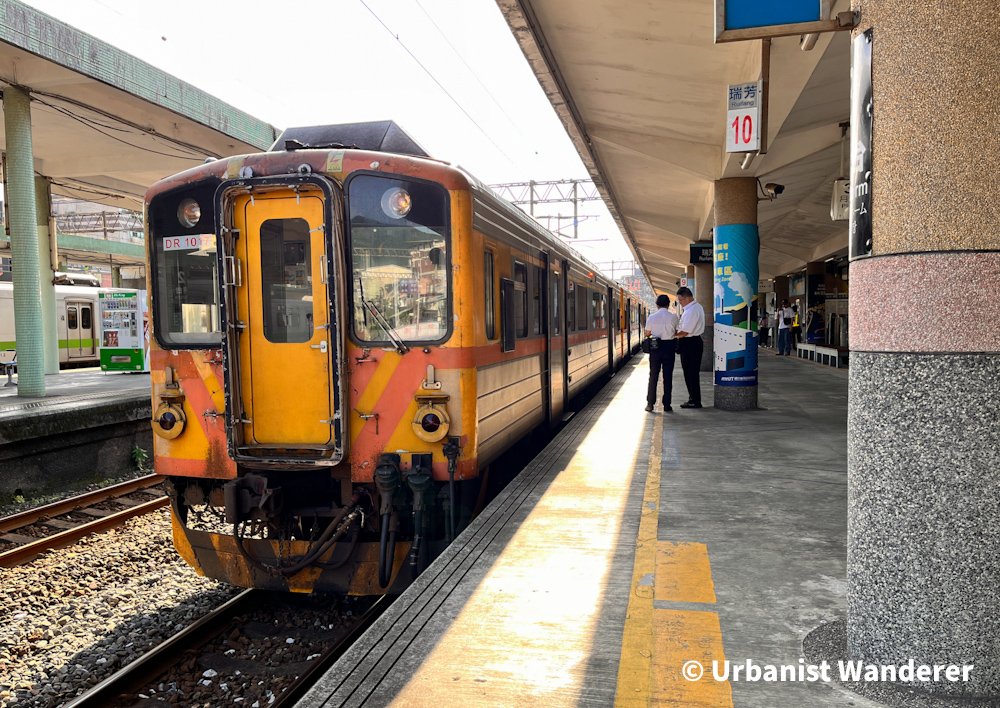
Trains in Taiwan leave on time. Don’t be late!
Onboard Cabin & Amenities
This particular trainset was decked out in commuter-style longitudinal seating with ceiling-mounted grab handles for standing passengers. It’s a decently comfortable experience onboard for the short journey.
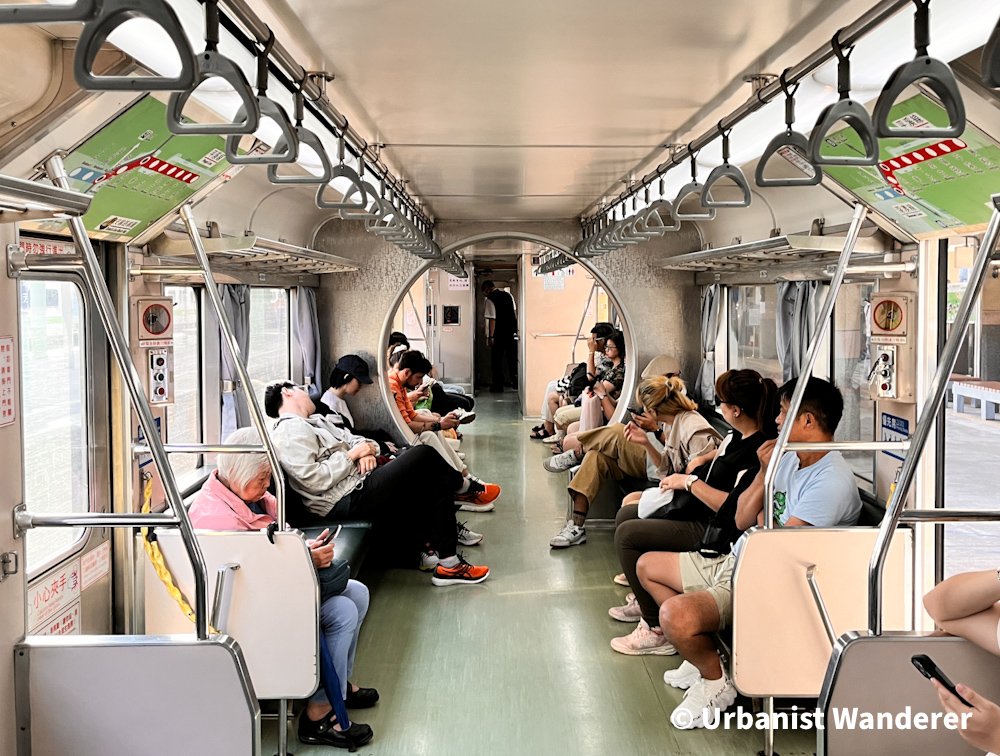
These trains have toilets onboard as well, but given the short journey times you aren’t likely to need them.
Arrival at Shifen 十分 station
Our train pulled into a sunny Shifen after a 30 minutes’ ride from Ruifang. Most of the disembarking passengers made a beeline for the station exit while I hung around to take in the scenery. Shifen station is quite small and rustic, and it looked a bit like a blockier version of a typical station in the British countryside.
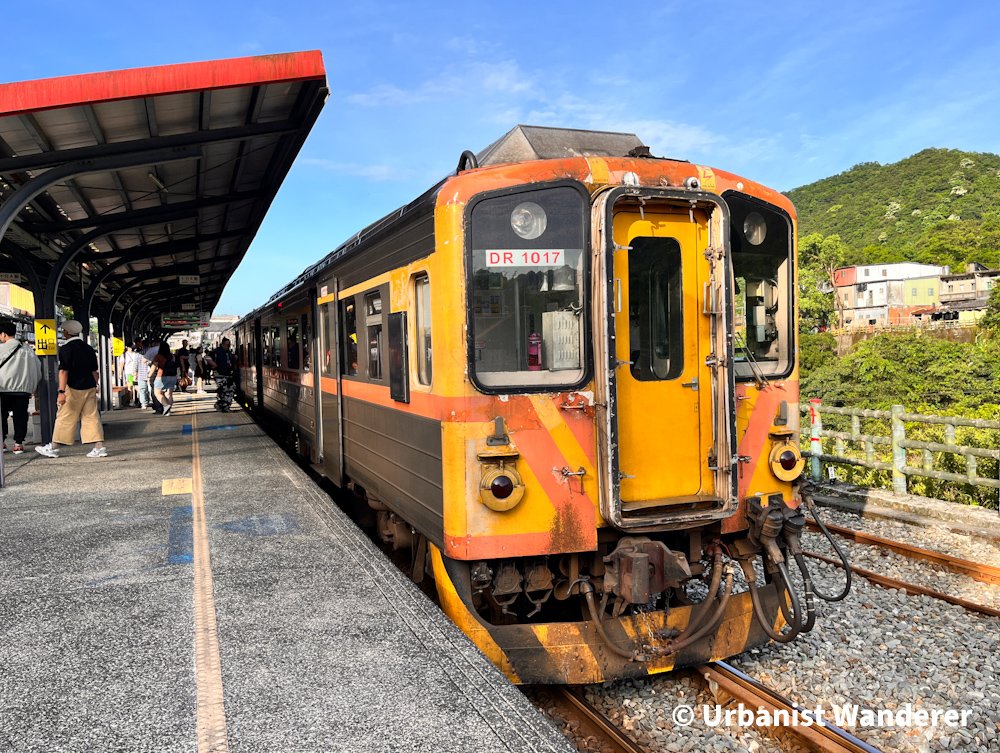
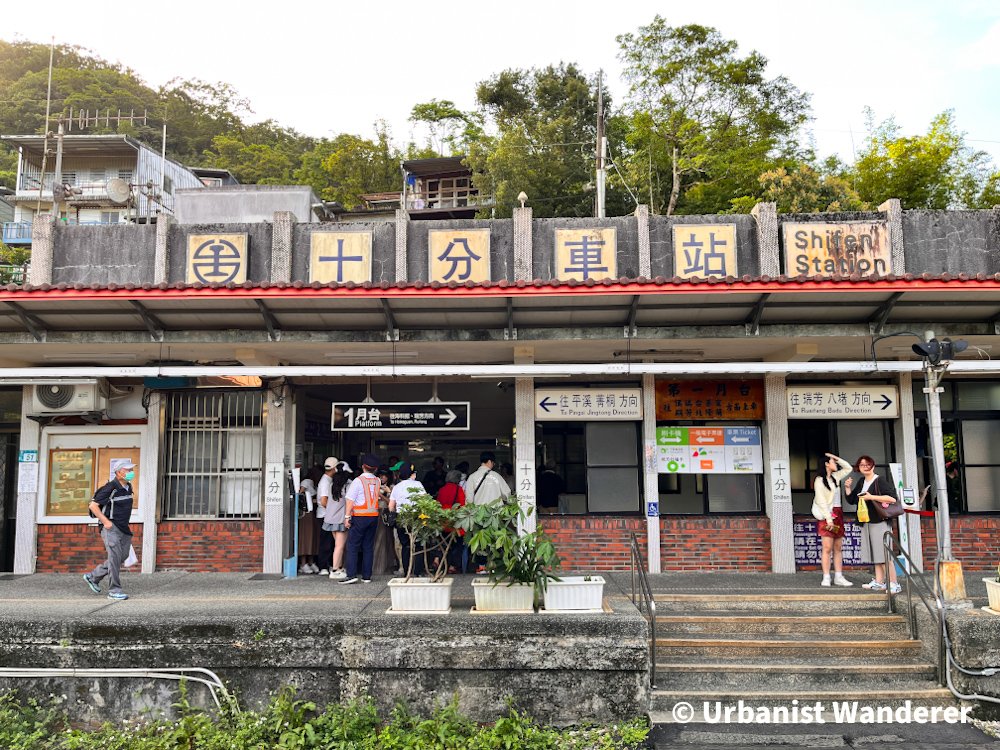
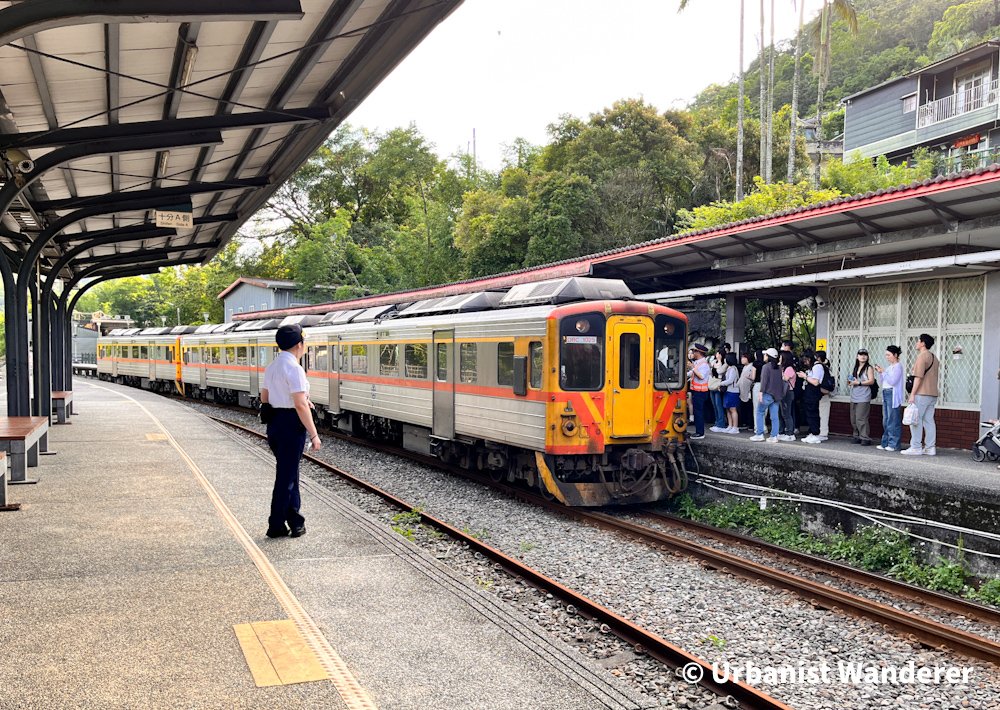
Later that evening I spent some time in the station building itself while waiting for my train back to Ruifang. I must say it really handles the crowd well despite being tiny.
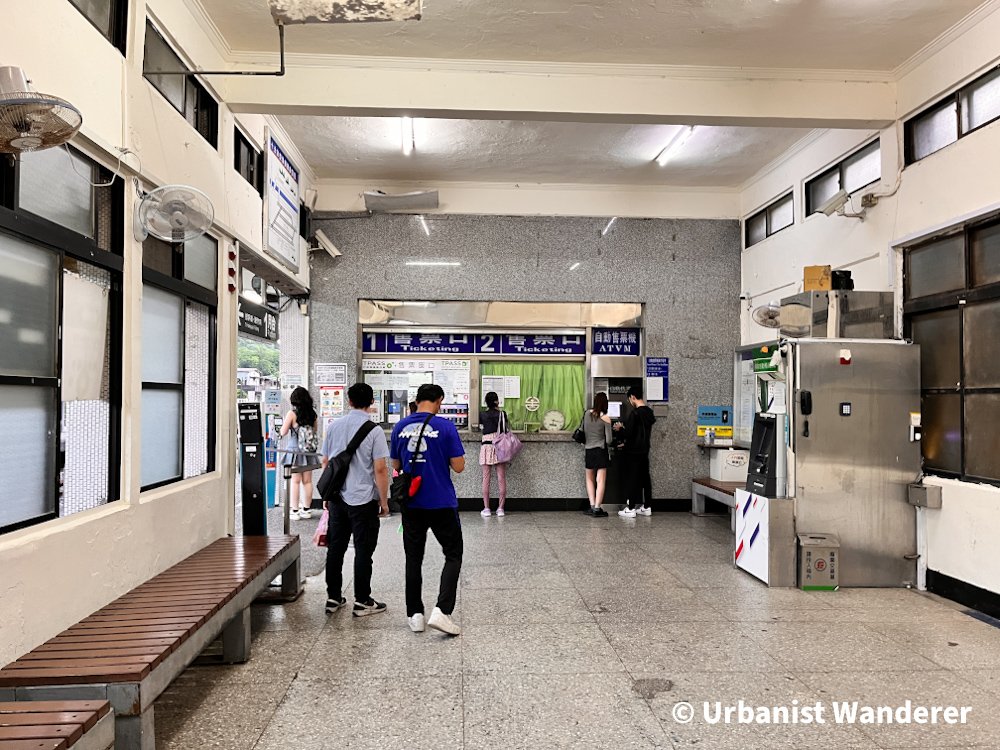
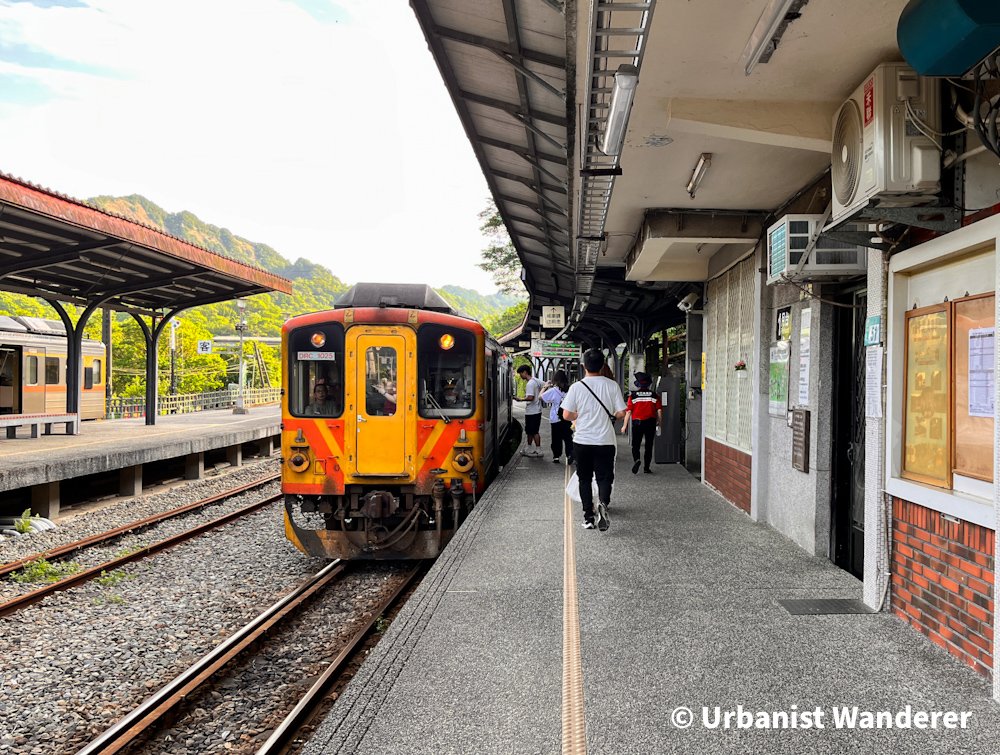
The Pingxi line famously runs through the middle of Shifen town itself, making it a very short walk from the station to the tourist sights. Just be mindful to not stand in the way of an oncoming train: The train always wins!

Final Thoughts
I liked my short time on the Pingxi line, and it’s living proof that old branch lines need not always be shut down. Maybe next time I’ll spend the whole day out on the line to properly see the sights.