
For the past 18 years, the skies of Malaysian Borneo have been criss-crossed by the blue-green liveried aircraft of MASwings. This Malaysia Airlines subsidiary was the home airline of Sabah and Sarawak, and also the face of the country’s Rural Air Service (RAS) network throughout its existence.
But like most things in the public sector, the airline wasn’t isolated from politics of the day. In this case, the state government of Sarawak acquired MASwings in February 2025 with aspirations of improving air links to the state, albeit under the new banner of AirBorneo. This was significant for two reasons: Firstly, it would be the first time a Malaysian state government directly owned an airline flying scheduled passenger services; Secondly, it meant the passing of the RAS routes from federal hands into state hands for the first time in 68 years*. Either way, the acquisition meant that the MASwings brand began its slow disappearance from Malaysian skies when AirBorneo came online on 1st January 2026. Indeed, at the time of posting, AirBorneo is live and you can book tickets on their website after 14 January 2026!
I’ve long had a fascination with the RAS, and as a child I used to stare at pictures of Malaysia Airlines’ Fokker 50s and Twin Otters in Sabahan and Sarawakian airports, thinking that one day I would experience these flights for myself. I managed my first trip on MASwings in 2022 with a short trip to and from Marudi, and when news broke of Sarawak’s acquisition I figured I had to make one more trip on the airline before the curtains closed on this chapter of Malaysian aviation history.
*The internal routes in Sabah and Sarawak were initially operated by Sabah Airways Ltd (partly owned by the British North Borneo government) in 1953, then Borneo Airways Ltd (partly owned by the governments of British North Borneo and British Sarawak) in 1957. It merged with the Singapore & Kuala Lumpur based Malaysian Airways Ltd (formerly Malayan Airways Ltd) in 1964, which later became Malaysia-Singapore Airlines (MSA), and which in 1972 would split into the Kuala Lumpur based Malaysia Airlines (as MAS), and Singapore Airlines. The rest is history.
What is the best way to fly MASwings?
I had thought up the idea of flying the length of Sabah and Sarawak on MASwings, so I knew from the start that I wanted to fly between Kota Kinabalu and Kuching. The roadblock was that MASwings did not fly directly between both cities. The options were a transit either in Limbang or Mulu (both in Sarawak), and with the former routing being the cheapest it became the no-brainer option.
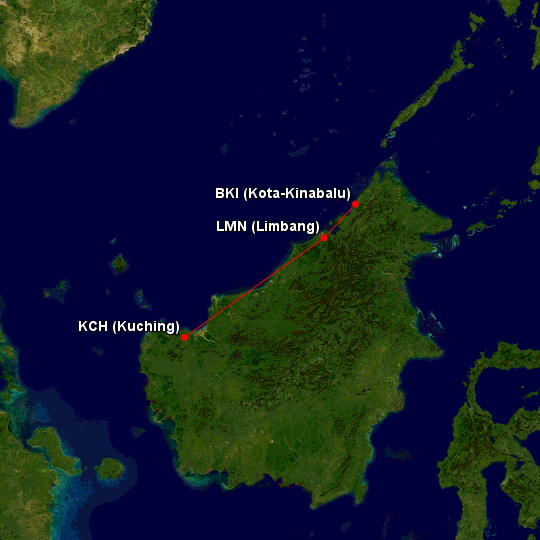
In the end I was quite satisfied with the routing through Limbang, as I got to tick a new place off the map and do a domestic transit routing that actually made sense. I also managed to cover both aircraft types in the MASwings fleet – a Twin Otter flight from Kota Kinabalu to Limbang, and a longer ATR 72 sector from Limbang to Kuching across the entire length of Sarawak. It really was the full MASwings experience in a day!
Departure from Kota Kinabalu International Airport (BKI)
MASwings’ base in Sabah is Terminal 1 at BKI, the only operational passenger terminal at the airport. Here, resources are shared with big sister Malaysia Airlines including the check in counters. Unfortunately the queue management wasn’t great, as the queue line was split in half with one half occupied by a large group, while the other half sat quiet because passengers were unsure if it was the correct line. Ground staff also weren’t proactively guiding passengers to the second line. I decided I wasn’t going to stand in line longer than I needed to and followed some enterprising passengers to the quieter line, and got checked in very fast.
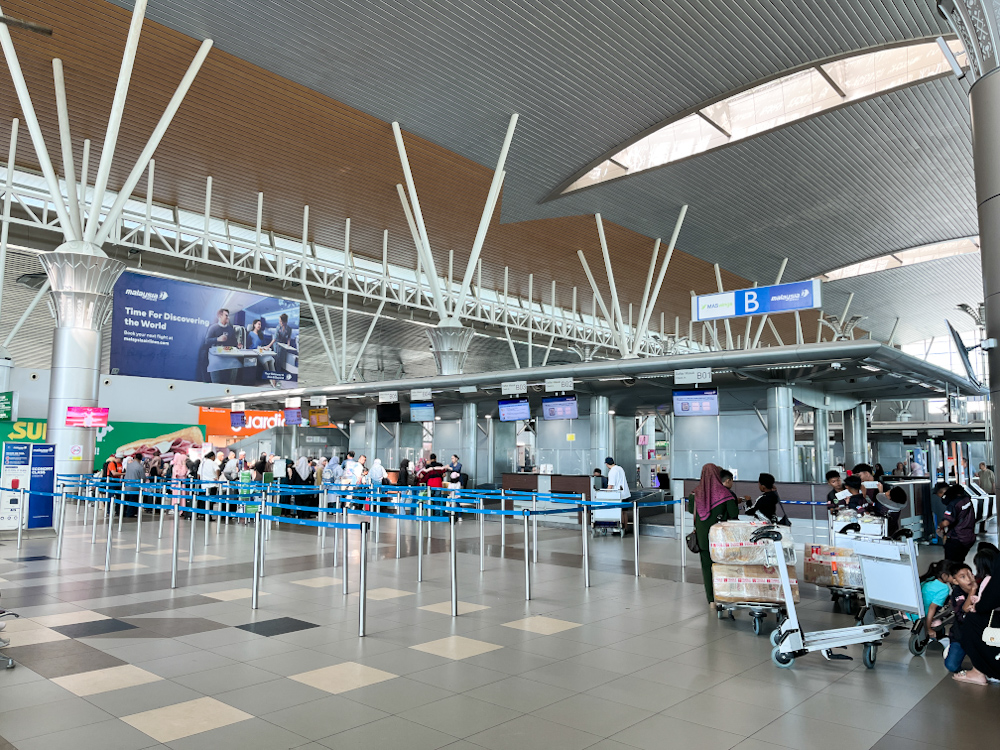
To my disappointment, the famous weighing scales were nowhere to be seen for this initial Twin Otter leg. The check in agent simply asked me for my body weight and I gave it, and he confirmed that they weren’t using the scales in BKI. As MASwings offered a check in baggage allowance of 7kg, I also had my bag checked in all the way to Kuching complete with a bright pink “hot transfer” tag attached.
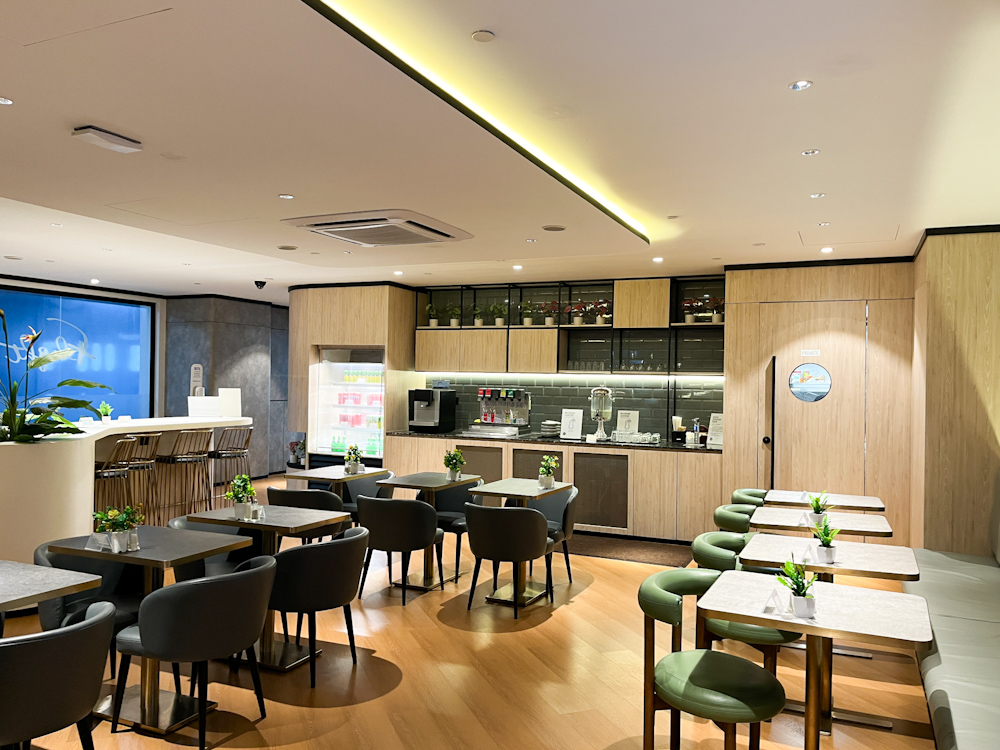
I then passed through exit immigration (Sabah and Sarawak have autonomy over immigration within the Federation), and emerged into the well equipped airside. With heavier passenger traffic, BKI features a decent variety of shops and restaurants, and even a lounge for Business Class passengers.
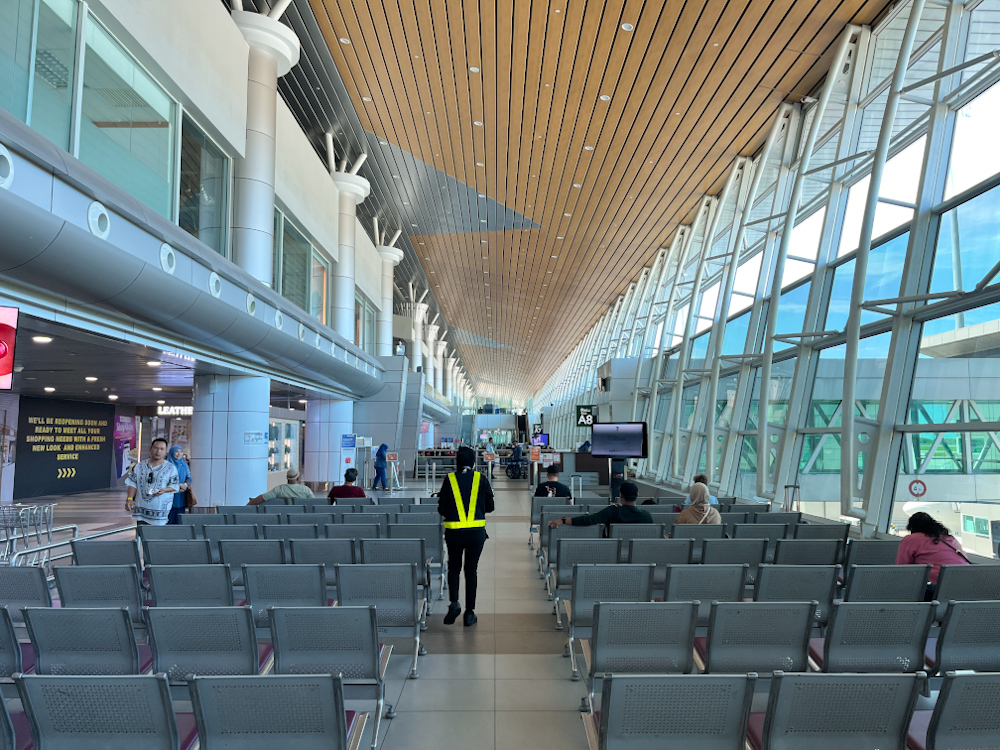
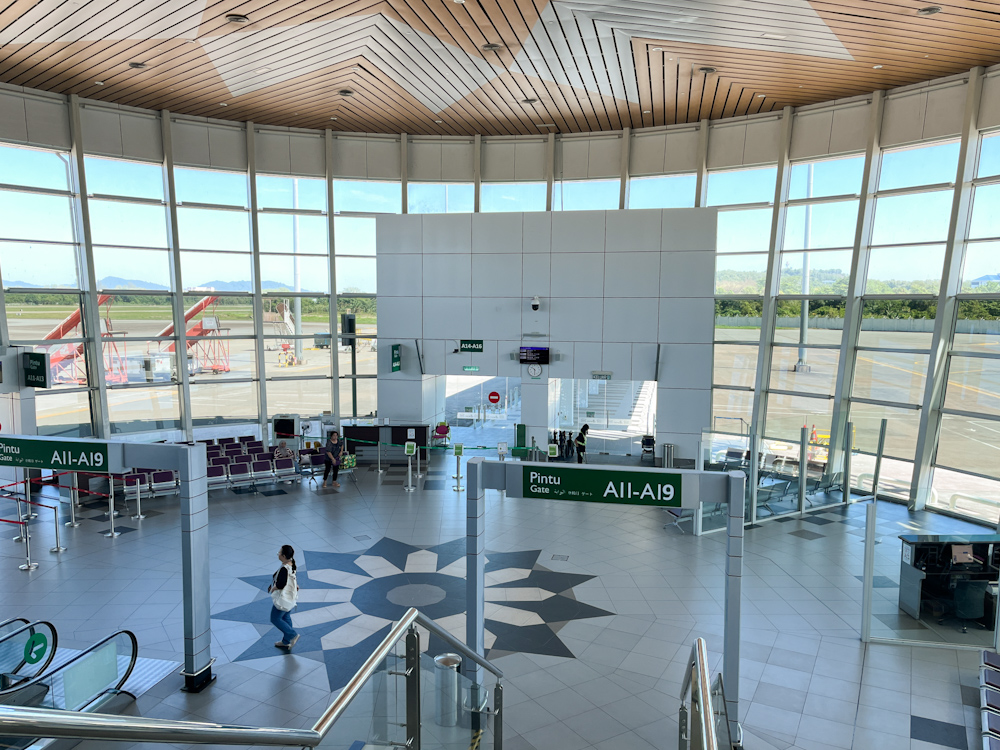
All MASwings flights are handled from Gates A11-A19, a circular waiting area at the end of BKI’s finger pier. These are equipped solely for boarding via stairs and offer great views of aircraft from the ground level. It’s a pleasant space to wait in, but can get packed during peak seasons as it also serves remote boarding for other airlines.
MASwings Viking DHC-6 Twin Otter (Kota Kinabalu to Limbang)
Boarding was called 10 minutes prior to the scheduled departure time of 11:20am, and we trooped out of the terminal onto the tarmac. 9M-SSE “Marudi” (formerly “Kiulu”) was to be our ride to Limbang.
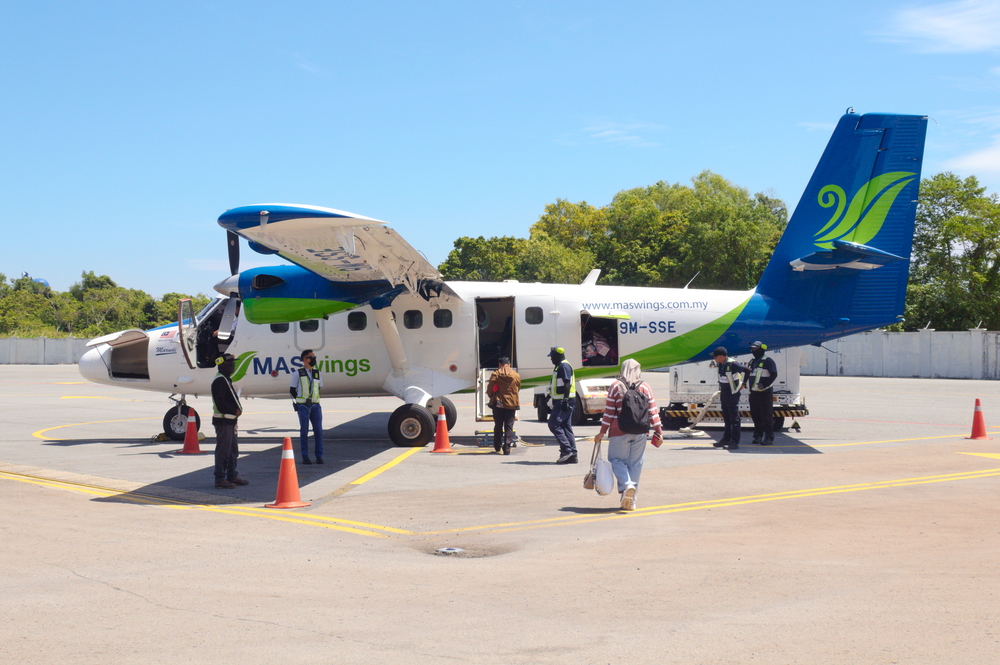
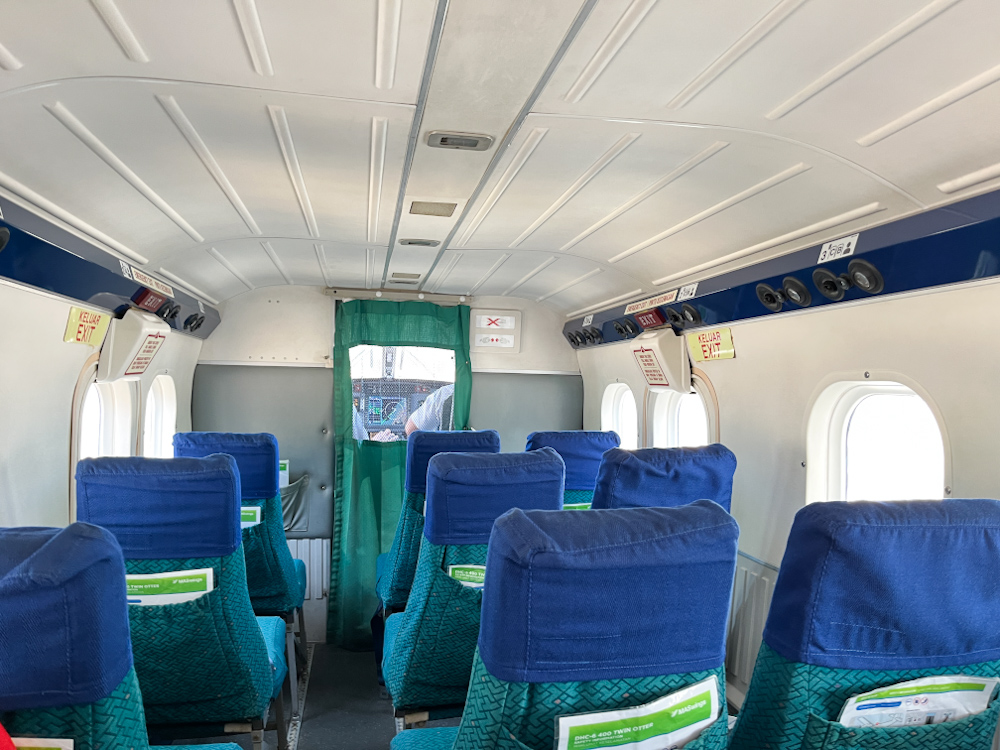
With all 17 passengers onboard within 5 minutes, the doors were closed and the pilots started up the twin Pratt & Whitney PT6A-34 engines. It was to be a mostly full flight to Limbang on this sunny day.
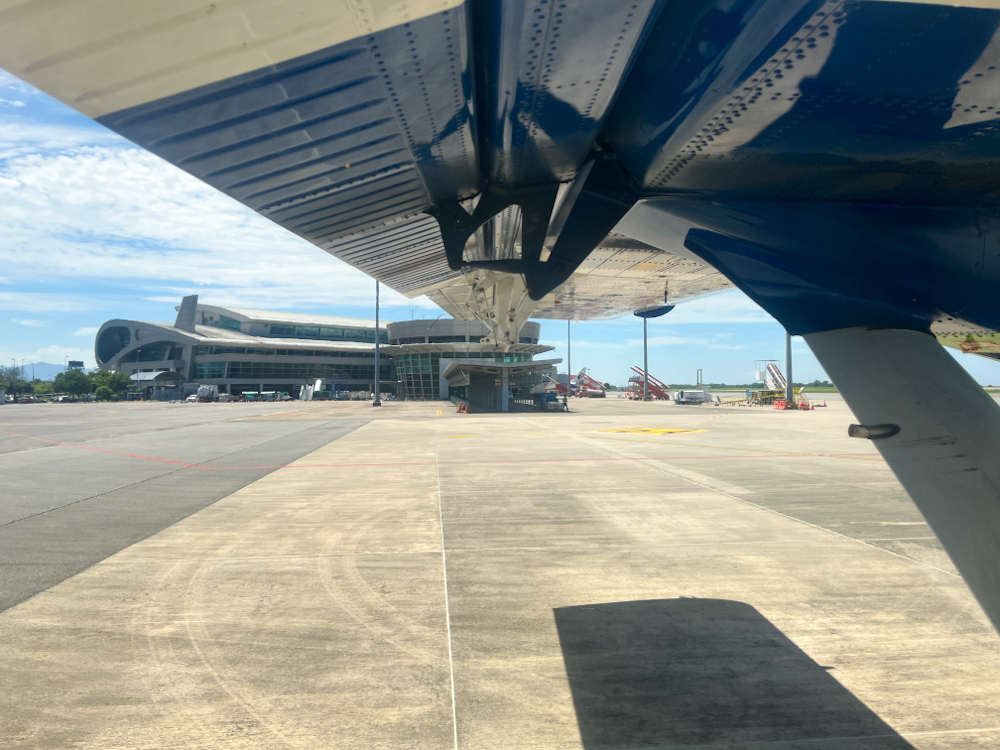
One of the Twin Otter’s distinctive features is its short takeoff and landing (STOL) capability, and this was on full display today. Our pilots entered runway 20 two-thirds of the way down, revved the engines to full throttle, released the brakes and rotated after less than a kilometre’s run. It was a wholly impressive feat of engineering and physics.
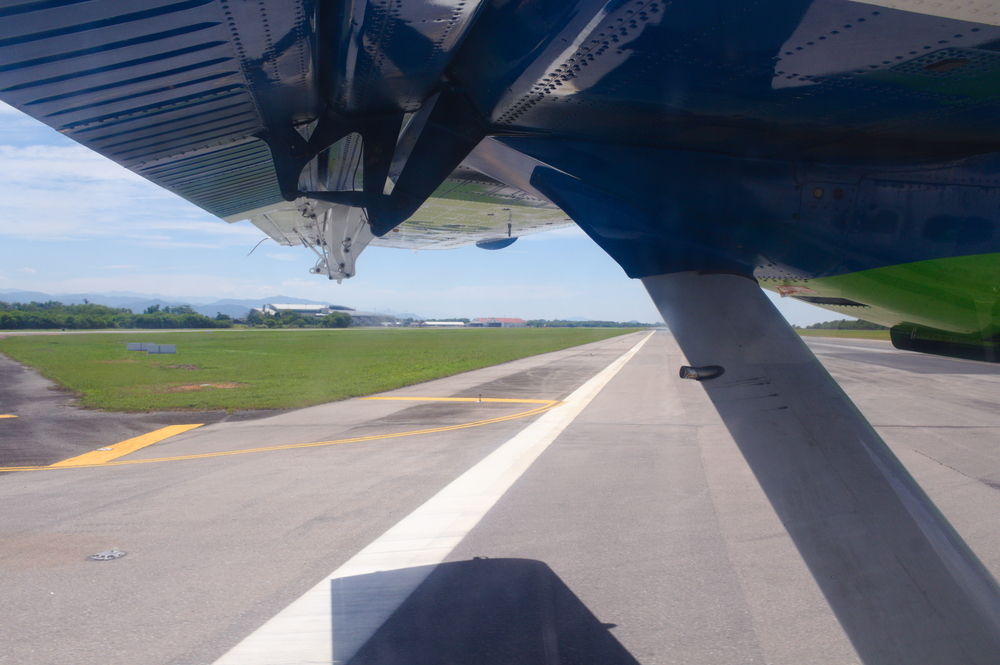
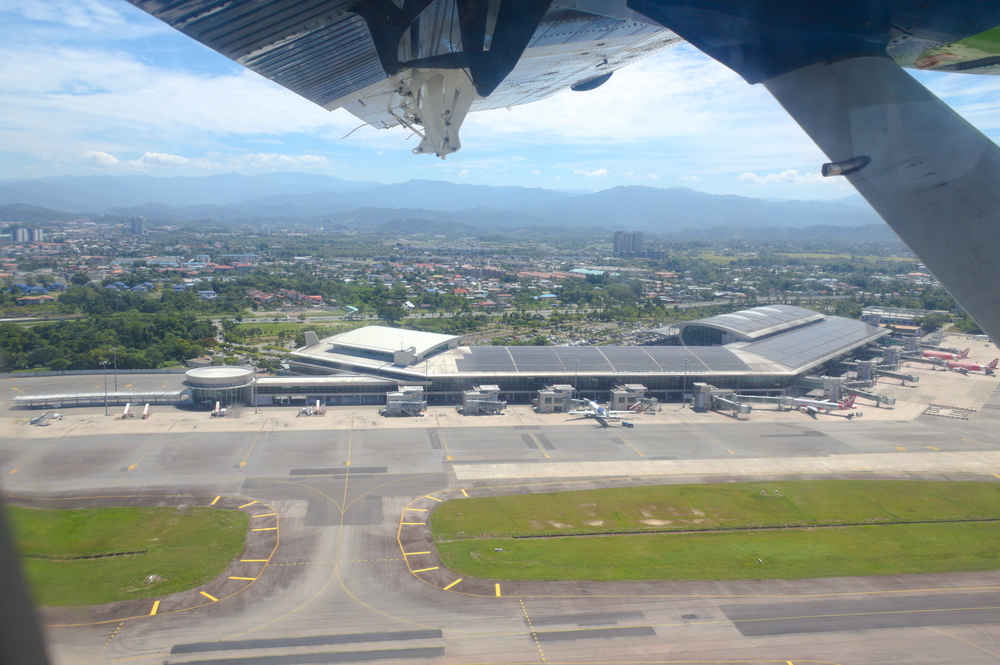
En-Route to Limbang
Our route today took us along Sabah’s eastern coast on a relatively straight track out of Kota Kinabalu, down south past Brunei Bay before descending into Limbang. With the Twin Otter’s lower cruising altitude and big windows, it was an excellent way to get a bird’s eye view of the land down below.
The climb out of the city past the suburban towns of Petagas, Putatan, yielded great views of the urban area with Mount Kinabalu in the background.
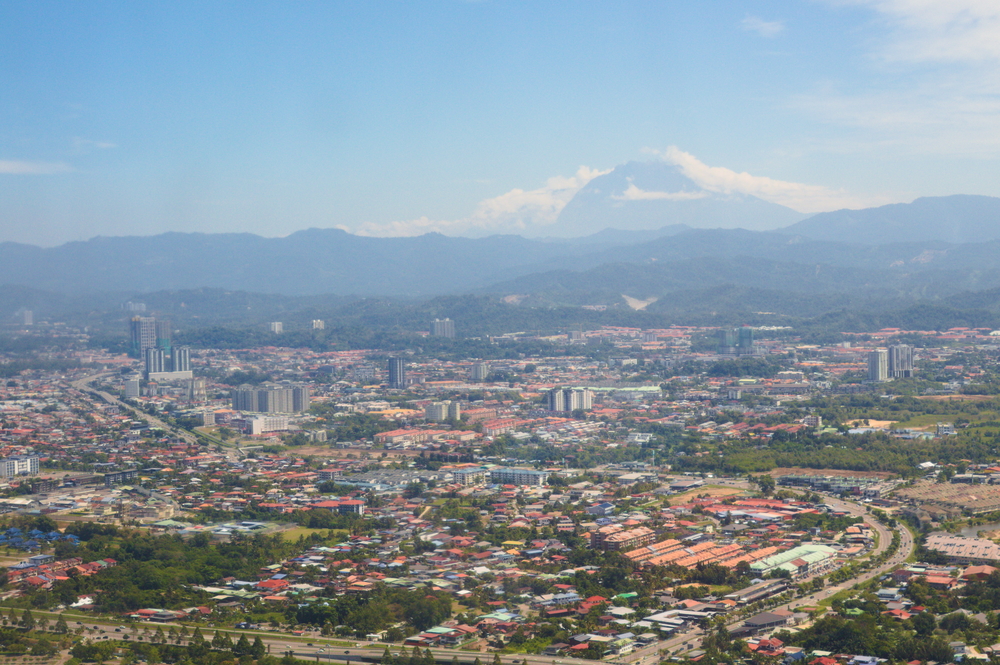
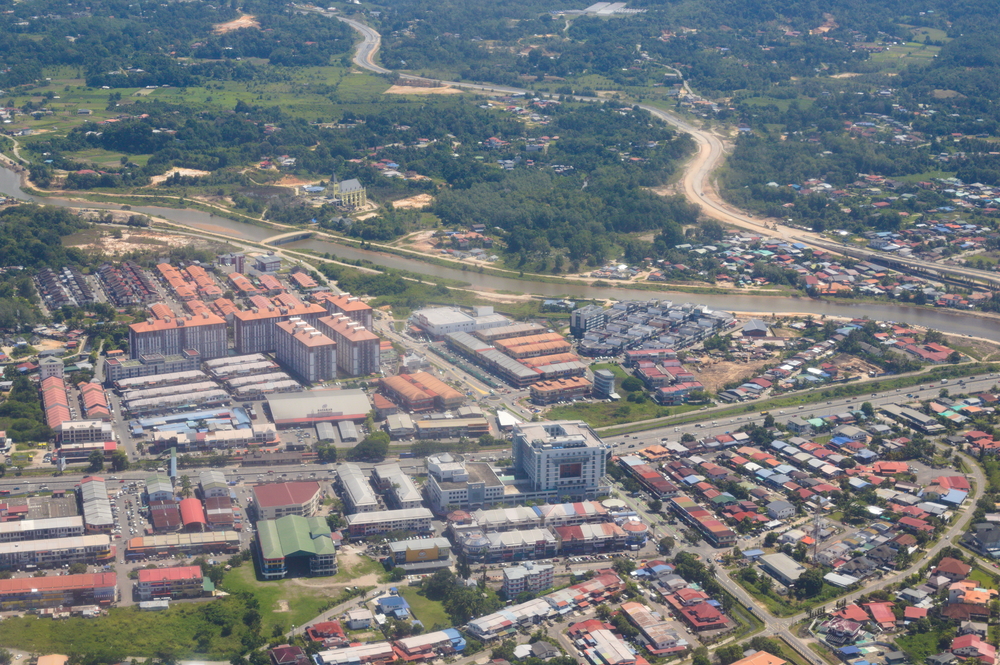
We then hugged the coast as we flew further southwest past Kinarut and Melinsung, and the view transitioned to towns amidst agricultural green, like Papar.
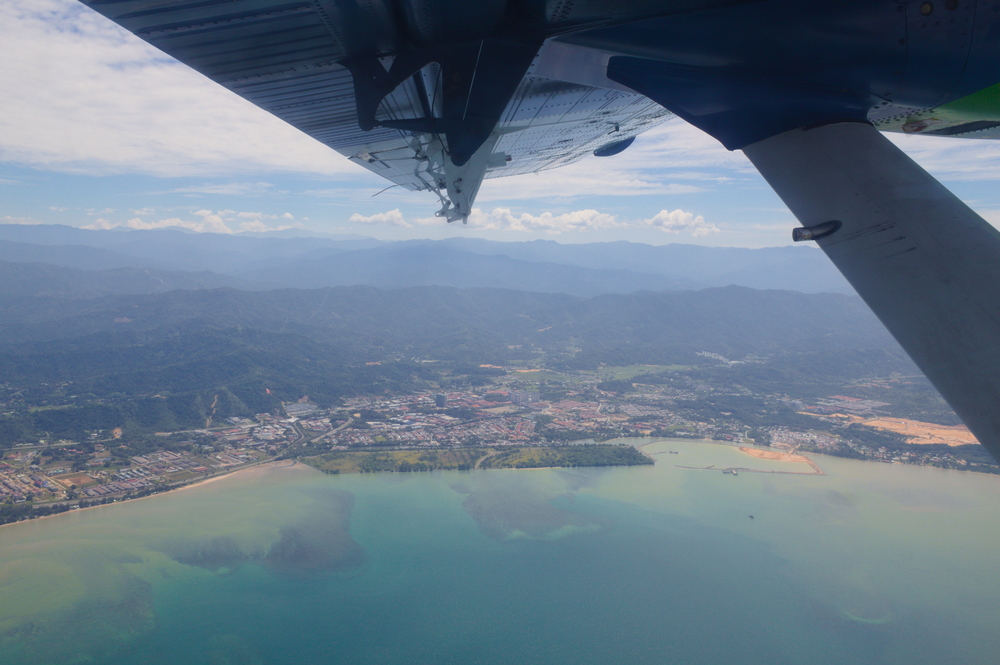
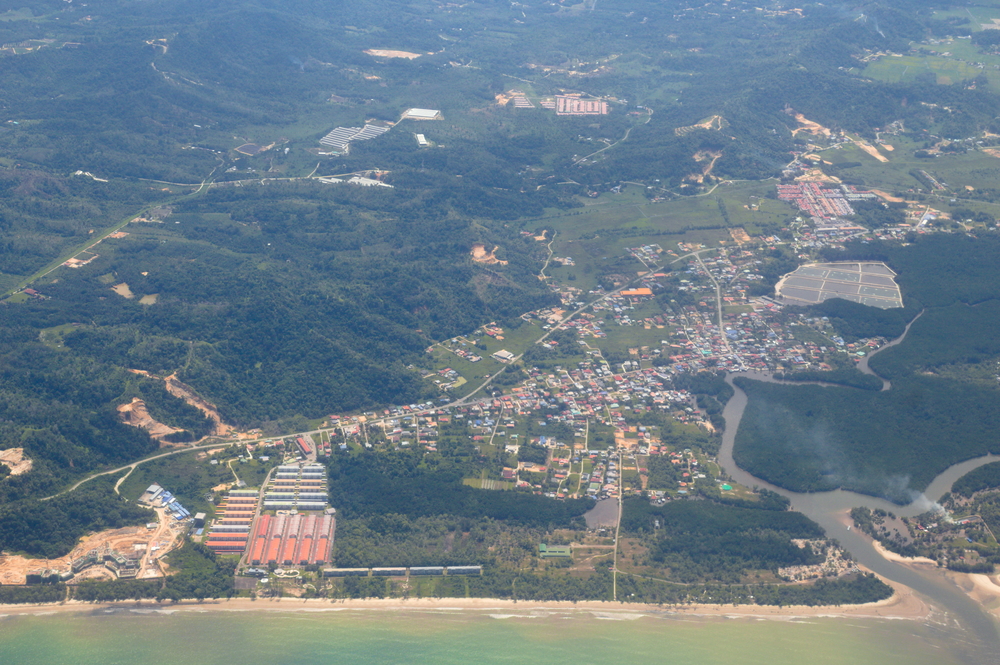
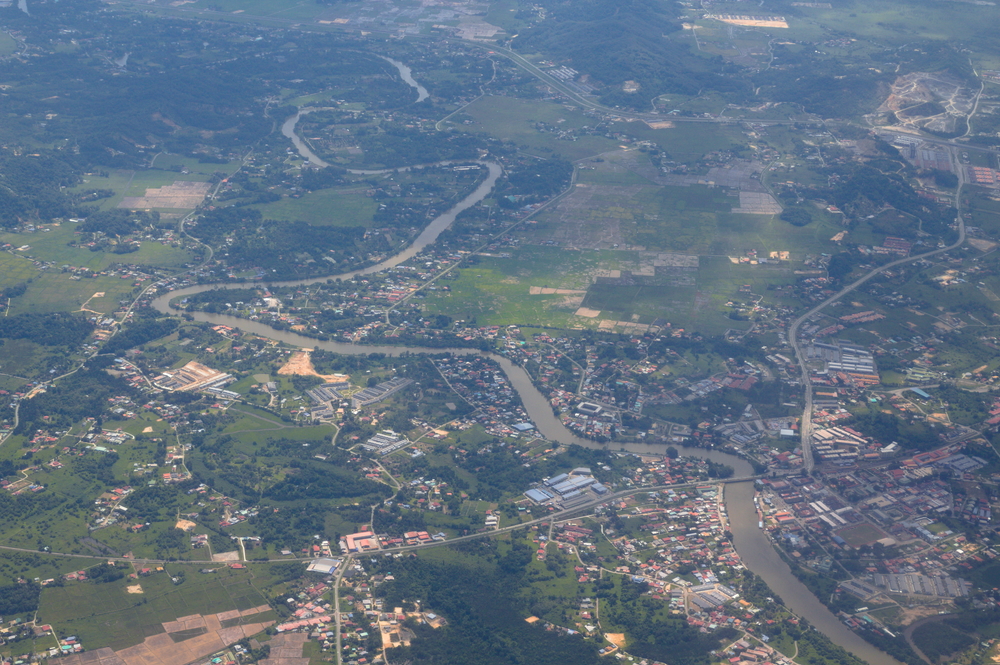
Continuing our cruise southwards, we buzzed over the waters of Kimanis Bay and made landfall over Membakut with the sight of beaches and the green of the Binsulok Forest Reserve; Further down, the town of Beaufort came into view with the Padas River snaking through the landscape, while the mountains of the Crocker Range loomed silently in the background.
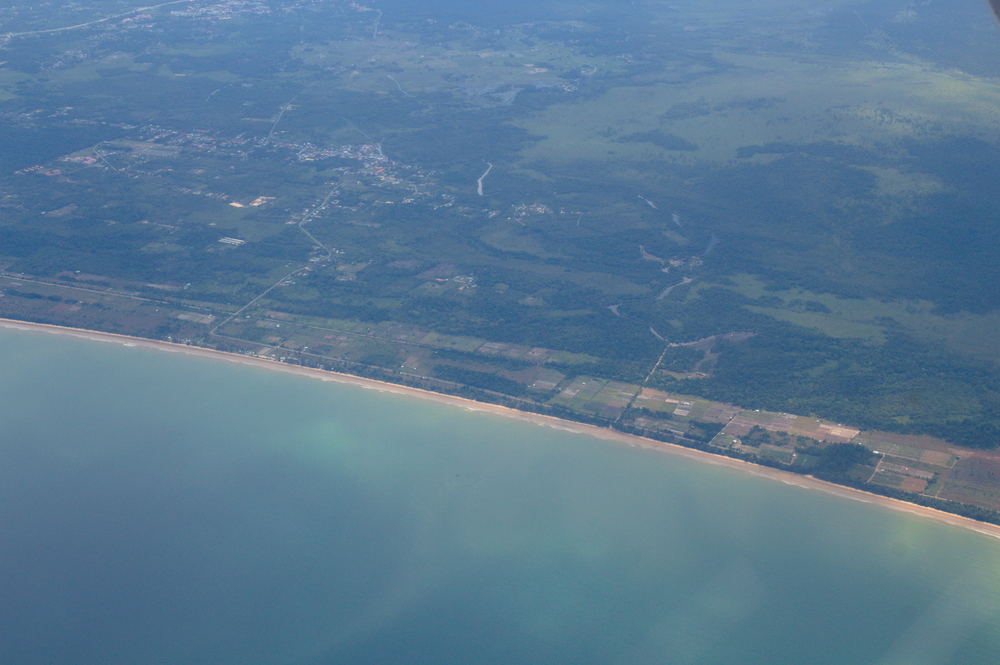
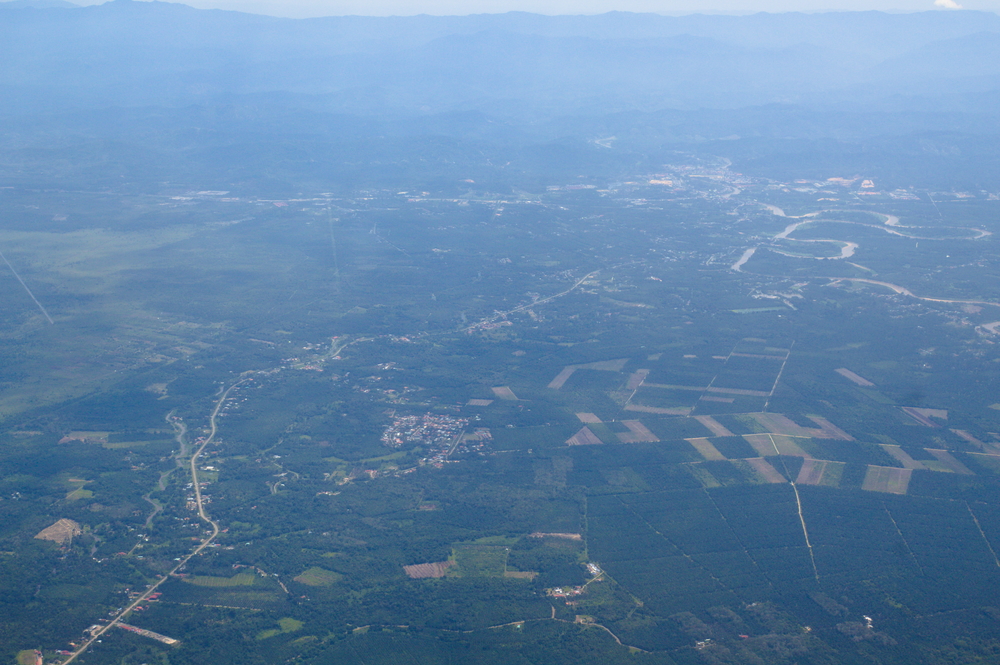
Our aircraft then overflew the thick green of the Menumbok Forest Reserve and crossed into Sarawak over the Brunei Bay.
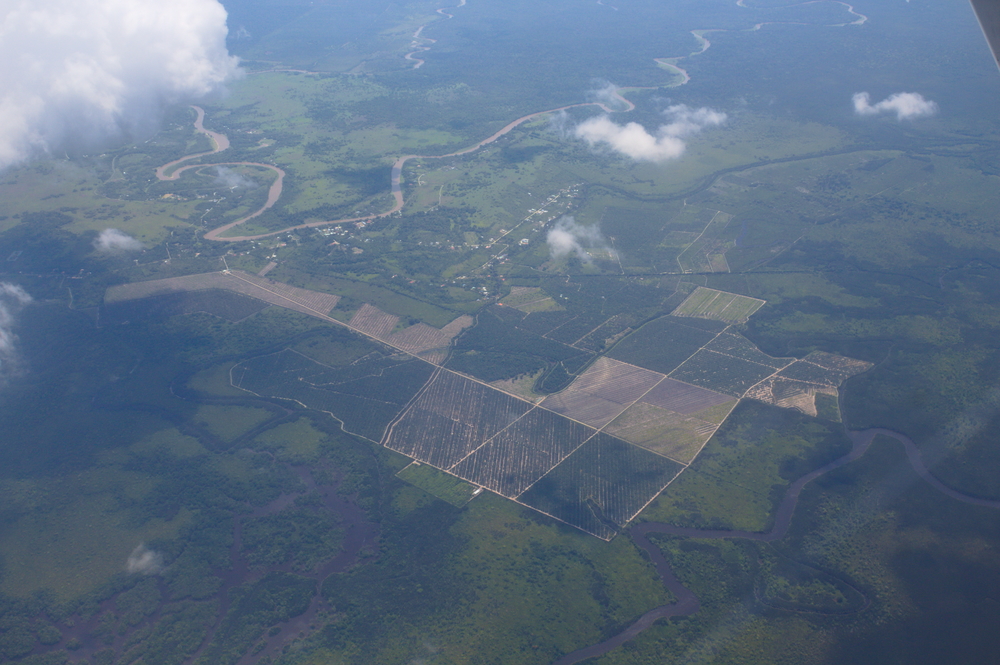
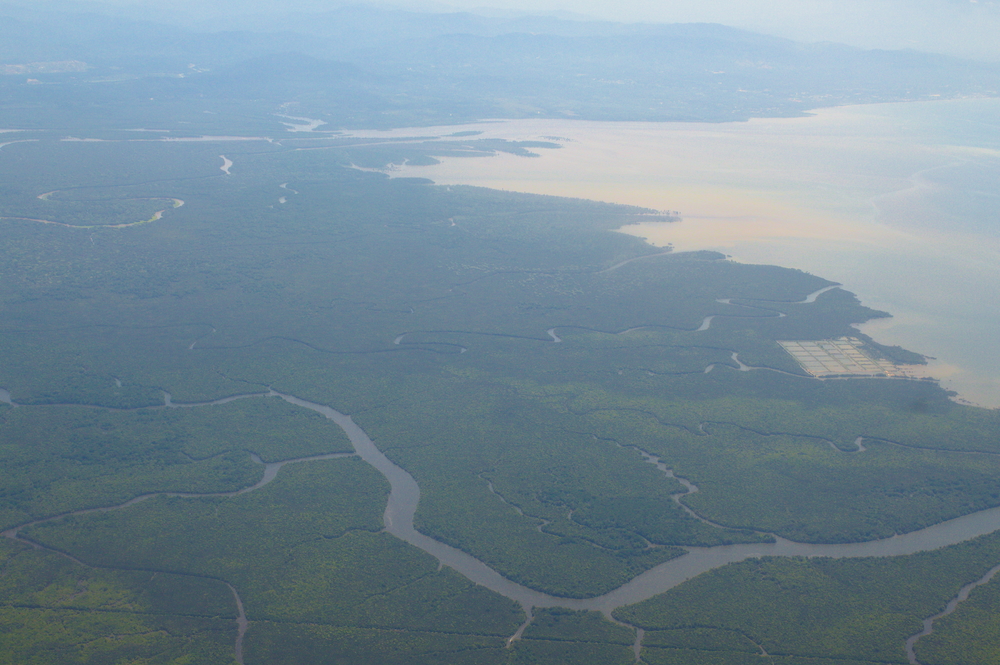
We briefly left the confines of Malaysia and entered the domains of Brunei on the sparsely populated Temburong side. Here, the Malaysian plantations stopped at the border and the jungles grew lusher – Brunei had left their jungles mostly untouched.
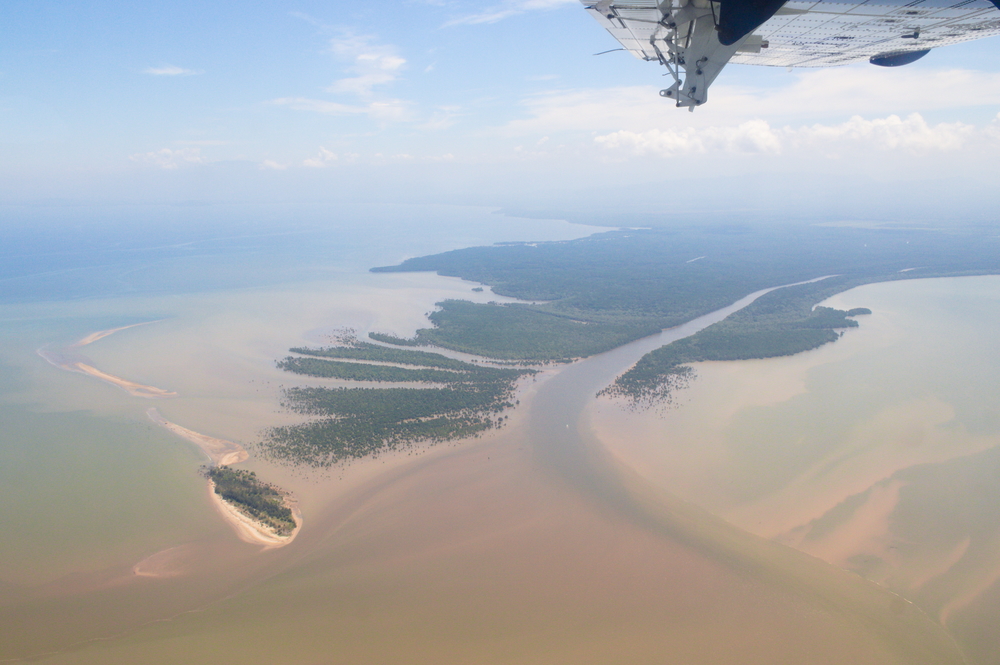
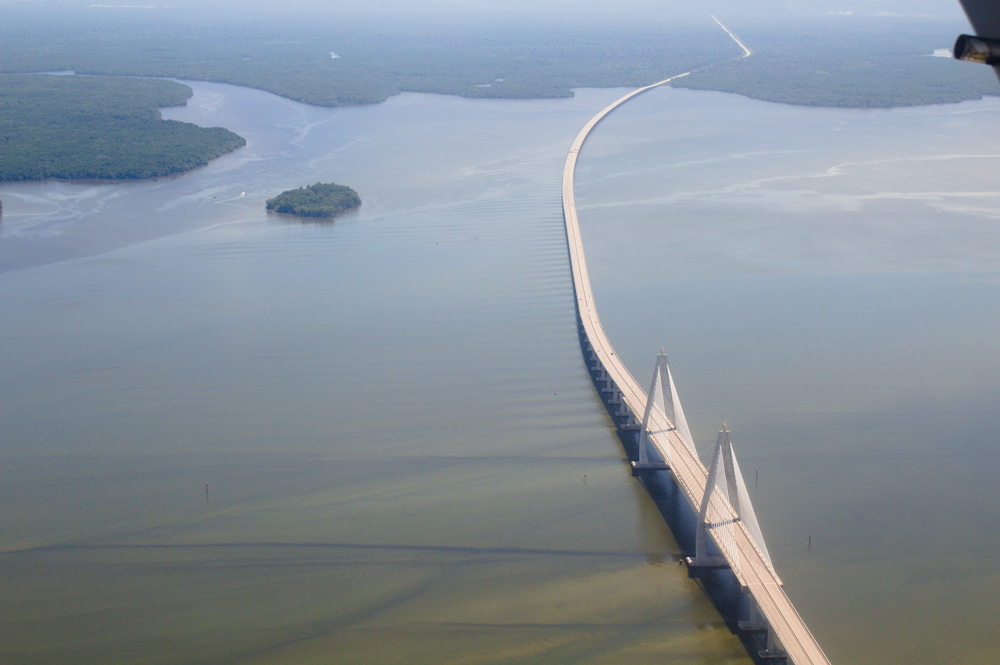
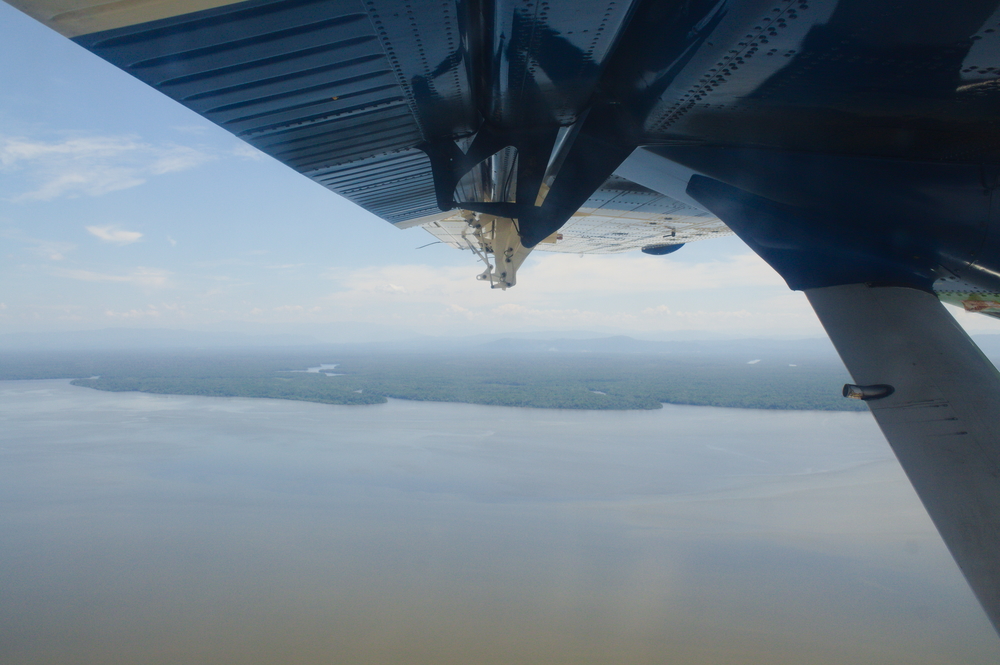
As is the norm with Twin Otter flights, our descent started with a noticeable nose-down attitude. Unlike on my previous time onboard to Marudi, the First Officer came on the speakers to announce our imminent arrival in Limbang and to thank us for flying with the airline. It was a very nice touch, and that was also how I learnt the Twin Otter was equipped with cabin speakers!
Transit at Limbang (LMN)
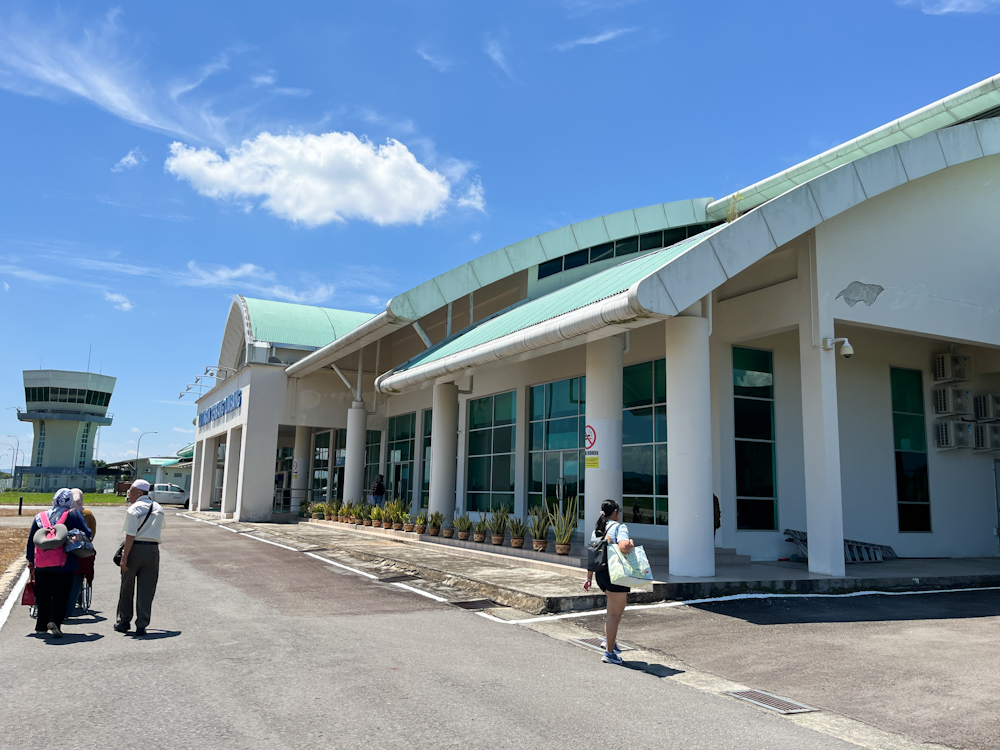
Touchdown at Limbang was firm with a short rollout, again courtesy of the Twin Otter’s excellent STOL capabilities. With Limbang being a small airport, we were on stand and out of the aircraft within 3 minutes of wheels on the ground.
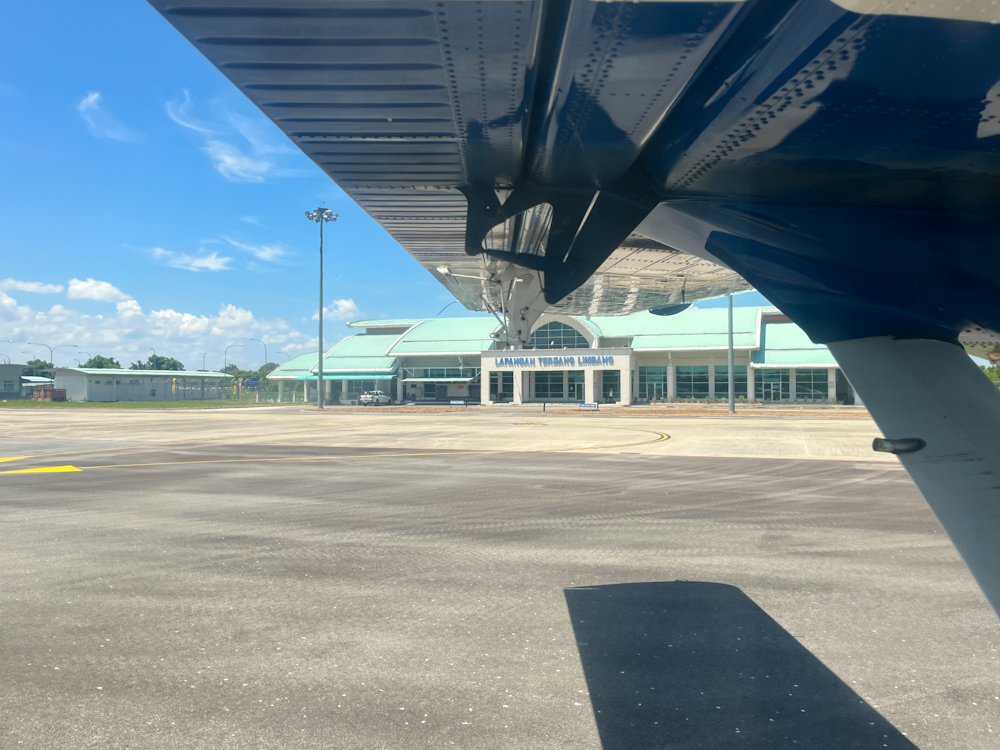
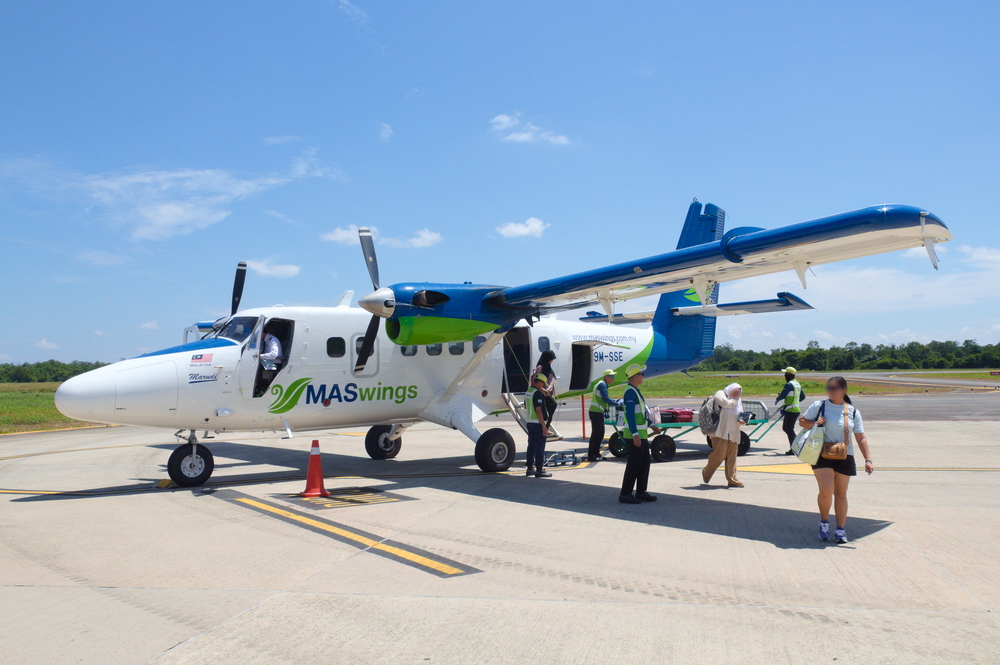
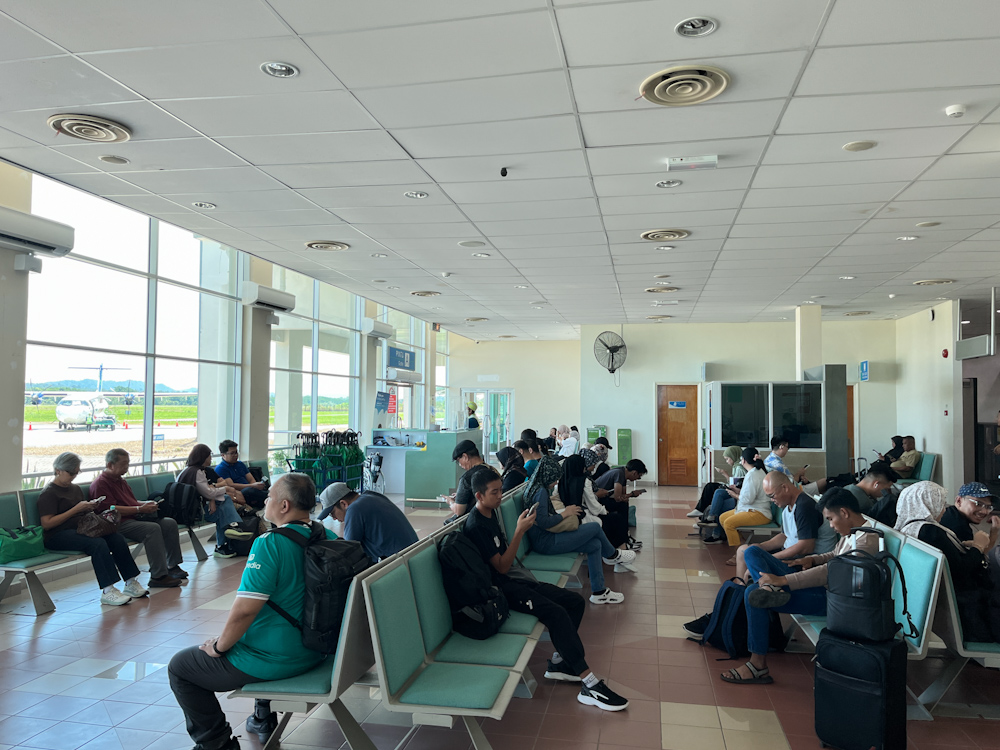
A small immigration area is present at LMN before the luggage belts, where we all had our passports stamped for entry into Sarawak. Limbang is clearly used to handling cross-border passengers, but not quite fully setup for transit either – Those of us on the flight to Kuching were led back out of the door to the tarmac and asked to access the small gate holding area from the outside.
MASwings ATR 72-500 (Limbang to Kuching)
Boarding for my onward flight to Kuching was called 10 minutes before the scheduled departure time. Ground staff enforced priority lines for Enrich members, and then boarding by rows began. ATR operations at MASwings were clearly very MH-coded. Taking us to Kuching today was 9M-MWC, bearing the special flag inspired Negaraku livery. Whiskey-Charlie was named “Sandakan” after the Sabahan town but now sported the Sarawak state arms at the front in what seemed to be a nod to the airline’s new owners.
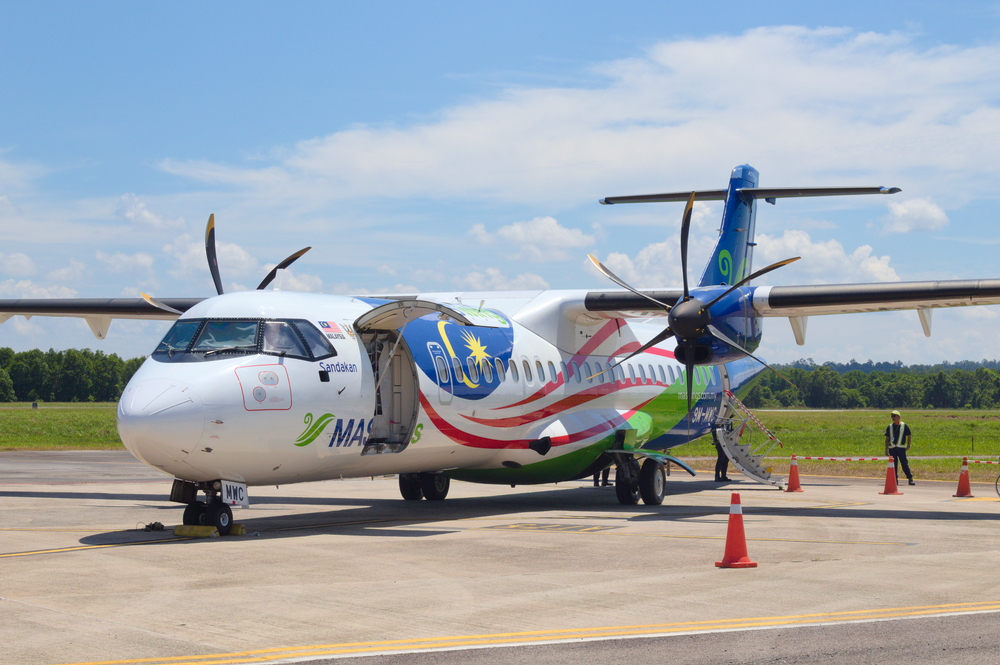
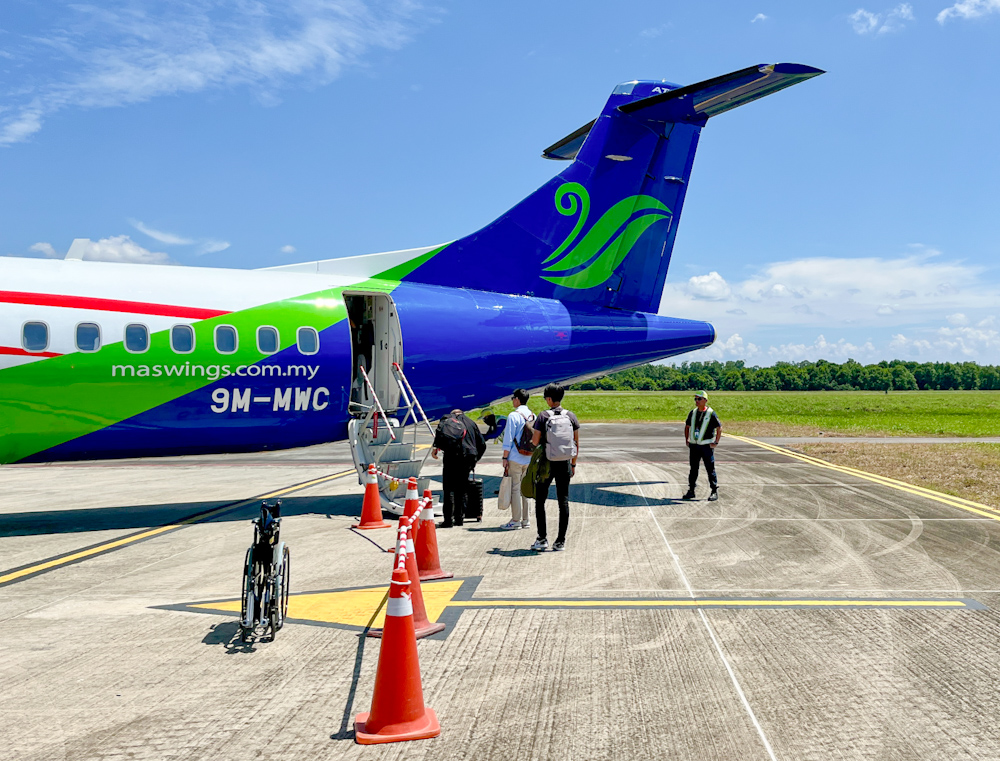
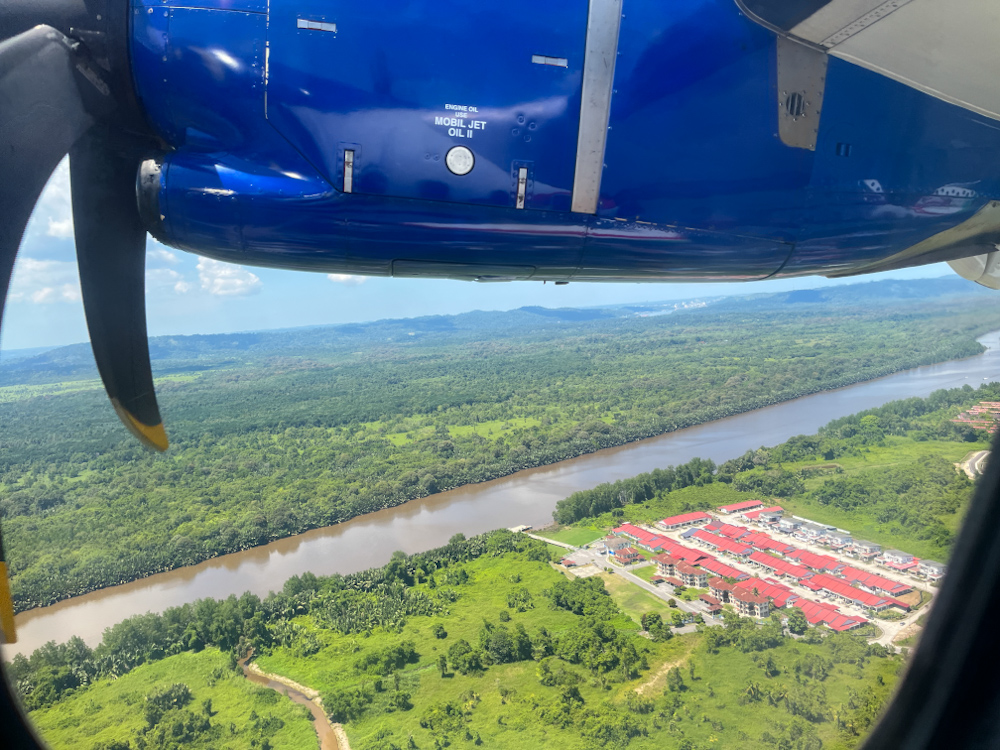
Boarding was completed within 15 minutes, and the doors were closed for departure. It was to be a full, very slightly delayed departure to Kuching. The ATR 72 itself has excellent short field performance, and we were treated to Whiskey-Charlie rocketing out of runway 22 and over the Limbang River.
En Route to Kuching
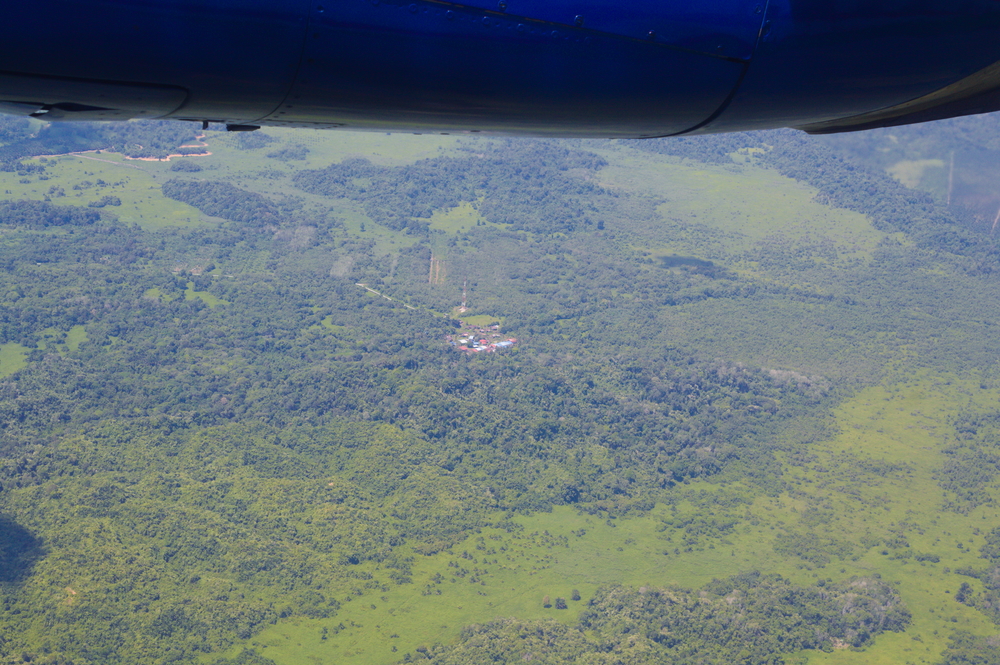
The weather had remained unchanged since I left Kota Kinabalu in the morning, making it a sunny, cloudless flight onwards down to Kuching. The ATR flies at a higher altitude than the Twin Otter, giving passengers a higher vantage point of the ground down below.
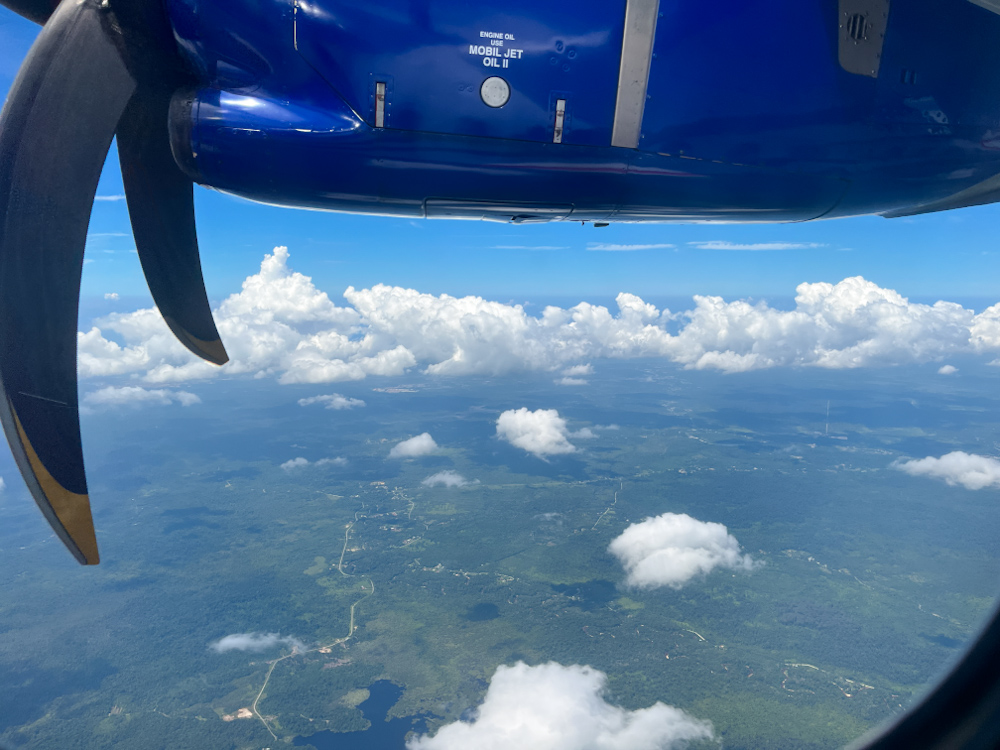
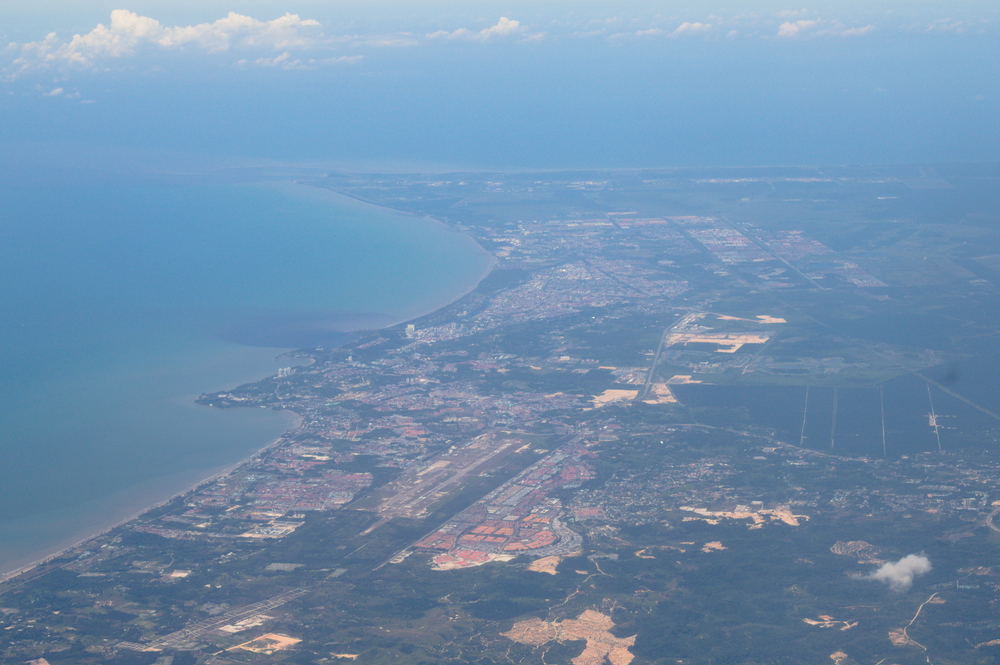
It was harder to glimpse the minute detail of the Sarawakian greenery from 29,000 feet in the air, but the winding roads to rural settlements were still visible as they snaked their way through the vegetation; Bigger settlements were even more recognisable – our route took us over the town of Miri just south of the airport.
Onboard MASwings’ ATR 72
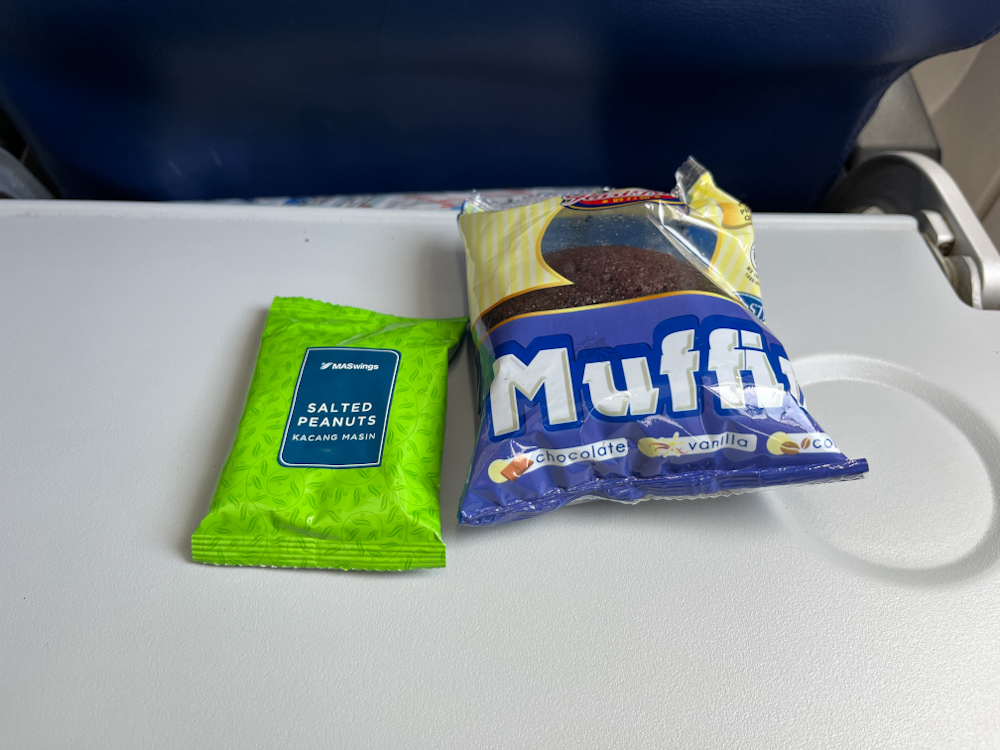
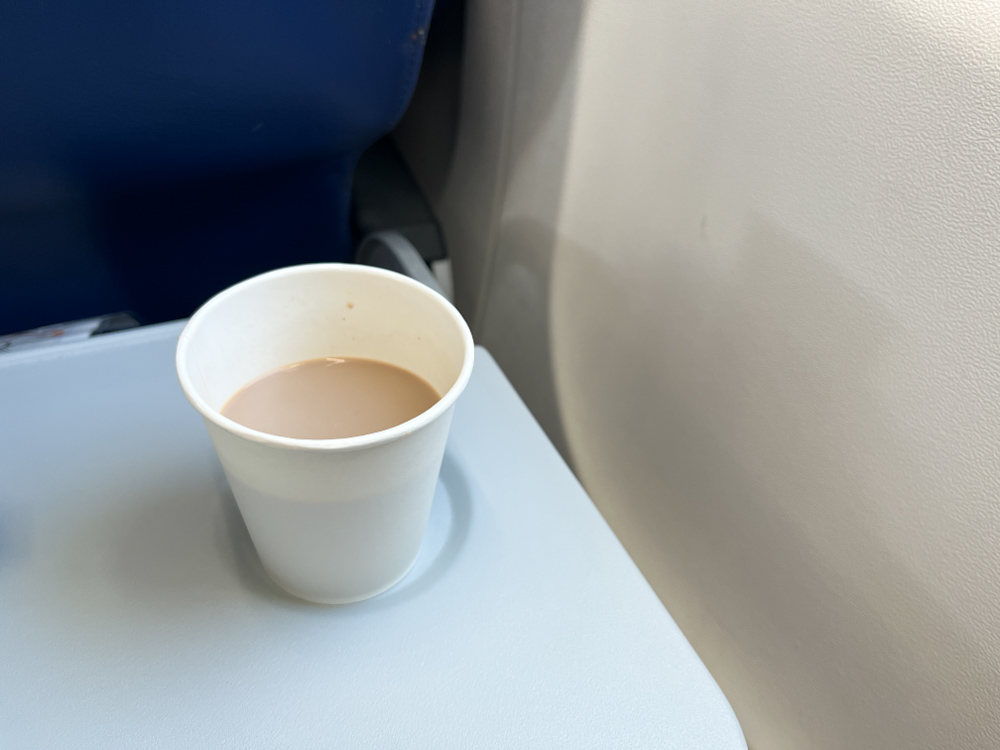
The flight attendants started the snack service some 10 minutes after takeoff. Each passenger received a pack of salted peanuts, a muffin, and a choice of drink (I opted for the Milo). This is similar to the catering on sister airline Firefly. Reviews online indicate that MASwings also served sandwiches on longer routes from time to time. This means that a small regional airline in Malaysia had better inflight service than some airlines on intra-Europe routes!
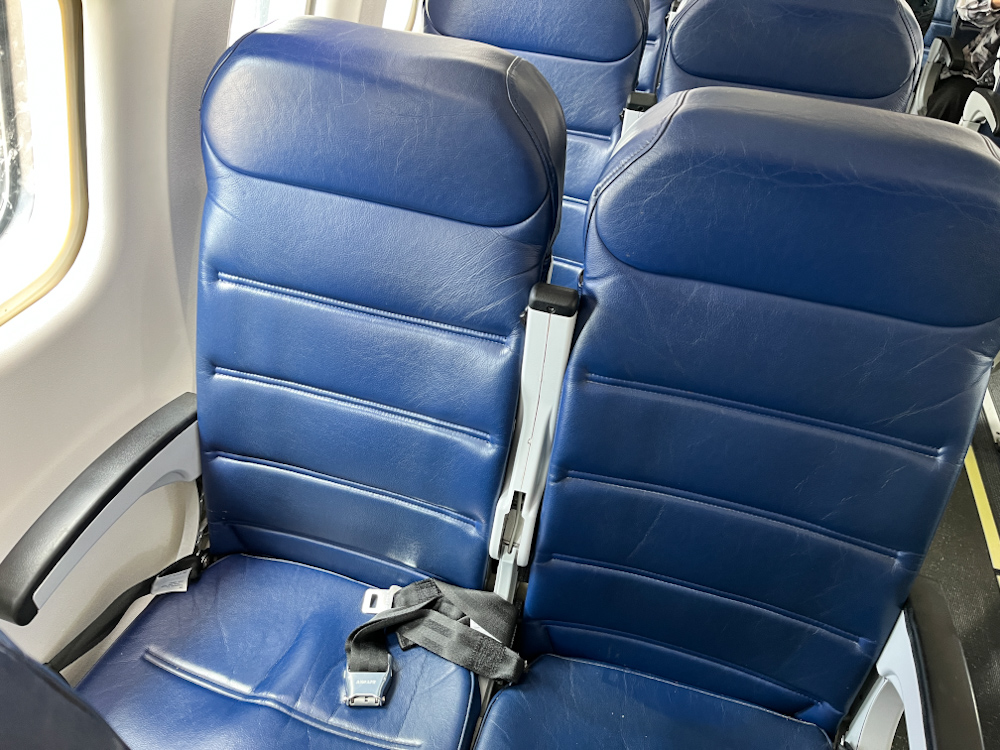
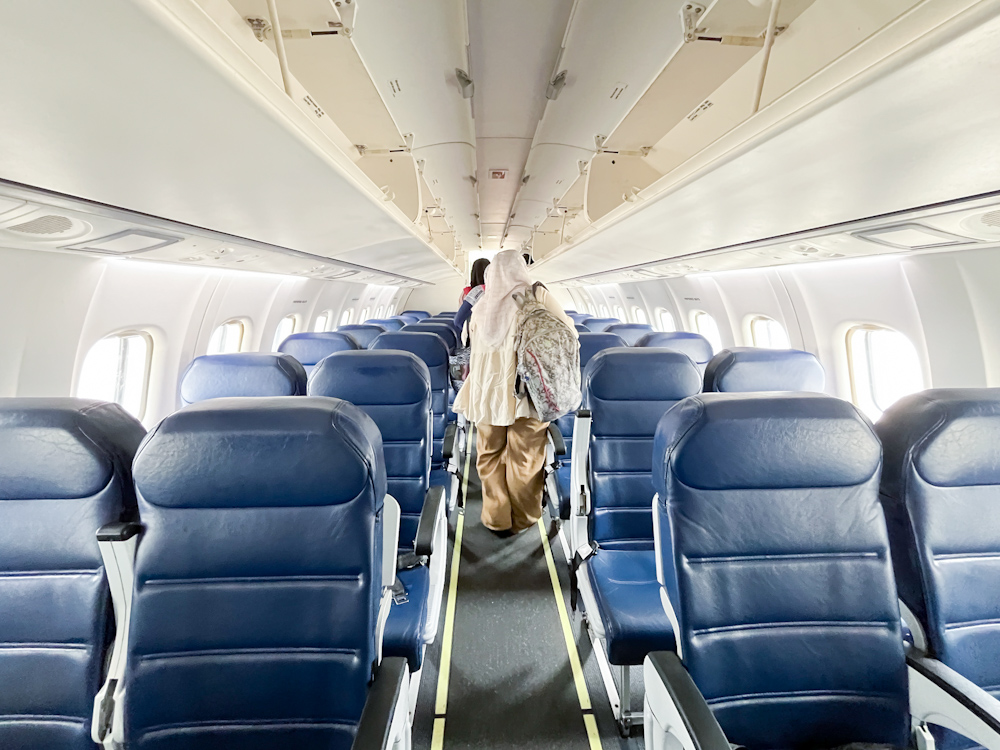
There are 68 seats onboard MASwings’ ATR 72s in a standard 2-2 layout. Seat pitch is adequate at 30 inches, given that MASwings flew exclusively short to medium haul domestic routes. There isn’t Business Class onboard, but the rear 4 or 5 rows of seats closest to the door were sold with an upcharge.
Arrival into Kuching International Airport (KCH)
The rest of the flight went by smoothly, and I took the time to catch up on some reading and light sleep. Before I knew it, we were already most of the way into our straight-in approach into KCH’s runway 25. It was an equally clear day in Kuching and we had a great view of the urban sprawl as we came in for a firm touchdown 1 minute earlier than scheduled.
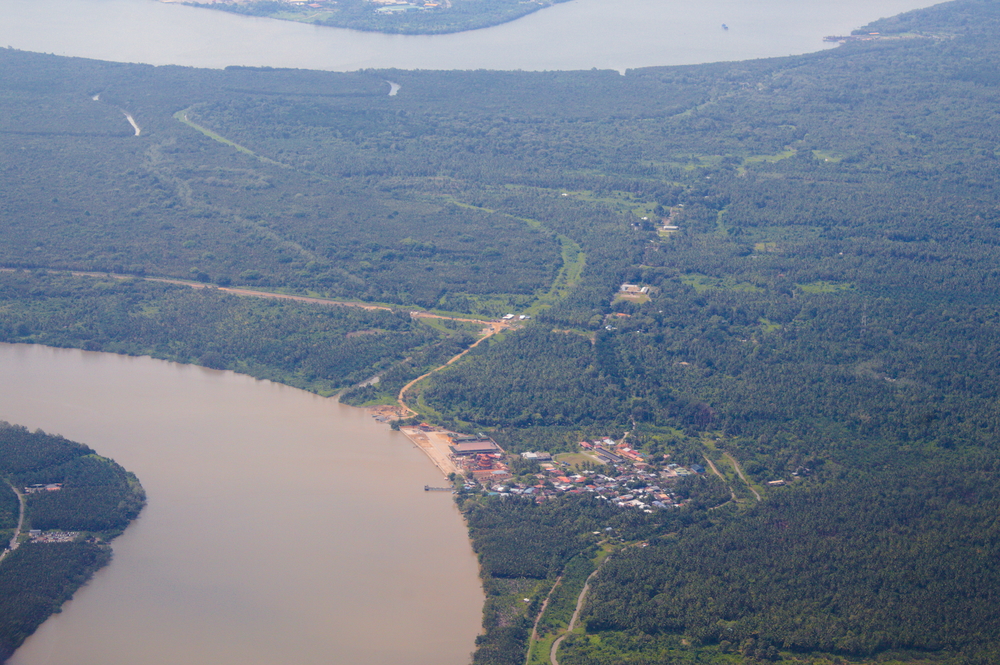
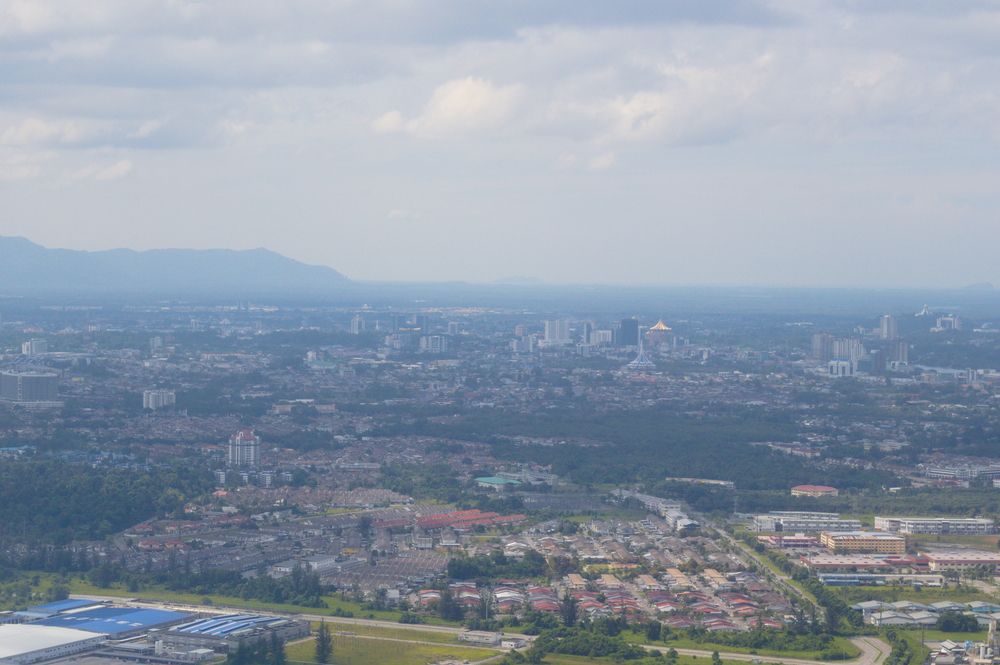
We briskly exited the runway and made the short taxi to KCH’s remote bays at the tip of the pier. I made my way down the ATR’s stairs and took the chance to admire MASwings’ blue-green livery one more time.
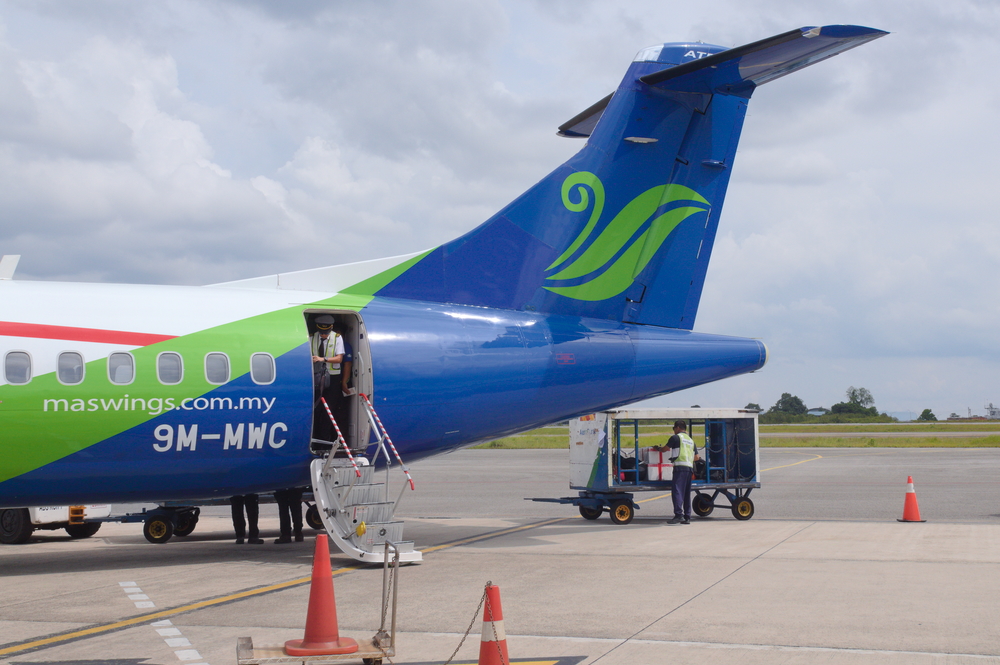
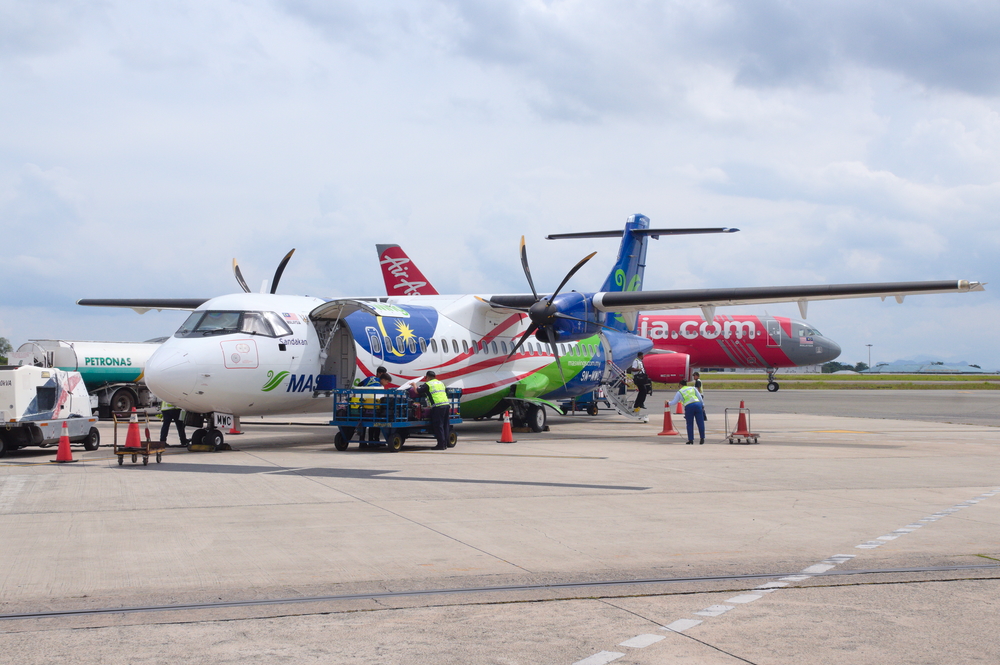
I was hoping to take my time with the walk to the baggage claim, but the sunny skies then gave way to a light drizzle and I figured I was better off sheltered in the terminal.
Final Thoughts
I had wanted to experience flying on MASwings for the longest time, and my second flight with them ended up being my last. I’ve flown on airlines that no longer exist, but this wasn’t the same. With Sarawak’s aspirations for AirBorneo in mind, this is an airline evolving into something bigger, and not the fading away of 18 years of local aviation history.
I’m hopeful AirBorneo succeeds, and of course, I’ll be happy to feature them on this blog.