
The Tze-Chiang Limited Express 自强號 is a class of intercity express trains in Taiwan, offering the mainline rail network’s fastest travel options across major cities. The service class is split further into different categories, featuring both the “normal” Tze-Chiang services and named express trains that offer slightly faster speeds.
One of the named express trains is the Tze-Chiang Limited Express 3000 (also branded as Xin Tze-Chiang 新自强號), with services operated by Taiwan Railways’ new TEMU 3000 electric trainsets. These are the newest additions to the Taiwan Railways fleet and are intended to replace older push-pull trainsets on the Tze-Chiang service.
I opted to travel on Taiwan Railways from Taipei to Taichung on a recent trip to Taiwan, and it so happened that a Tze-Chiang Limited Express 3000 service had the perfect timing for my plans. To keep things simple, I’ll refer to the service in shorthand as the “Tze-Chiang 3000”.
Buying my tickets
I bought my tickets on the official Taiwan Railways website for a total of TWD 375 per person. A booking confirmation is issued after payment, and you’ll then have to use the generated booking number or QR code to collect your tickets at a Taiwan Railways ticket counter or ticket machine. I collected mine at a ticket machine in Taipei Main Station the day before my trip, which saved a lot of time on the day of travel.
Taiwanese websites are apparently not known for being user friendly, but I found the Taiwan Railways website to be quite usable. Both English and Mandarin are available language options, and booking confirmations are issued in your chosen display language. I did my own research on the buying process beforehand, and I was also helped by Nick Kembel’s post on his website covering the ticket purchase process.
Departure from Taipei Main Station 台北車站
Taipei Main Station is Taiwan’s biggest railway hub, and offers connections to virtually every corner of the island. For connections within Taipei, the station complex is connected to the Bannan Line 板南線 and Tamsui-Xinyi Line 淡水信義線 on the Taipei Metro network.
The station has a sprawling underground multi-level transfer corridor, allowing for easy transfer between the Metro and Taiwan Railways services. It’s a seamless journey, as travellers won’t have to pass through the station’s main hall to get to their trains.
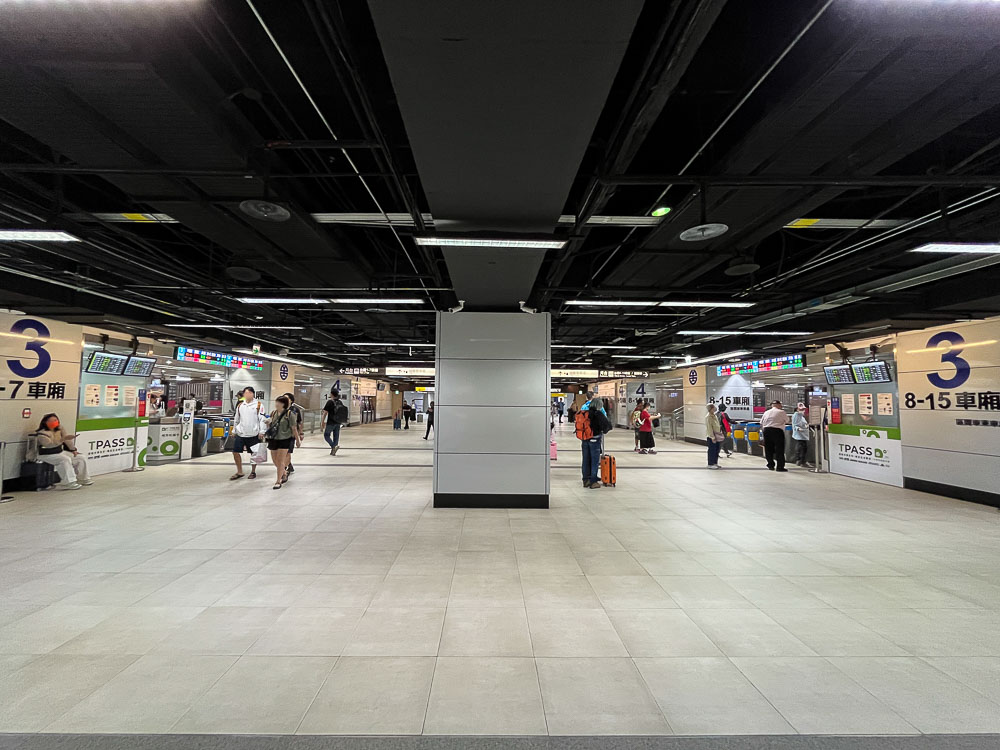
I liked the wayfinding put in place by Taiwan Railways – train car numbers were marked out on the platform, and there were guides denoting waiting areas for different train services. This is needed because Taiwan Railways operates a diverse range of trains on its services, each with different lengths sharing the same station platforms.
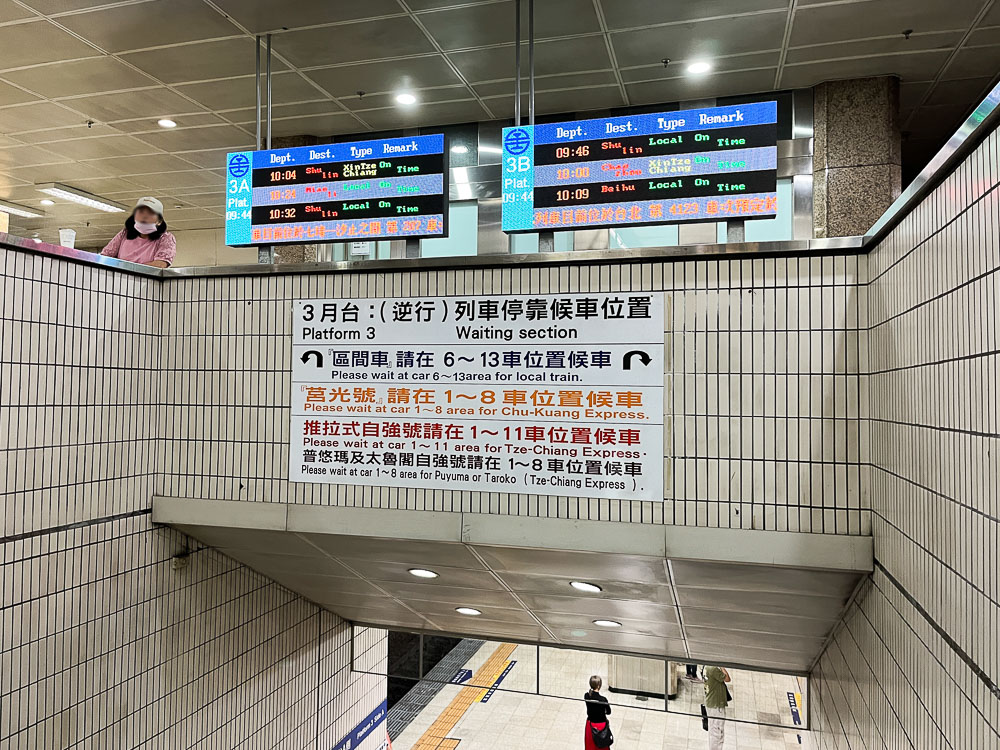
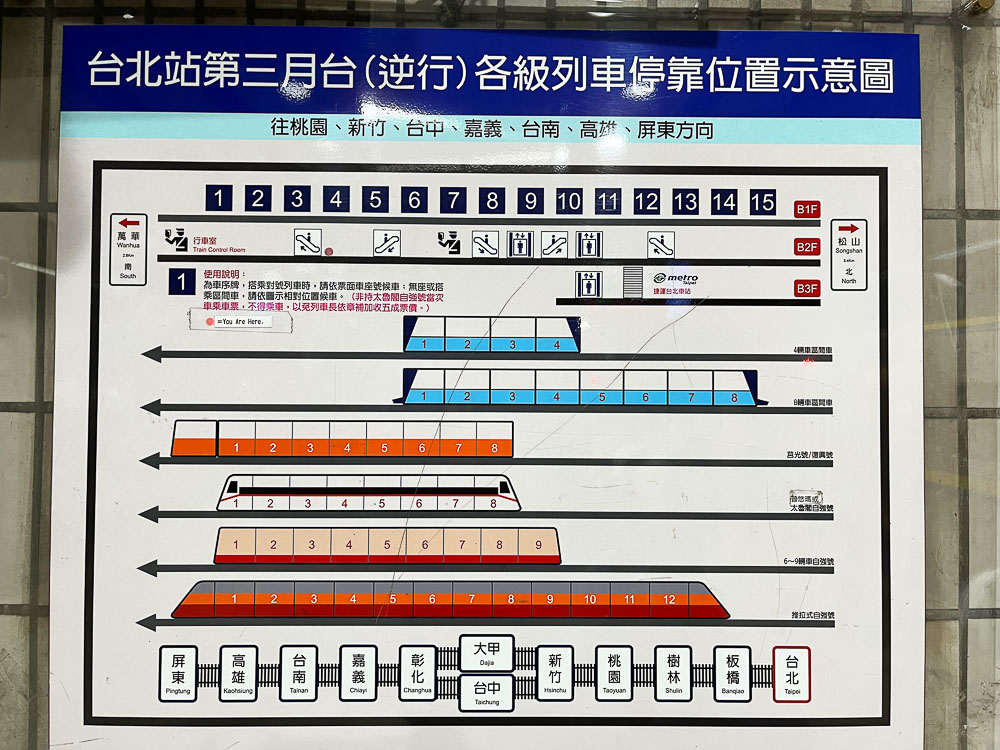
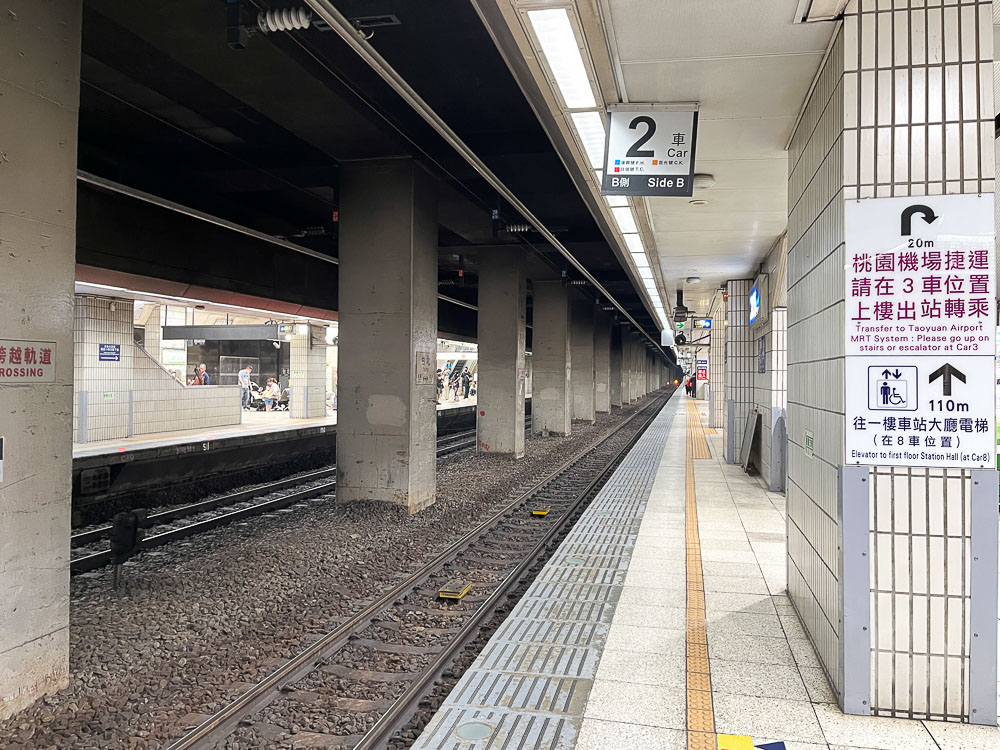
My train pulled in at 09:54am with 6 minutes of boarding time allocated. Boarding proceeded smoothly and was completed within the full 6 minutes, allowing for an on time departure at 10:00am sharp. Very impressive!
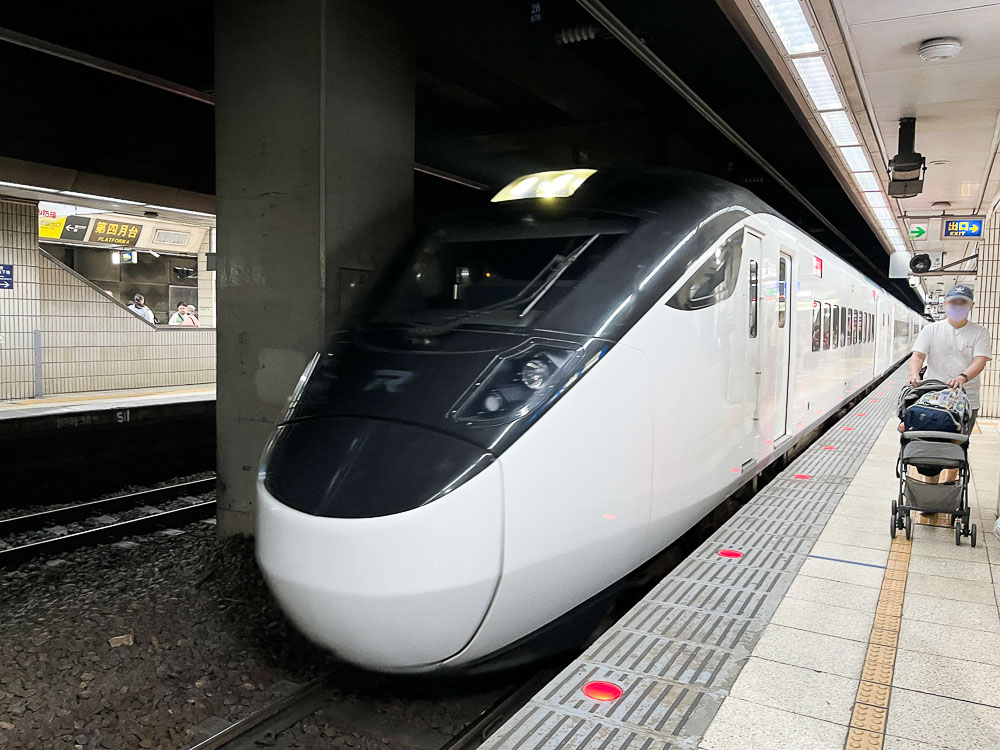
Onboard Cabin & Amenities
The TEMU 3000 trainsets run in a 12-car formation with a total of 538 seats onboard. A 2-class configuration is offered onboard with Business Class 騰雲座艙 fitted in car 6, and Standard Class 一般車廂 in the remaining 11 train cars.
Tze-Chiang 3000 Standard Class cabin
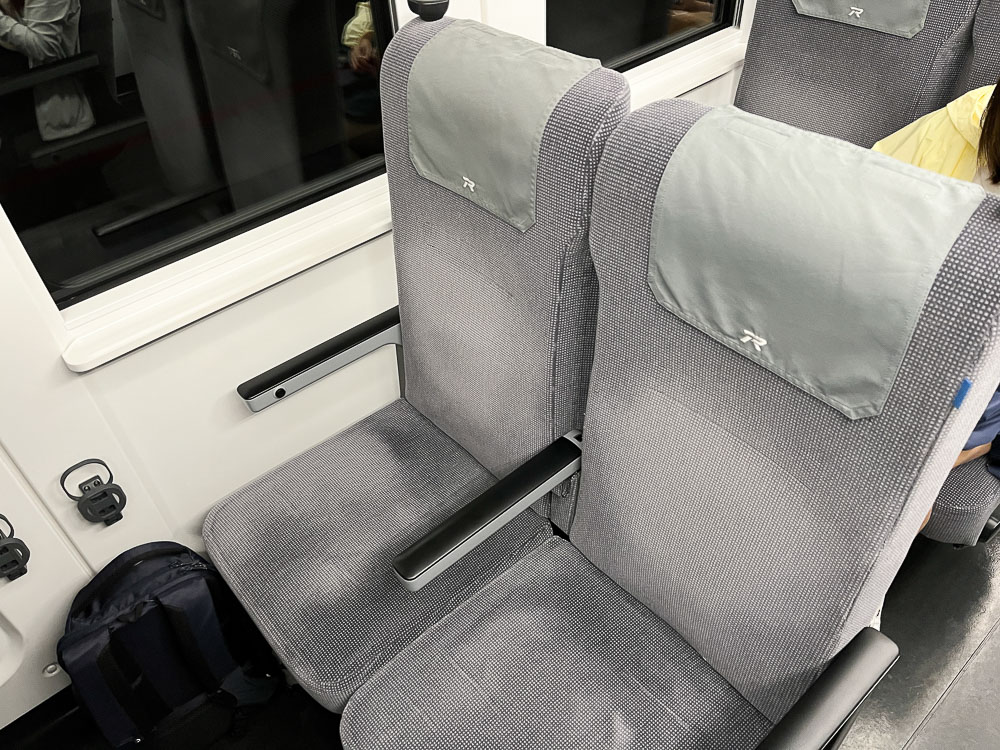
The Standard Class seats are fitted in a regular 2-2 layout. Most Standard Class cars in the Tze-Chiang 3000 formation have between 40 to 52 seats, making for an average of 10 to 13 rows per car.

The well padded seats are upholstered in a grey-white textured fabric, which along with the decidedly monochrome colour palette of the walls and flooring gives the cabin clean and minimalist aesthetics. The seats have great legroom, recline, and are generally comfortable.
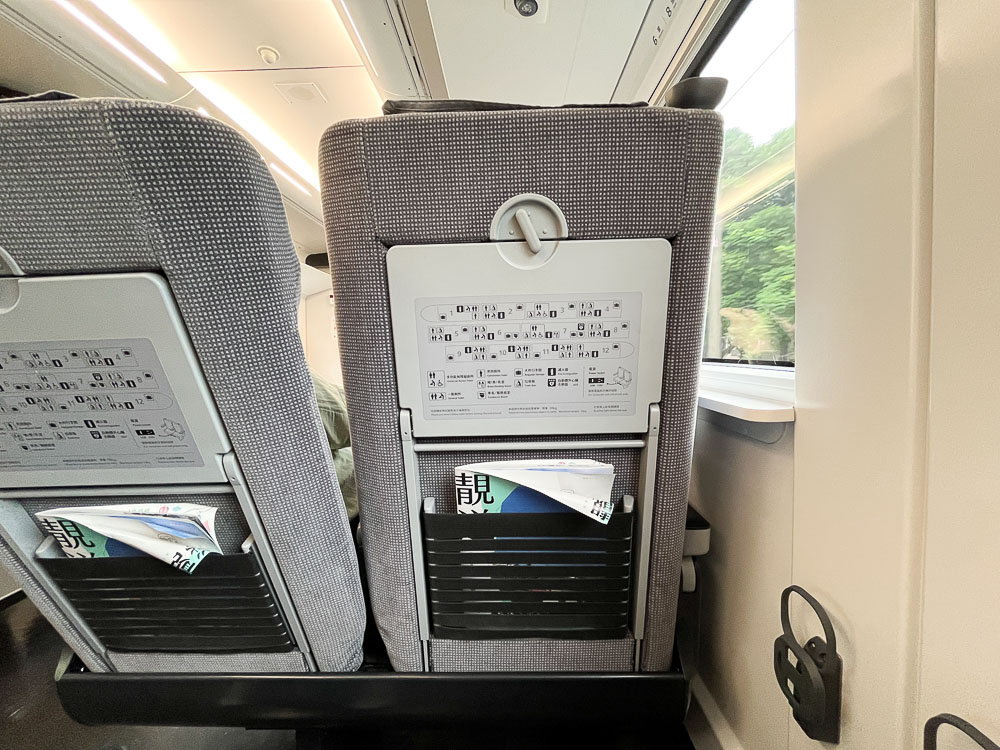
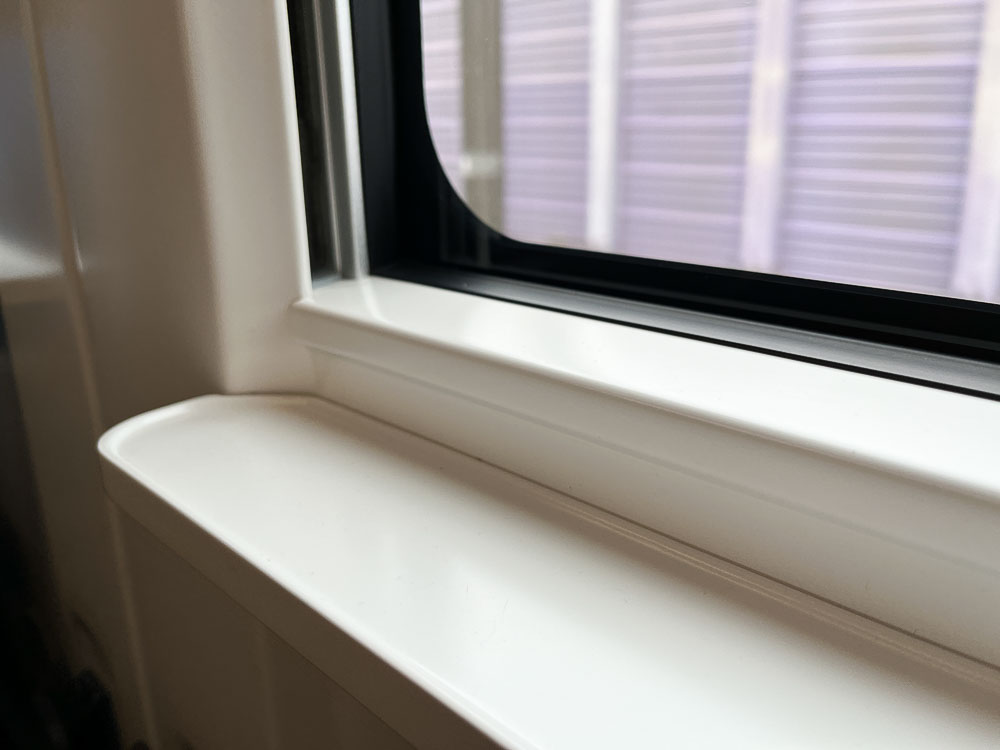
The cabin design also includes a small ledge installed beneath the windows, which turned out to be a good place to rest the elbows. Taiwan Railways also has its own in-house magazine called 靚道 (translatable as “Beautiful Tracks”), which I thought was really cool. You don’t really see train operators do this elsewhere.
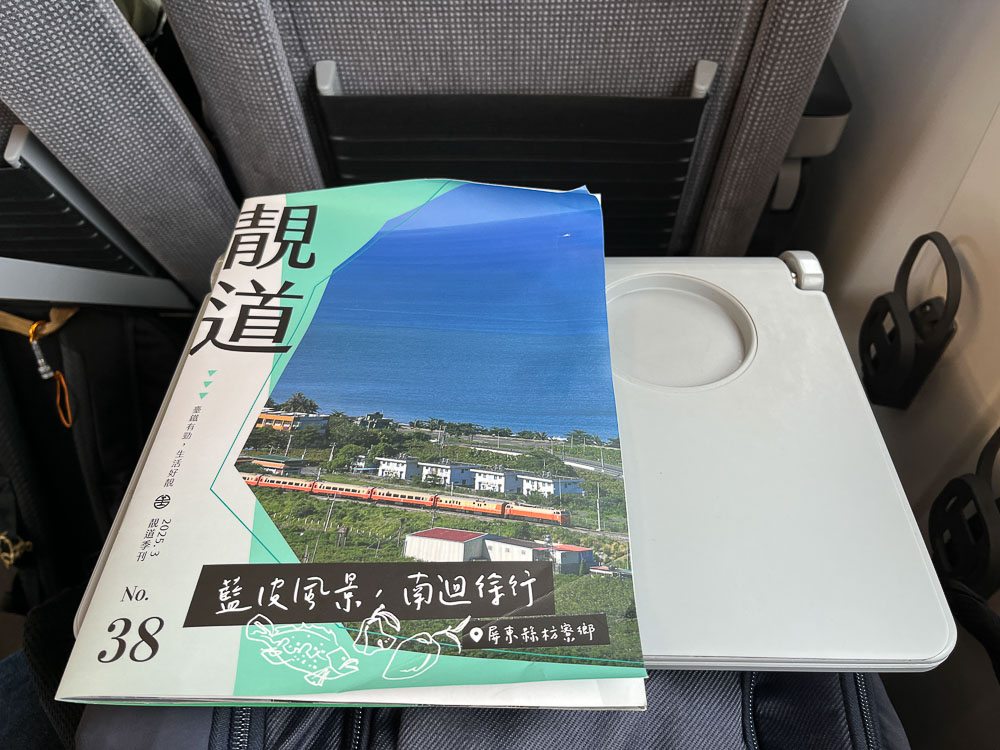
There are still quirks to the whole onboard experience – the seat back is a bit flat, and the seat base is a bit too high for shorter passengers. Each pair of seats have individual cupholders attached to the wall as well, but this means aisle passengers have to reach across their seatmates’ legs to actually use them. Very odd.
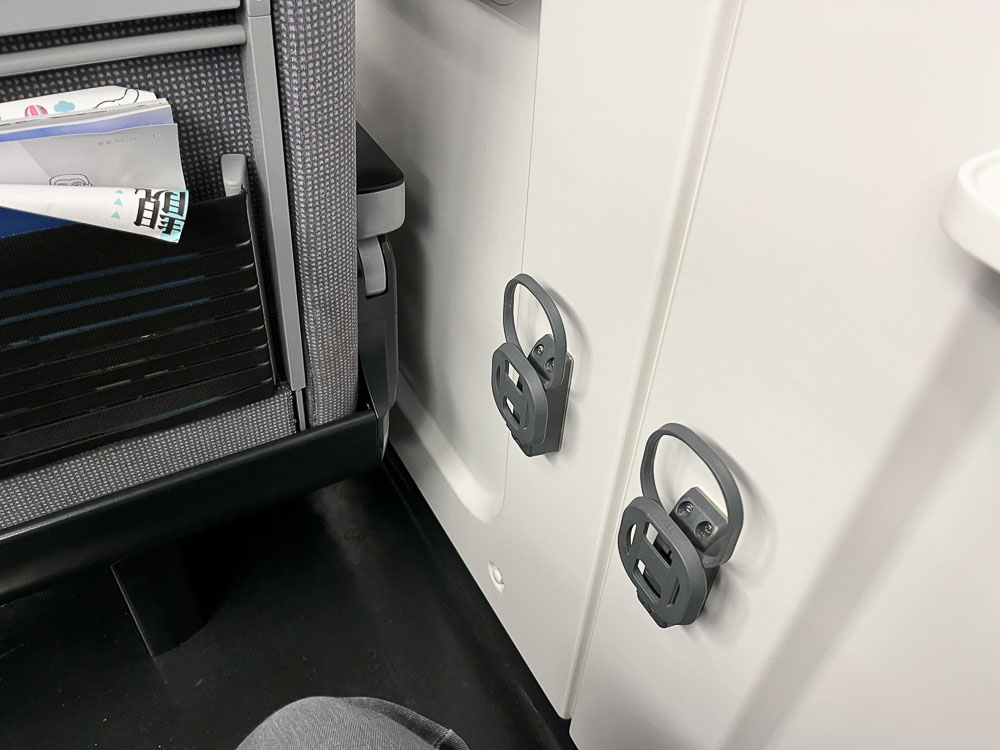
There are also dedicated luggage spaces in each carriage, and overhead racks are available for lighter items. The legroom is also big enough to accommodate a cabin bag, but only if your legs don’t need the extra space.

Onboard Amenities – Toilets
Each train car is generally equipped with a regular toilet and a urinal-only toilet. The sole exceptions are Cars 3 and 7, which have the 2 universal access toilets onboard.

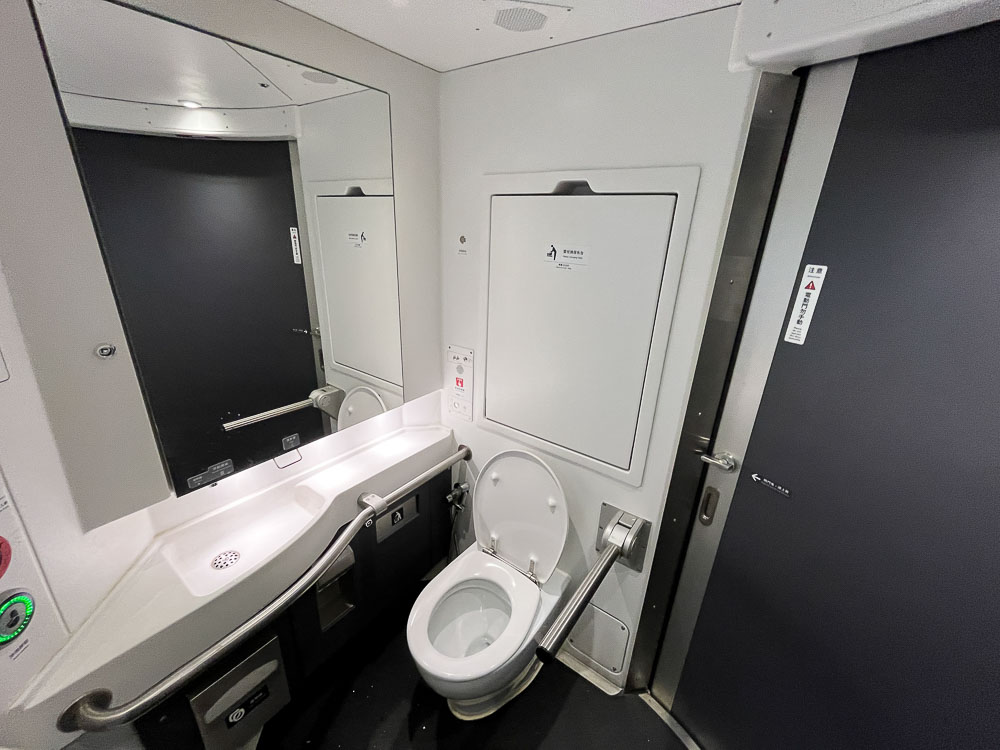
Suffice to say that the universally accessible toilets offer more space and a combination of the regular toilets’ amenities. There is a regular flush toilet, a urinal, a nappy change seat, and grab handles for those needing extra support. Pretty standard stuff, and of course the cabin’s colour scheme is also applied in the toilet.
Onboard Food & Drinks
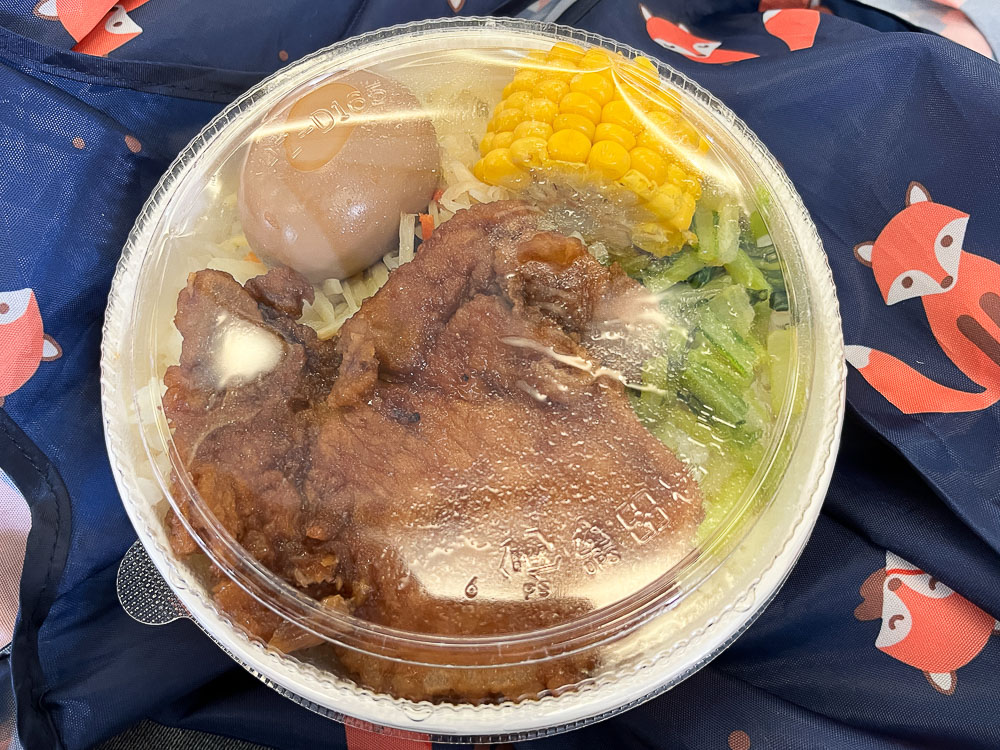
Taiwan Railways is particularly known for their boxed meals (“biàndāng” 便當 but also popularly known via the Japanese term “bento”). Passengers typically can reserve a bento when buying their intercity train ticket, or buy one from one of the many stalls operated by Taiwan Railways across the station network. I didn’t have the option to reserve mine when booking my tickets, and I later noticed that the stalls at Taipei Main Station had opening times that clashed with my train’s departure time – I suspect only departures during the opening hours have bentos catered, but this wasn’t made clear on the website.
Instead, I bought a pork chop bento from Taiwan Railways’ bento shop on arrival at Taichung station. The box contained a balanced combination of rice, pork chop, braised egg, corn, and some vegetables, all for the princely sum of TWD 80. As far as I’m concerned, the bento was tasty and an excellent value for money!
A trolley service was also available onboard this Tze-Chiang 3000 service selling snacks and a selection of drinks. No one in my section bought anything and the attendant practically breezed through with the trolley. There was a Family Mart right next to the platform entrance at Taipei selling hot food and other snacks, which I suppose diminishes the need to buy something from the trolley. Taiwan is convenience mart land after all!
Arrival at Taichung 台中車站
The ride took 1 hour and 49 minutes, and Taiwan Railway’s tight operation meant that we pulled into Taichung’s impressive central station right on time.


Taichung’s current station building was completed in year 2016, replacing the older 1905-built Japanese era building and also elevating the railway tracks across the city. This was an exercise similar to Malaysia’s ongoing EDTP project that yielded the ETS services, and it was almost a preview into what travellers in Malaysia can expect when the upgrades to Johor Bahru are finally completed.
Just a few days after this ride, I took the Taiwan High Speed Rail back northwards to Taoyuan to catch my flight home. That ticket cost more than the “regular” trains like the Tze-Chiang 3000, but having tried both to and from Taichung, I’d say that Taiwan Railways’ slower trains are perfectly sufficient if you’re not in a hurry. With high speed trains, the time savings naturally come with a premium.
Final Thoughts
The Tze-Chiang 3000 offered a comfortable ride to Taichung and a glimpse into the future of passenger experience onboard Taiwan Railways services. I did enjoy the efficient and punctual operations, and the clean, minimalist interior design seemed almost like an extension of that ethos.
If there was anything I wasn’t quite happy about, it would be that I wished that Taiwan Railways’ website was more upfront about why the bentos weren’t available for booking on my train, but this was really inconsequential. I was generally quite happy with my introduction to Taiwan Railways’ intercity services, and I do look forward to travelling with them again.