
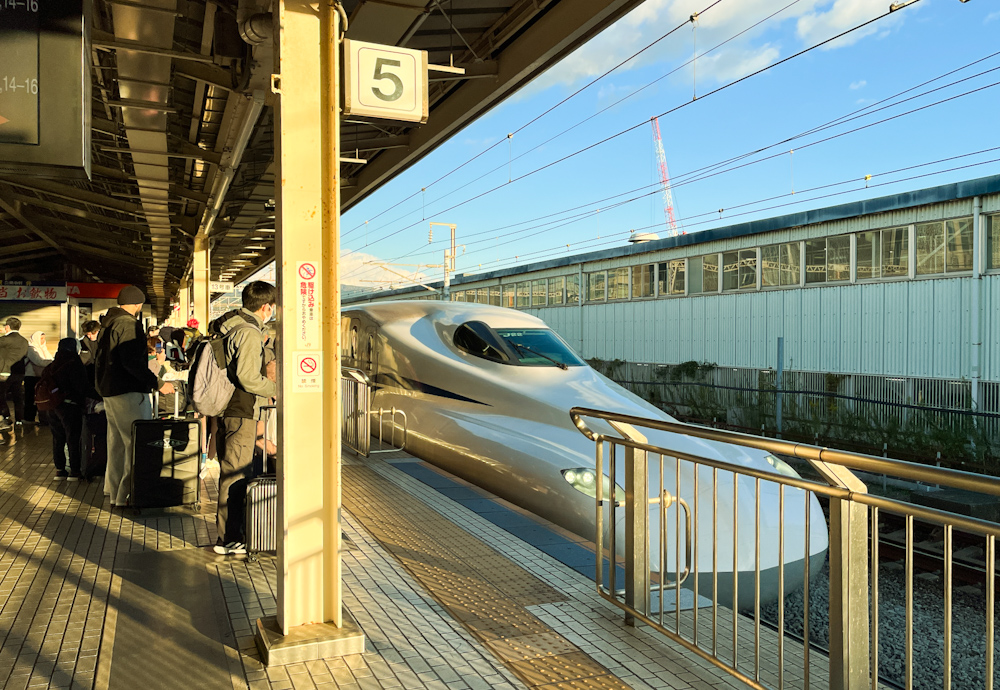
There are few advances as revolutionary as Japan’s high speed railway network. Since the 1964 debut of the Tokaido Shinkansen between Tokyo and Osaka, the system has come to define high speed rail travel, to the point that the word “Shinkansen 新幹線” (Japanese for “New Mainline”) is now a byword for high speed trains. Like the high speed rail networks that came after it, the Shinkansen cut travel times between major cities. Trains running end-to-end covered the new 515.4km route in 4 hours in 1964, some 41% faster than the legacy mainline’s 6 hours and 50 minutes. Later changes to the schedules allowed faster speeds, and today’s fastest trains cover the same distance daily in 2 hours and 21 minutes – that’s 65% faster than the legacy mainline!
The Shinkansen has become an inseparable part of the Japan experience, and during a recent trip to the country I got to catch the Shinkansen from Mishima to Osaka. It turned out to be every bit as impressive in person as its reputation insists.
Which Shinkansen?
There are 3 tiers of trains on the Tokaido Shinkansen in decreasing order of speed: the Nozomi のぞみ, the Hikari ひかり, and the Kodama こだま. The Nozomi is the fastest and most expensive and serves only major stations; The popular Hikari limited express is the “normal” tier with more stops than the Nozomi; The Kodama is the slowest and cheapest, being the all-stop service.
I was aiming for an earlier Hikari service, but its reserved seats were nearly sold out when I was ready to buy tickets, and I wasn’t keen on trying my luck with the unreserved seating cars either. The next Kodama departure was the only workable option for my travel needs, albeit with a scheduled travel time of 2 hours and 56 minutes, slightly slower than the earlier Hikari’s 2 hours and 11 minutes.
Departure from Mishima station 三島駅
The mid-sized city of Mishima is served by the equally compact Mishima station. The station handles both conventional JR and Shinkansen services, with dedicated passenger concourses for each services. The Shinkansen is accessed only through the southern concourse, while the northern concourse serves conventional JR trains. While the Shinkansen is a separate system altogether, the passenger experience is kept very integrated with the conventional railways.
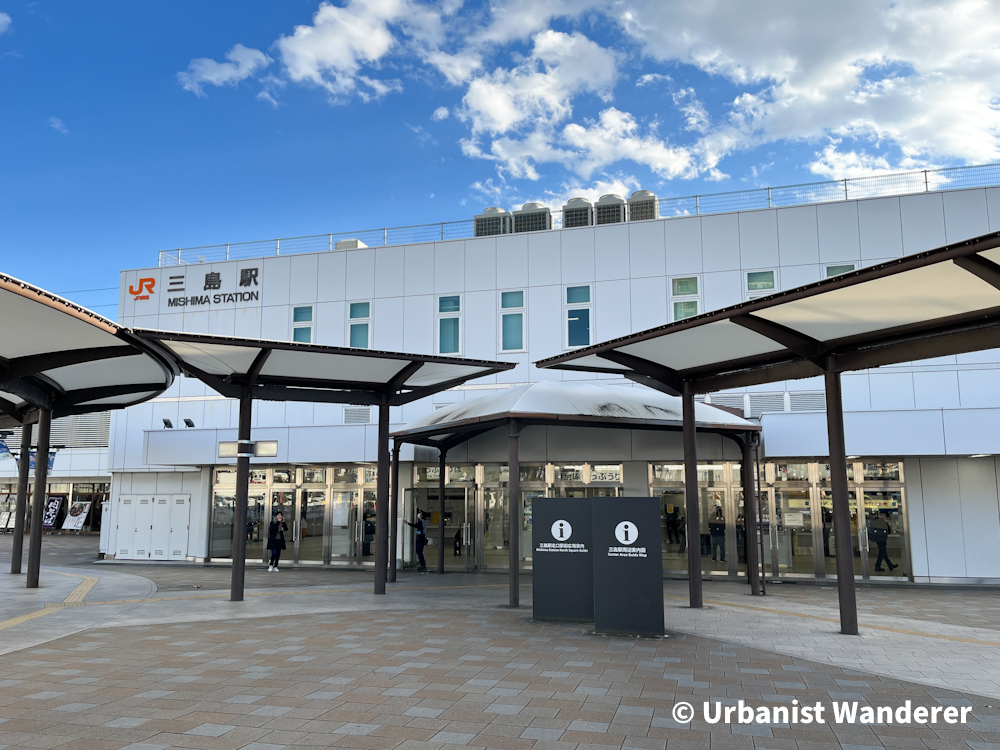
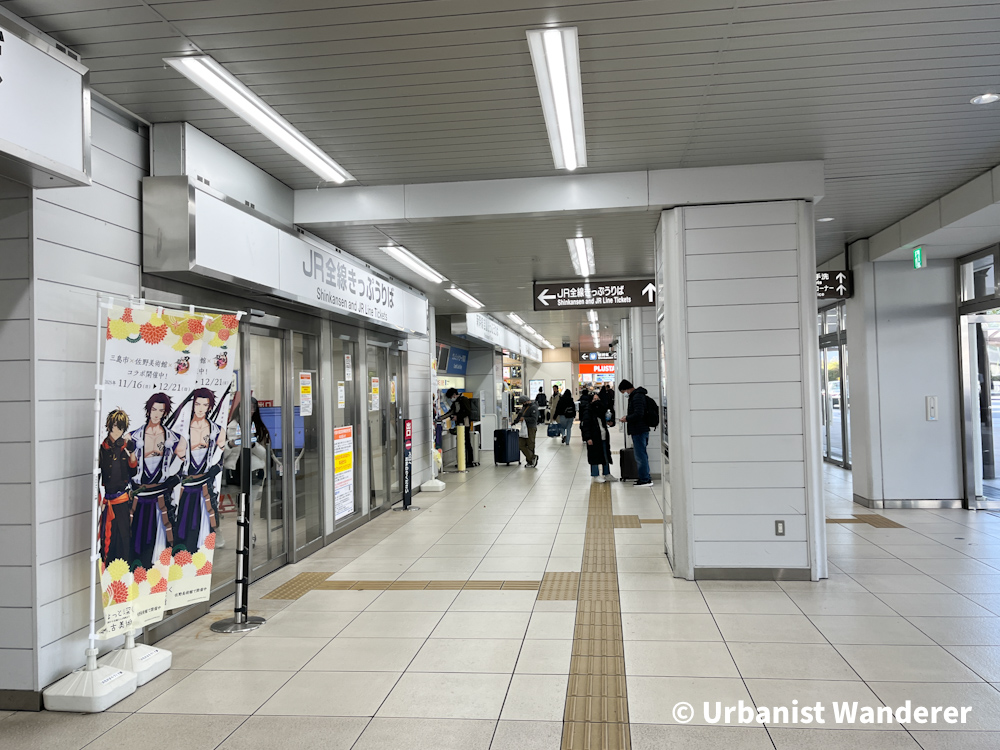
The Shinkansen section of Mishima station opened in 1969 and is very different from today’s grandiose, new-build rail infrastructure. There is a small waiting room after the ticket gates (with the requisite vending machines – this is Japan after all), but not much else. In fact, you could get dropped off at the station, pick up your tickets, head up to the platforms, and board your train all within 5 to 10 minutes.
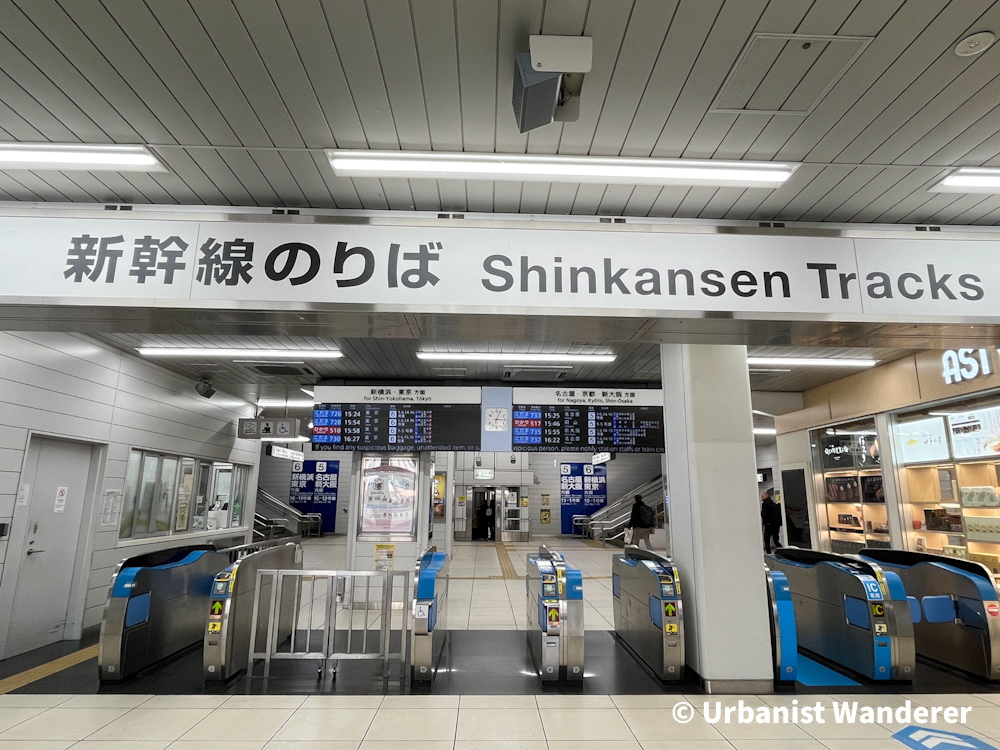
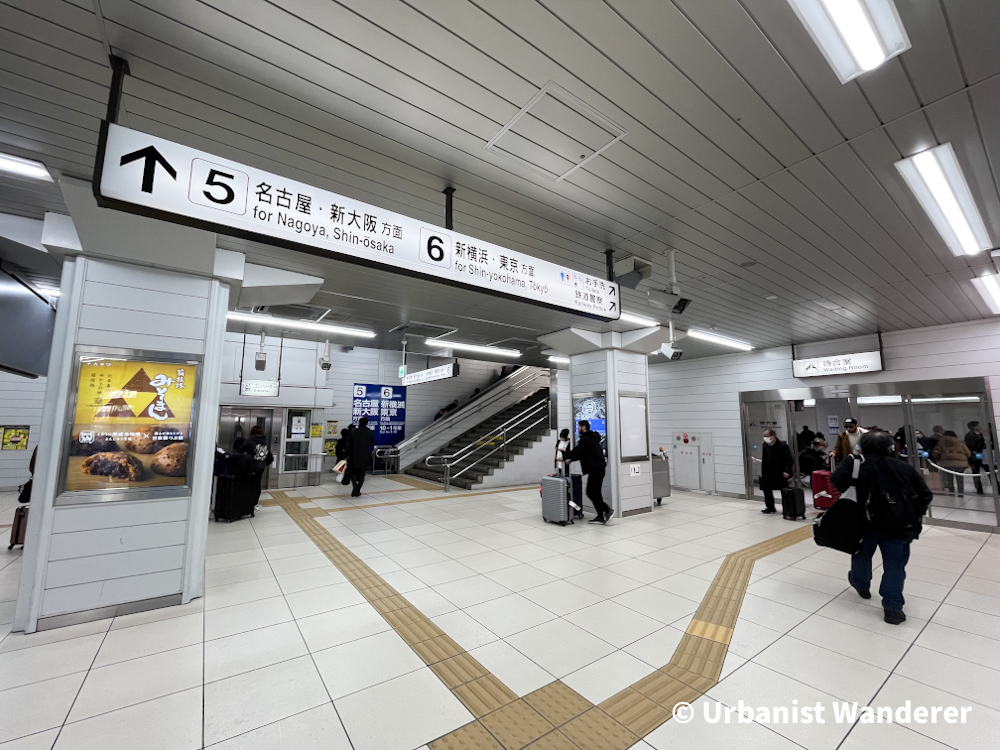
Ticket collection at Mishima station
I purchased my tickets on the smart-ex website which gave me the option of Apple Wallet-compatible e-tickets. I decided to attempt printing my tickets at the kiosks to see how fast it would take, but discovered it requires keying in a “pick-up code”, which was nowhere to be seen on my reservation. It turned out to be a dynamic sequence of numbers that I had to prompt the smart-ex website or app to generate. It’s not ideal for a last minute rush to board, so I’d recommend just sticking with the e-tickets if you can live without paper tickets. Plus, it’s not like you get to keep the tickets when exiting at your destination anyway.
I had some time to spend on Mishima’s island platform, and saw two Nozomi services roar past on the outer bypass tracks, followed by a quick stop by the Hikari I originally wanted to catch. My Kodama N700S trainset then pulled in at 3:50pm, with 5 minutes for passengers to board or get off.
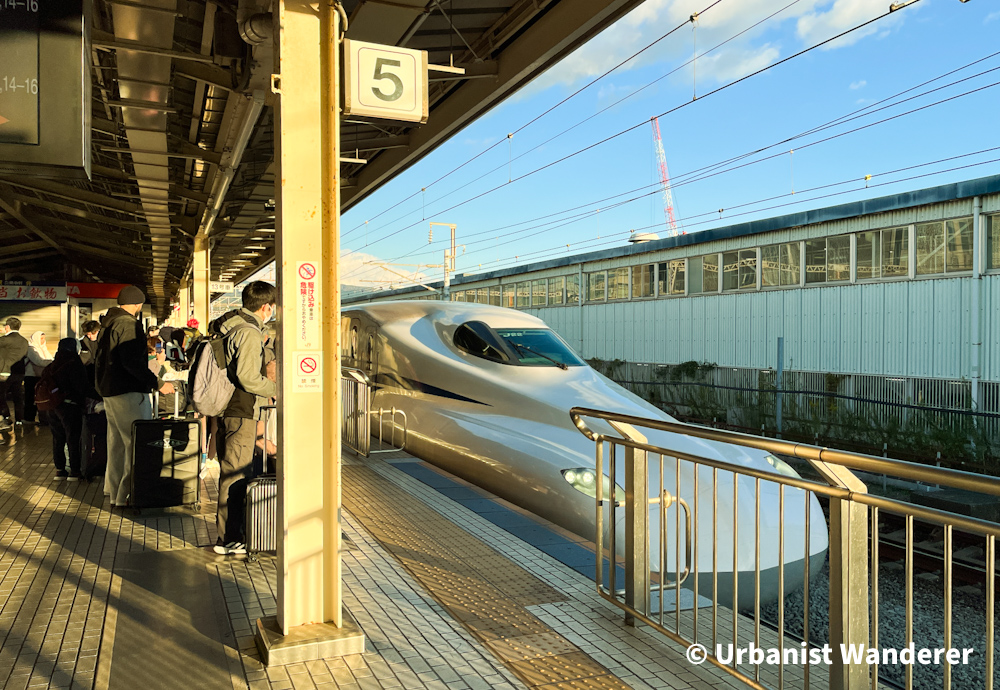
Japan’s railways are the definition of punctuality and the Shinkansen is no different. Our train’s doors closed a minute before the departure time, and we accelerated out of Mishima right on time.
Onboard Cabin & Amenities
A single N700S set typically consists of 16 cars, divided between 16 Standard Class cars and 3 Green Cars. 11 of the Standard Class cars are typically reserved-seat cars, while the remaining 2 are free seating.
I was hoping to try out JR Central’s onboard catering, but unfortunately food trolley service onboard Tokaido Shinkansen trains were discontinued in late-2023, and neither are there vending machines and bistro counters onboard.
JR Central N700S Standard Class
Standard Class on Shinkansen trains are laid out in the classic 3-2 configuration. All rows of seats are aligned with its own window with individual pull-down shades, and can be swivelled to face the direction of travel.
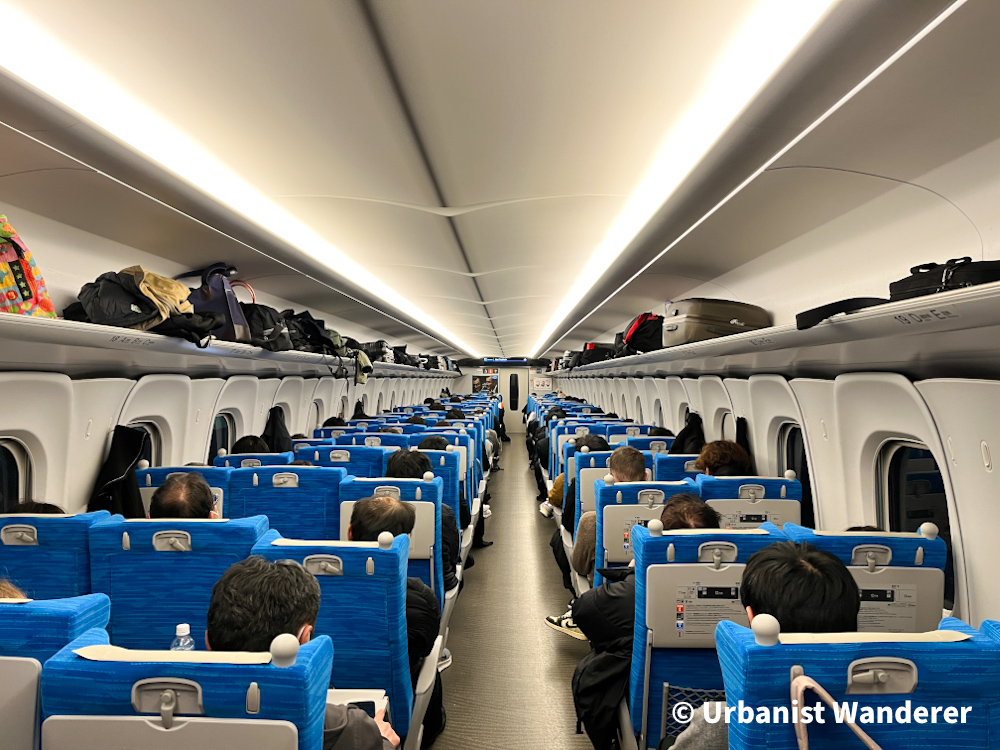
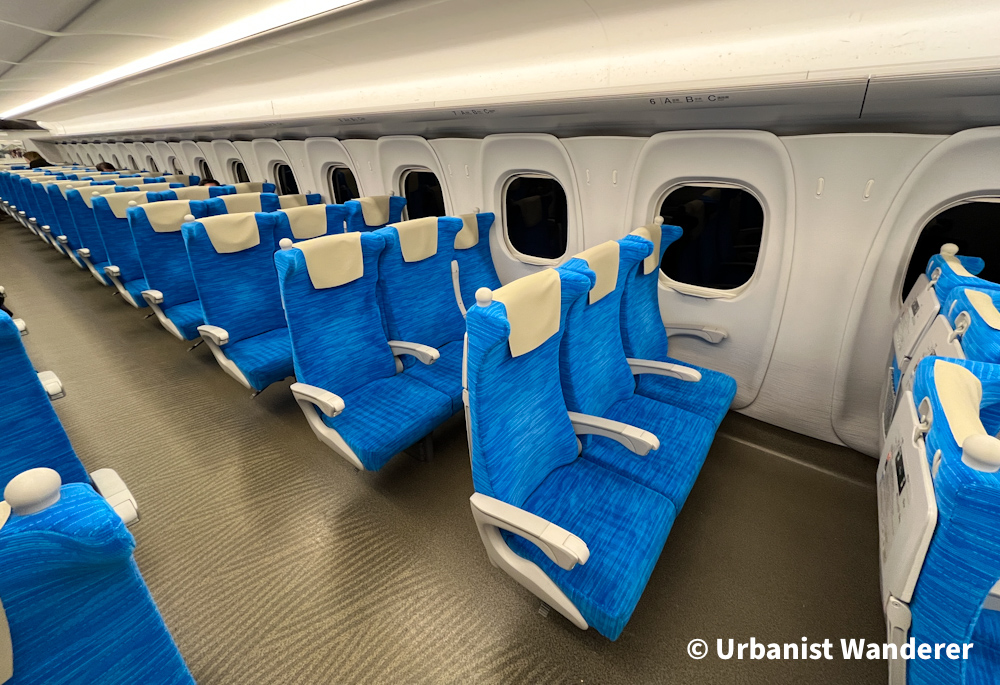
The blue Standard Class seats are decently comfortable. The seats recline for better comfort over longer journeys, and there are fixed “wings” at head level instead of movable headrests. The armrests also have power plugs installed, but require using an adapter; Behind the seats are tray tables and excellent amounts of legroom for the passenger behind. The seats are also positioned lower towards the ground, which is more comfortable for passengers with shorter legs.
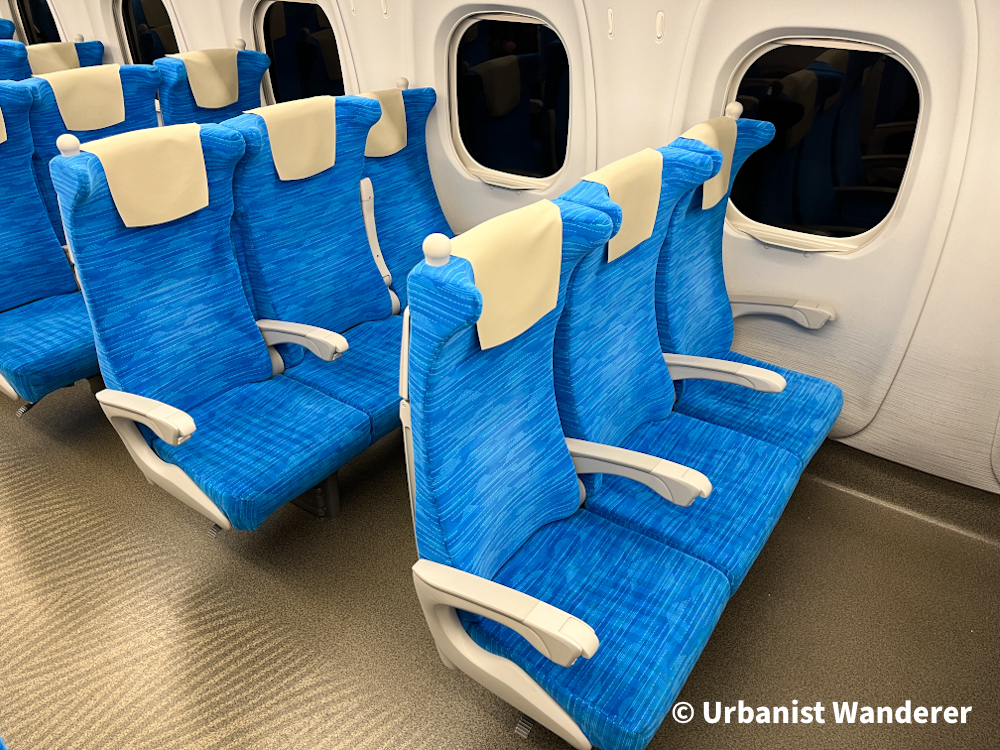
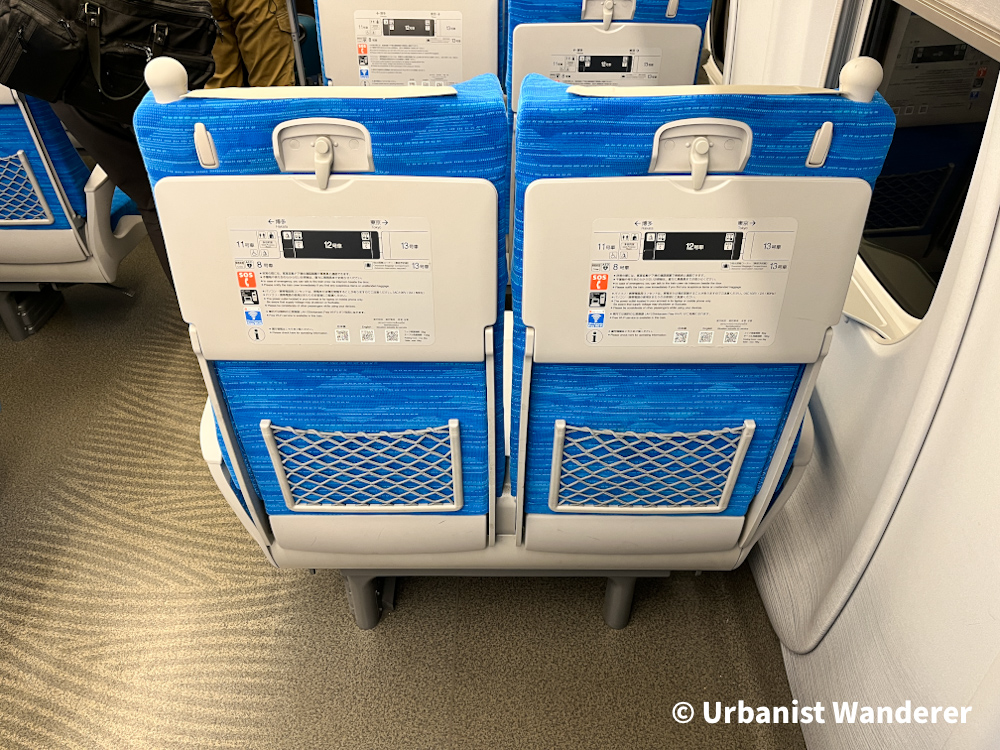
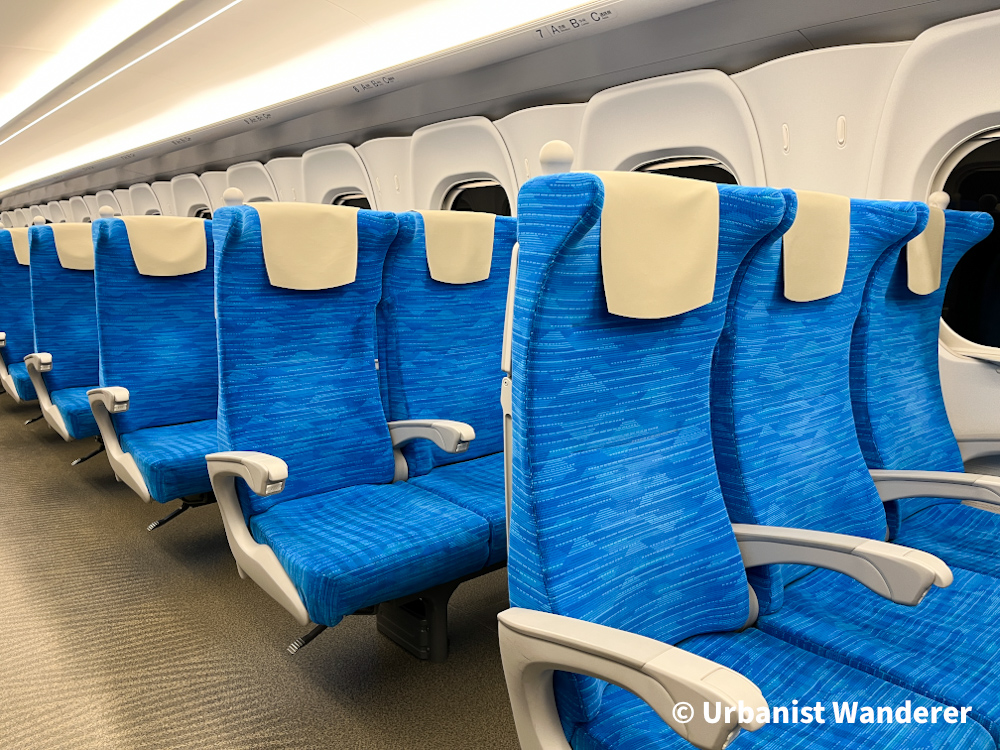
I generally found the cabin to be a comfortable space and JR Central had clearly opted for a soft and calming design language. The warm interior lighting played well with the seats’ blue upholstery, and the result was a less stressful mood onboard.
Onboard amenities – Toilets
The 16 car N700S sets have 8 toilets onboard located in odd-numbered cars. The sole accessible toilet is in car 11, and is quite well equipped with a urinal, baby changing facilities, and grab handles in addition to the standard western toilet.
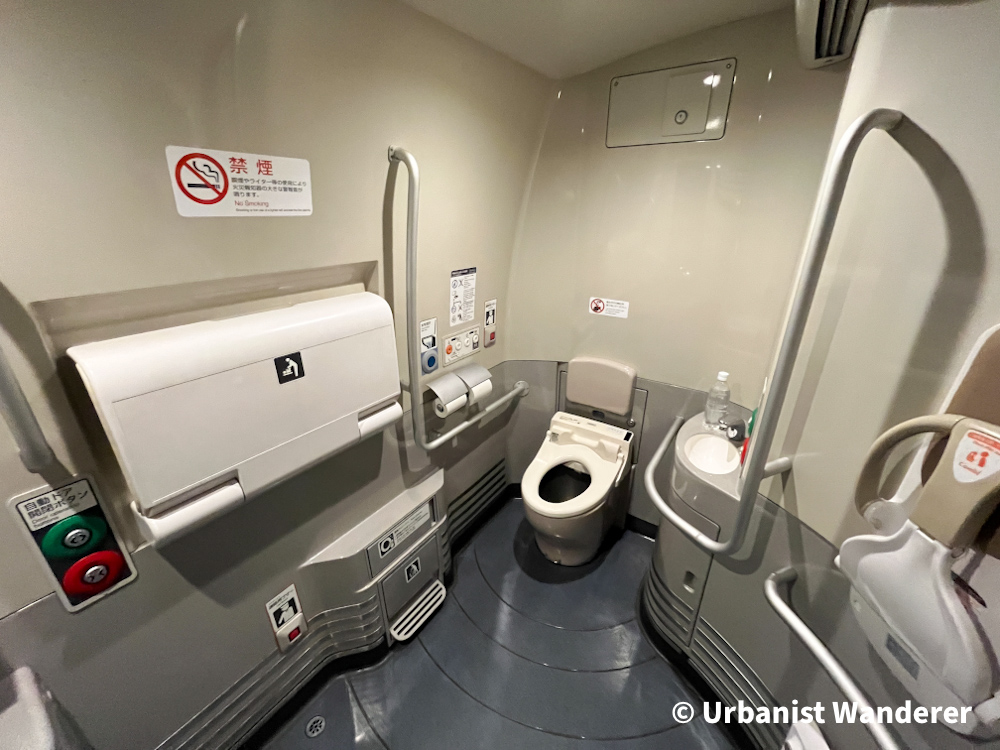
I dropped into the accessible toilet nearer to Osaka for a look, and found it to have been kept immaculately clean by train staff throughout the train’s run from Tokyo. Very impressive.
Views of Fujisan 富士山
One of the best ways to view Fujisan (Mount Fuji) is from the Shinkansen. Sit on the right if heading westbound (i.e towards Osaka), and on the left if heading eastbound (i.e towards Tokyo).
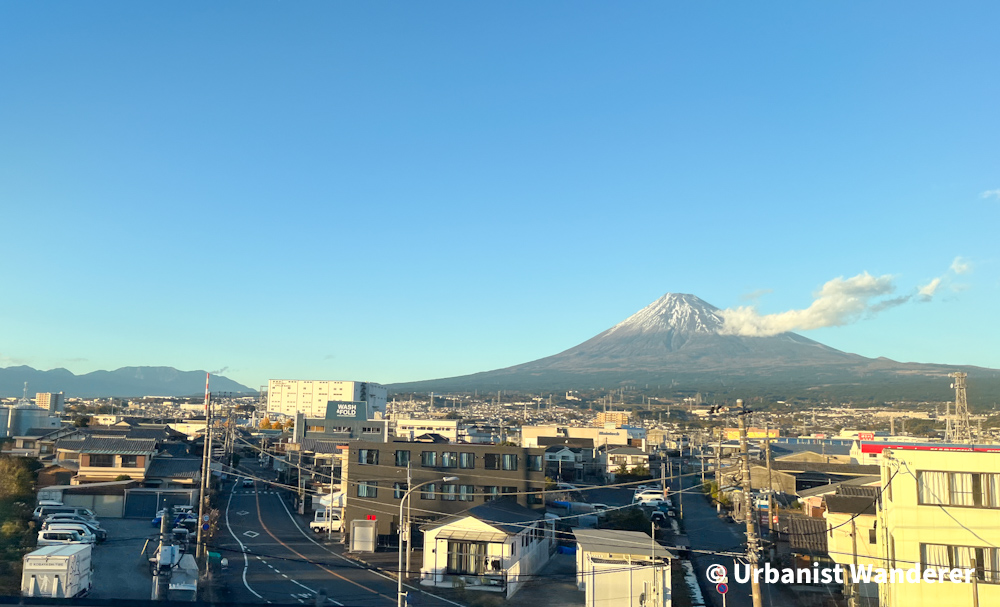
I was sat on the right for this trip and had excellent views of Japan’s most famous mountain on the stretch leading out of Mishima.
Arrival at Shin-Ōsaka station 新大阪駅
The hours passed as our train flew westwards on the tracks. With how smooth the trip was, I had to remind myself that I was travelling almost 400km in less than 3 hours.
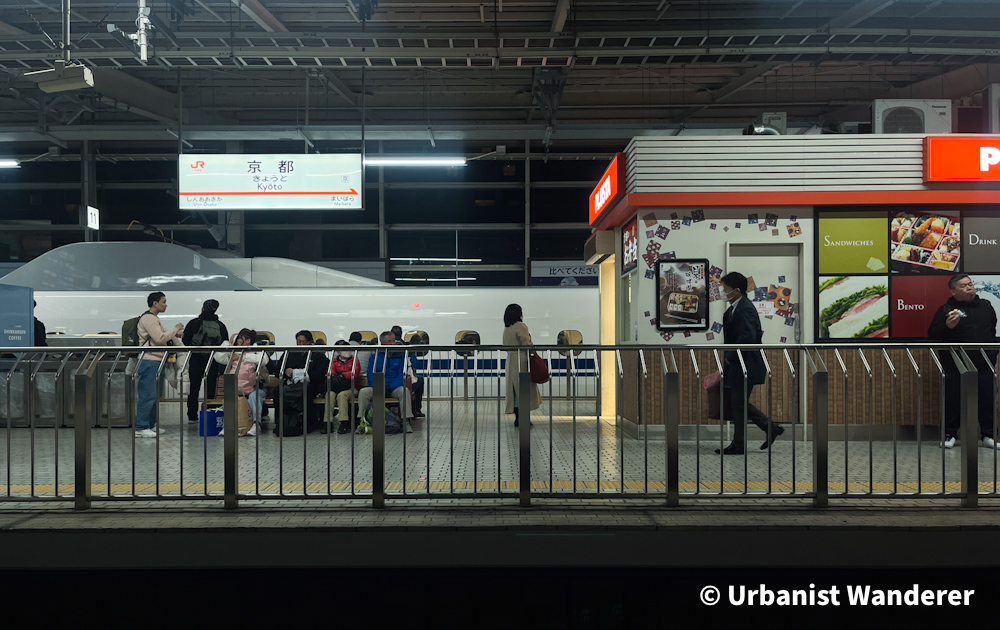
We pulled into Shin-Osaka station on time, and I took one more opportunity to admire the high frequency Shinkansen movements on the departures board on my way out. A high speed train every 20 minutes is really mind-blowing!
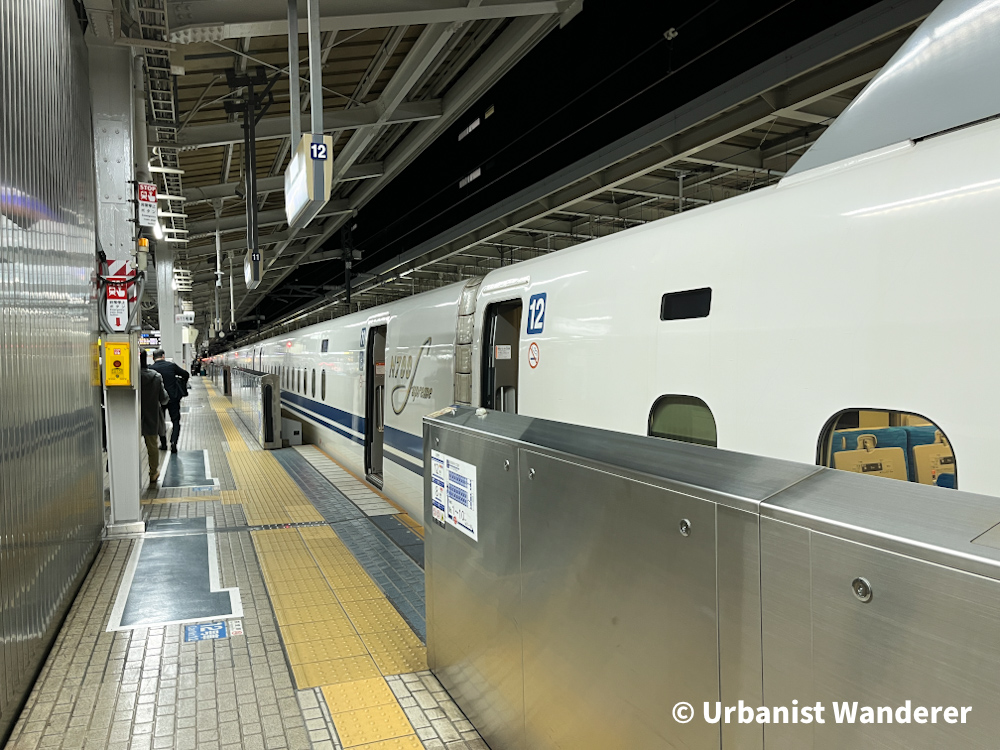
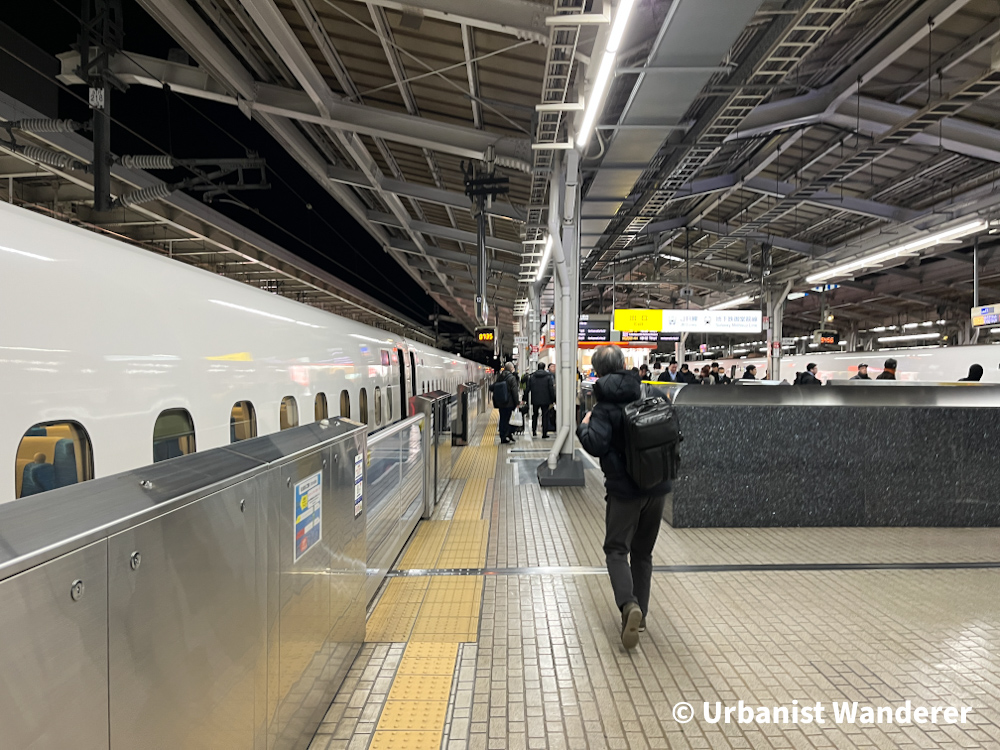
Shin-Osaka station was built new in 1964 for the Shinkansen, and is located on the north side of the River Yodo away from Osaka’s city centre. The station is still very much part of the Osaka urbanscape though, and the central Osaka-Umeda station complex is only 3 stops away on the Midosuji Line of the Osaka Metro.
Final Thoughts
If I really had to nitpick the Shinkansen’s flaws, I would say the ticketing process was a bit more complicated than it should have been, but this was really just down to software design. It wouldn’t have been a problem if I had used my e-tickets like most probably do.
Overall, I was impressed by the Shinkansen. It was easy to see why after all these years the Shinkansen is still held up globally as a gold standard. The ease of use, physical connections with the conventional railways, and being integrated in the existing built environment are things new-built systems sometimes fail to achieve. Using it felt less like a one-off, flagship project and more like a “normal” train service, albeit one that ran at almost 300km/h. It truly was the “New Mainline” it was built to be.